Stockinger Christian, Thürer Benjamin, Stein Thorsten
BioMotion Center, Institute of Sports and Sports Science, Karlsruhe Institute of Technology, Karlsruhe, Germany.
HEiKA-Heidelberg Karlsruhe Research Partnership, Heidelberg University, Karlsruhe Institute of Technology, Karlsruhe, Germany.
PLoS One. 2017 May 1;12(5):e0176594. doi: 10.1371/journal.pone.0176594. eCollection 2017.
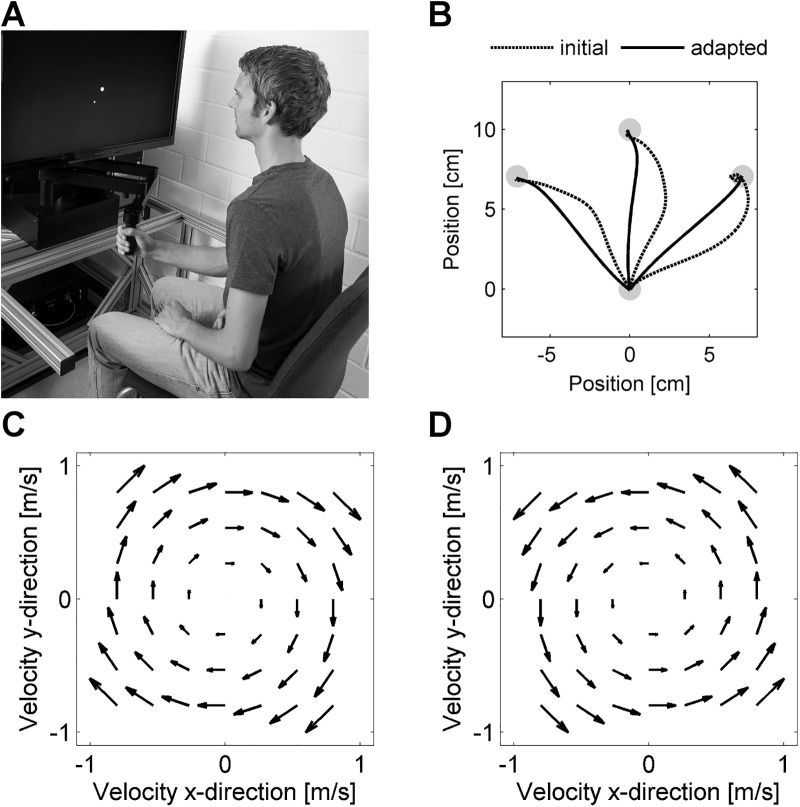
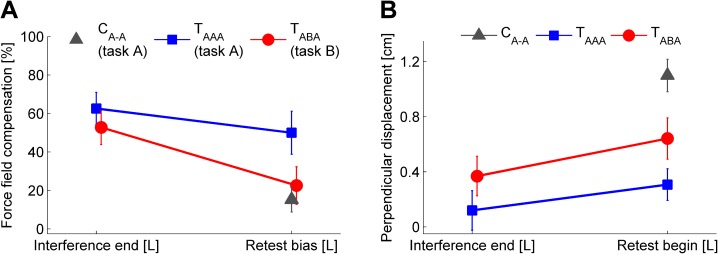
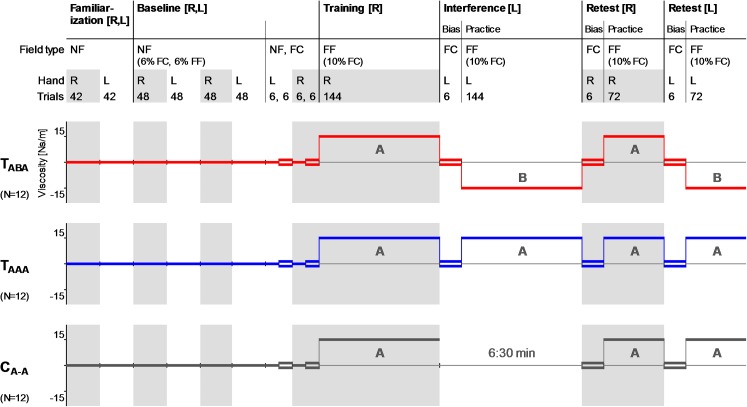
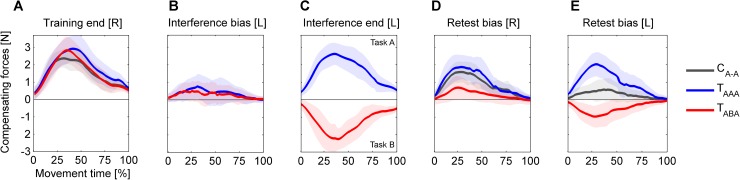
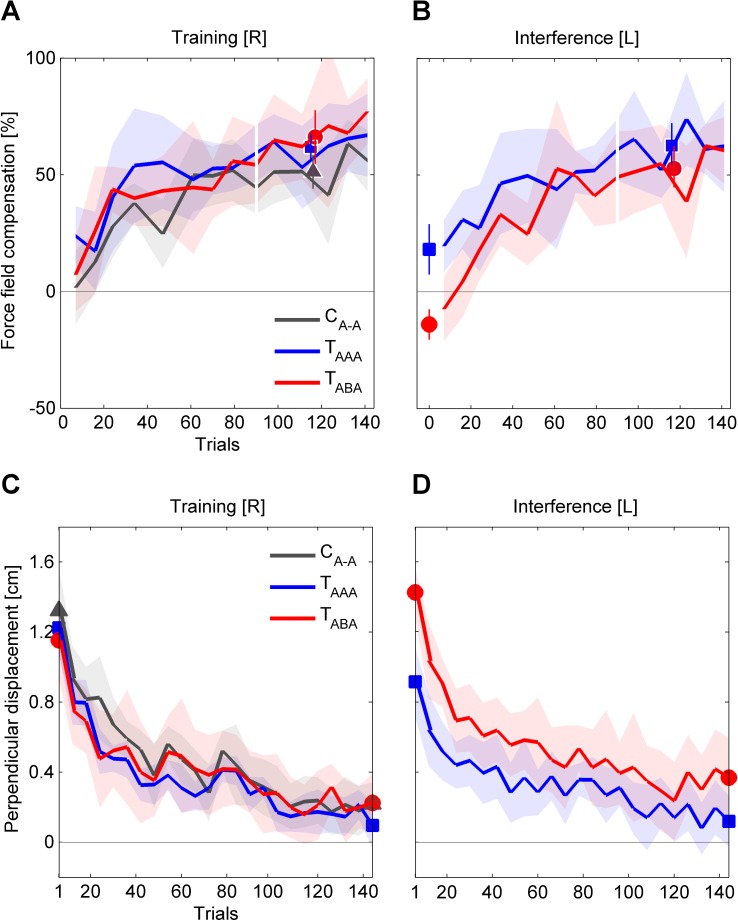
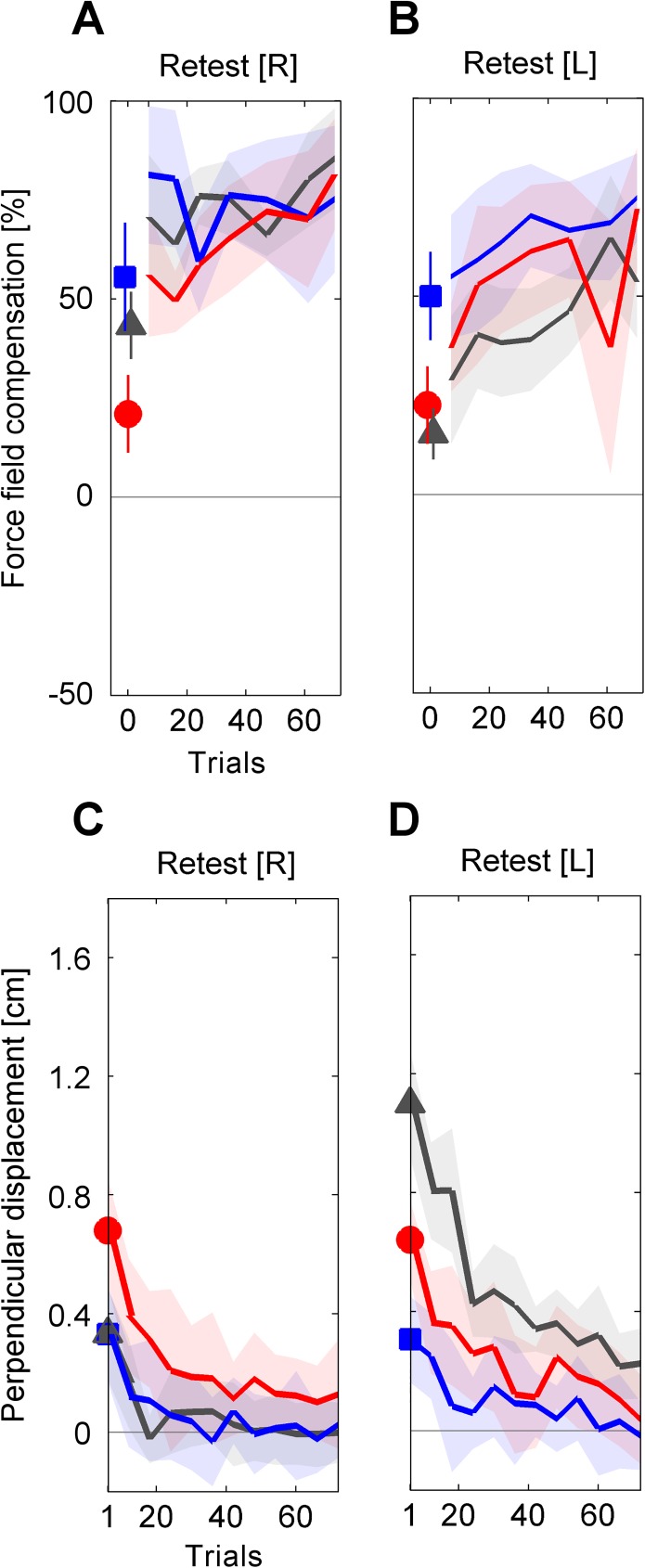
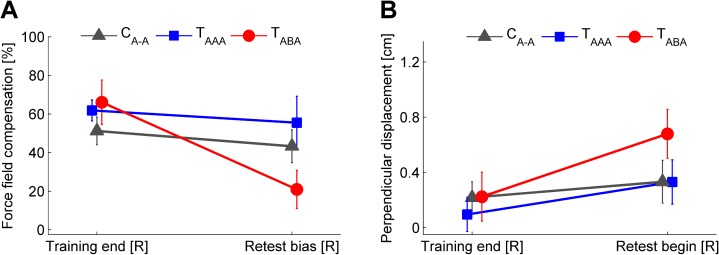
Intermanual transfer (motor memory generalization across arms) and motor memory interference (impairment of retest performance in consecutive motor learning) are well-investigated motor learning phenomena. However, the interplay of these phenomena remains elusive, i.e., whether intermanual interference occurs when two unimanual tasks are consecutively learned using different arms. Here, we examine intermanual interference when subjects consecutively adapt their right and left arm movements to novel dynamics. We considered two force field tasks A and B which were of the same structure but mirrored orientation (B = -A). The first test group (ABA-group) consecutively learned task A using their right arm and task B using their left arm before being retested for task A with their right arm. Another test group (AAA-group) learned only task A in the same right-left-right arm schedule. Control subjects learned task A using their right arm without intermediate left arm learning. All groups were able to adapt their right arm movements to force field A and both test groups showed significant intermanual transfer of this initial learning to the contralateral left arm of 21.9% (ABA-group) and 27.6% (AAA-group). Consecutively, both test groups adapted their left arm movements to force field B (ABA-group) or force field A (AAA-group). For the ABA-group, left arm learning caused significant intermanual interference of the initially learned right arm task (68.3% performance decrease). The performance decrease of the AAA-group (10.2%) did not differ from controls (15.5%). These findings suggest that motor control and learning of right and left arm movements involve partly similar neural networks or underlie a vital interhemispheric connectivity. Moreover, our results suggest a preferred internal task representation in extrinsic Cartesian-based coordinates rather than in intrinsic joint-based coordinates because interference was absent when learning was performed in extrinsically equivalent fashion (AAA-group) but interference occurred when learning was performed in intrinsically equivalent fashion (ABA-group).
双手间转移(跨手臂的运动记忆泛化)和运动记忆干扰(连续运动学习中重测表现的受损)是经过充分研究的运动学习现象。然而,这些现象之间的相互作用仍然难以捉摸,也就是说,当使用不同手臂连续学习两个单手任务时,是否会发生双手间干扰。在此,我们研究当受试者连续将其右臂和左臂运动适应新动态时的双手间干扰。我们考虑了两个力场任务A和B,它们结构相同但方向相反(B = -A)。第一个测试组(ABA组)先用右臂连续学习任务A,再用左臂学习任务B,然后用右臂对任务A进行重测。另一个测试组(AAA组)以相同的右-左-右手臂顺序只学习任务A。对照组受试者只用右臂学习任务A,没有中间的左臂学习过程。所有组都能够将其右臂运动适应力场A,两个测试组都显示出这种初始学习向对侧左臂的显著双手间转移,ABA组为21.9%,AAA组为27.6%。接着,两个测试组都将其左臂运动适应力场B(ABA组)或力场A(AAA组)。对于ABA组,左臂学习导致最初学习的右臂任务出现显著的双手间干扰(表现下降68.3%)。AAA组的表现下降(10.2%)与对照组(15.5%)没有差异。这些发现表明,右臂和左臂运动的运动控制和学习部分涉及相似的神经网络,或者基于重要的半球间连接。此外,我们的结果表明,在外在笛卡尔坐标而非内在关节坐标中存在一种优选的内部任务表征,因为当以外在等效方式进行学习时(AAA组)不存在干扰,但当以内在等效方式进行学习时(ABA组)会出现干扰。