Carvalho Carlos A M, Silva Jerson L, Oliveira Andréa C, Gomes Andre M O
Programa de Biologia Estrutural, Instituto de Bioquímica Médica Leopoldo de Meis, Universidade Federal do Rio de Janeiro, Rio de Janeiro, Brazil.
Instituto Nacional de Ciência e Tecnologia de Biologia Estrutural e Bioimagem, Universidade Federal do Rio de Janeiro, Rio de Janeiro, Brazil.
PeerJ. 2017 Apr 27;5:e3245. doi: 10.7717/peerj.3245. eCollection 2017.
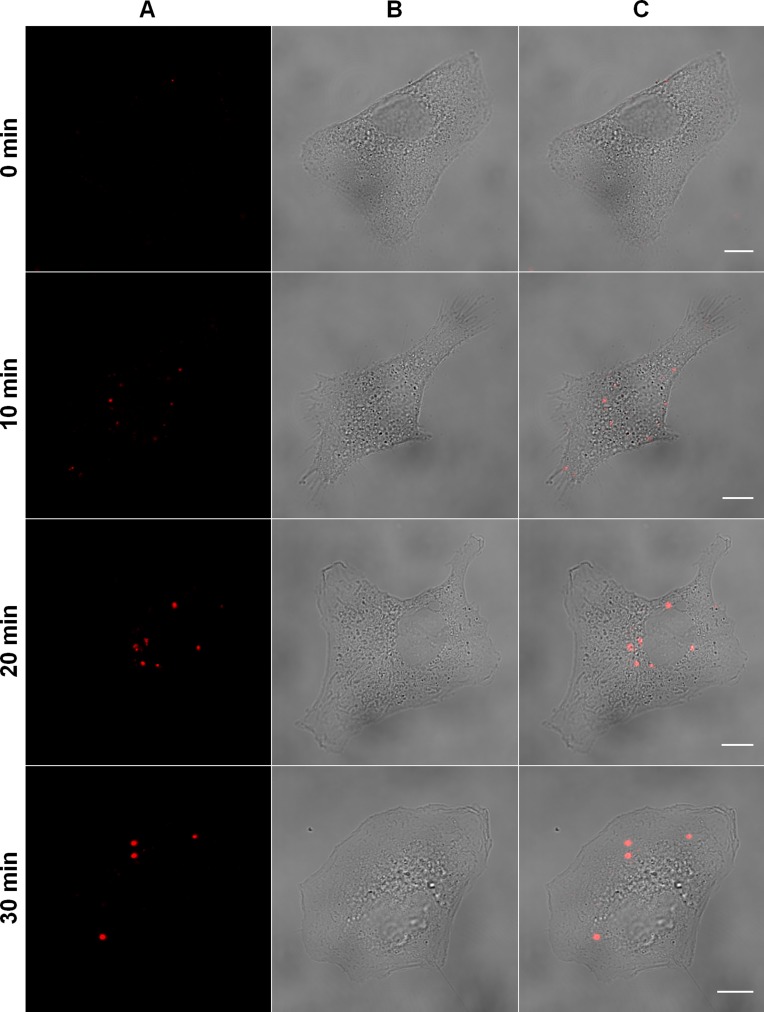
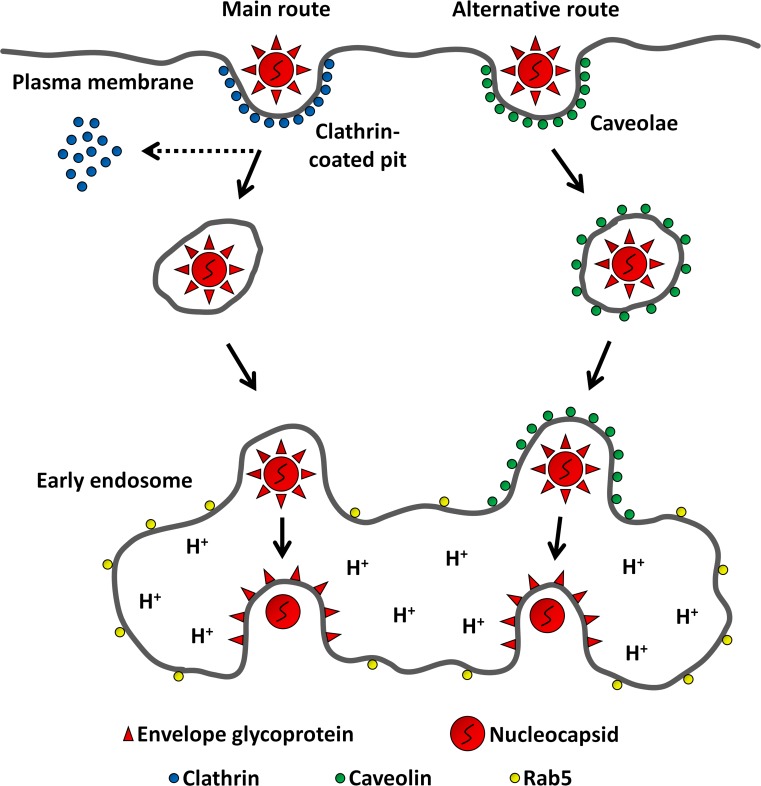
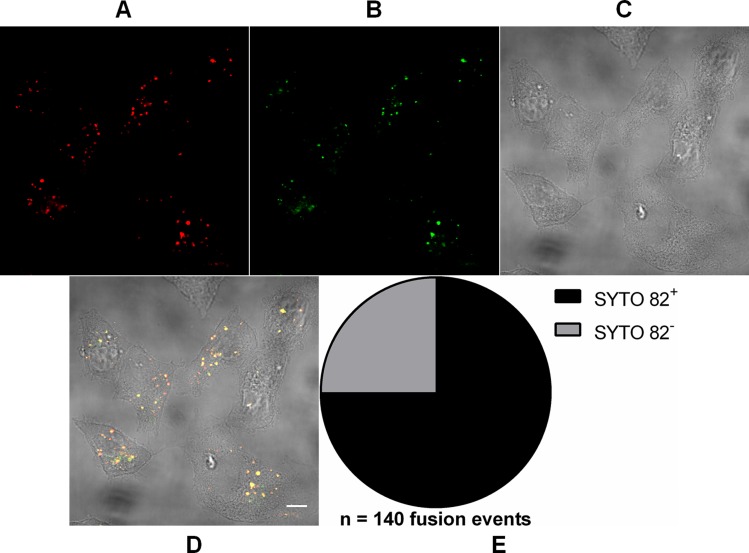
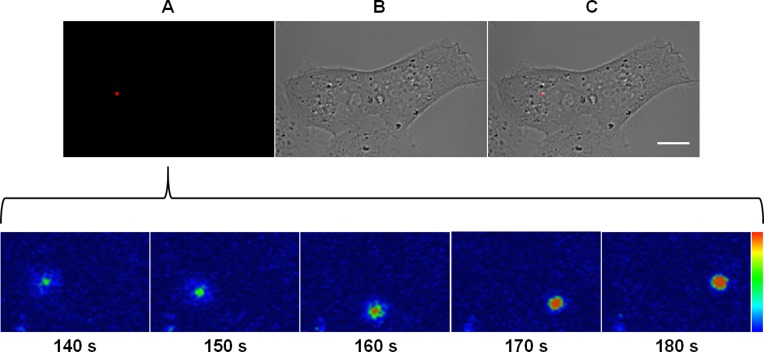
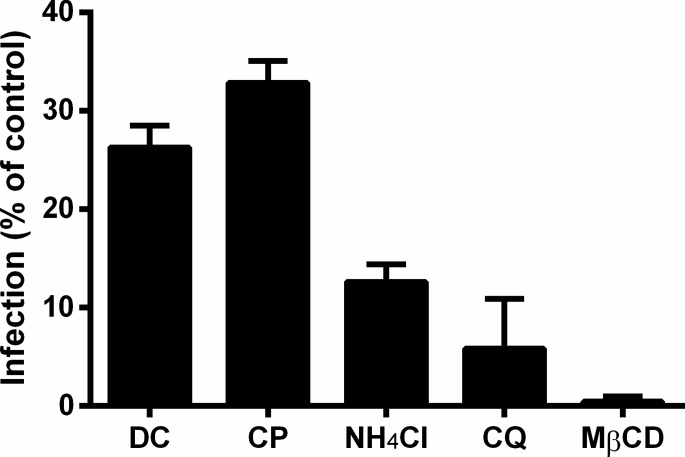
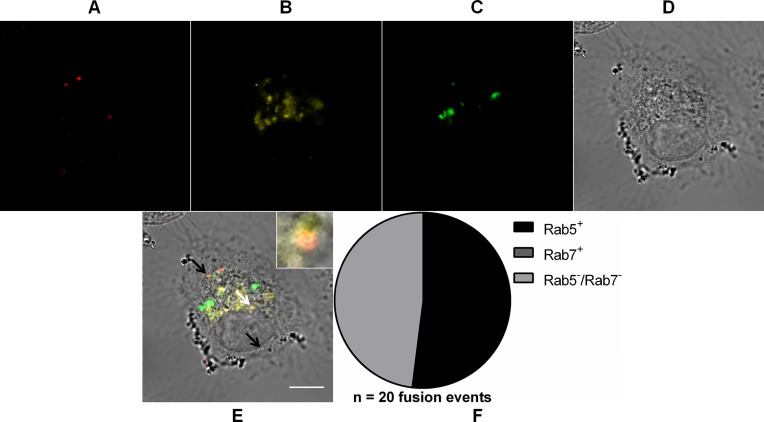
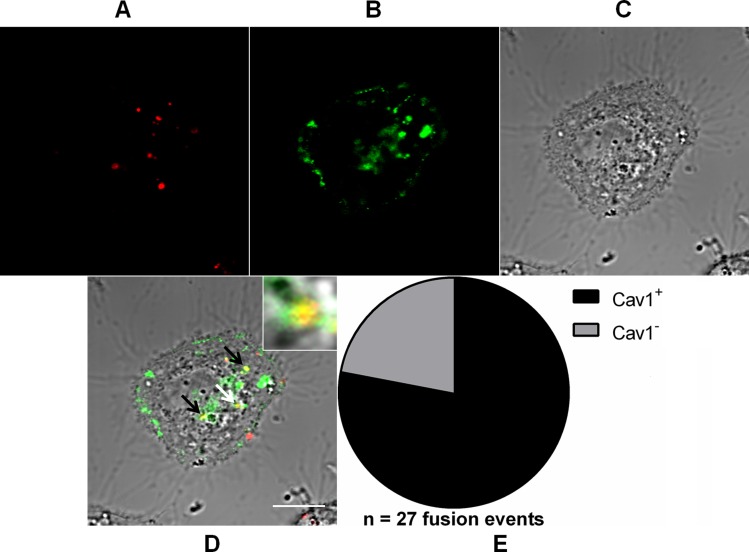
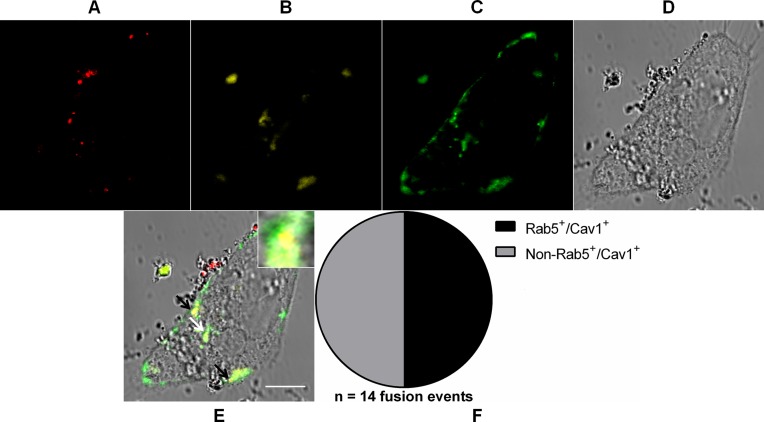
Mayaro virus (MAYV) is an emergent sylvatic alphavirus in South America, related to sporadic outbreaks of a chikungunya-like human febrile illness accompanied by severe arthralgia. Despite its high potential for urban emergence, MAYV is still an obscure virus with scarce information about its infection cycle, including the corresponding early events. Even for prototypical alphaviruses, the cell entry mechanism still has some rough edges to trim: although clathrin-mediated endocytosis is quoted as the putative route, alternative paths as distinct as direct virus genome injection through the cell plasma membrane seems to be possible. Our aim was to clarify crucial details on the entry route exploited by MAYV to gain access into the host cell. Tracking the virus since its first contact with the surface of Vero cells by fluorescence microscopy, we show that its entry occurs by a fast endocytic process and relies on fusion with acidic endosomal compartments. Moreover, blocking clathrin-mediated endocytosis or depleting cholesterol from the cell membrane leads to a strong inhibition of viral infection, as assessed by plaque assays. Following this clue, we found that early endosomes and caveolae-derived vesicles are both implicated as target membranes for MAYV fusion. Our findings unravel the very first events that culminate in a productive infection by MAYV and shed light on potential targets for a rational antiviral therapy, besides providing a better comprehension of the entry routes exploited by alphaviruses to get into the cell.
马亚罗病毒(MAYV)是南美洲一种新出现的丛林型甲病毒,与类似基孔肯雅热的人类发热疾病的散发性暴发有关,该疾病伴有严重关节痛。尽管MAYV在城市中出现的可能性很大,但它仍然是一种鲜为人知的病毒,关于其感染周期的信息很少,包括相应的早期事件。即使对于典型的甲病毒,其细胞进入机制仍有一些需要完善的地方:虽然网格蛋白介导的内吞作用被认为是假定的途径,但像通过细胞质膜直接注入病毒基因组这样截然不同的替代途径似乎也是可能的。我们的目的是阐明MAYV进入宿主细胞所利用的进入途径的关键细节。通过荧光显微镜从病毒首次与Vero细胞表面接触开始追踪,我们发现其进入是通过快速内吞过程发生的,并且依赖于与酸性内体区室的融合。此外,通过蚀斑试验评估,阻断网格蛋白介导的内吞作用或从细胞膜中去除胆固醇会导致病毒感染受到强烈抑制。顺着这条线索,我们发现早期内体和小窝衍生的囊泡都是MAYV融合的靶膜。我们的发现揭示了导致MAYV产生有效感染的最初事件,为合理的抗病毒治疗提供了潜在靶点,同时也有助于更好地理解甲病毒进入细胞所利用的进入途径。