Key Laboratory of Green Printing, Institute of Chemistry, Chinese Academy of Sciences, Beijing 100190, China.
School of Chemistry and Chemical Engineering, University of Chinese Academy of Sciences, Beijing 100049, China.
Nat Commun. 2017 May 2;8:15154. doi: 10.1038/ncomms15154.
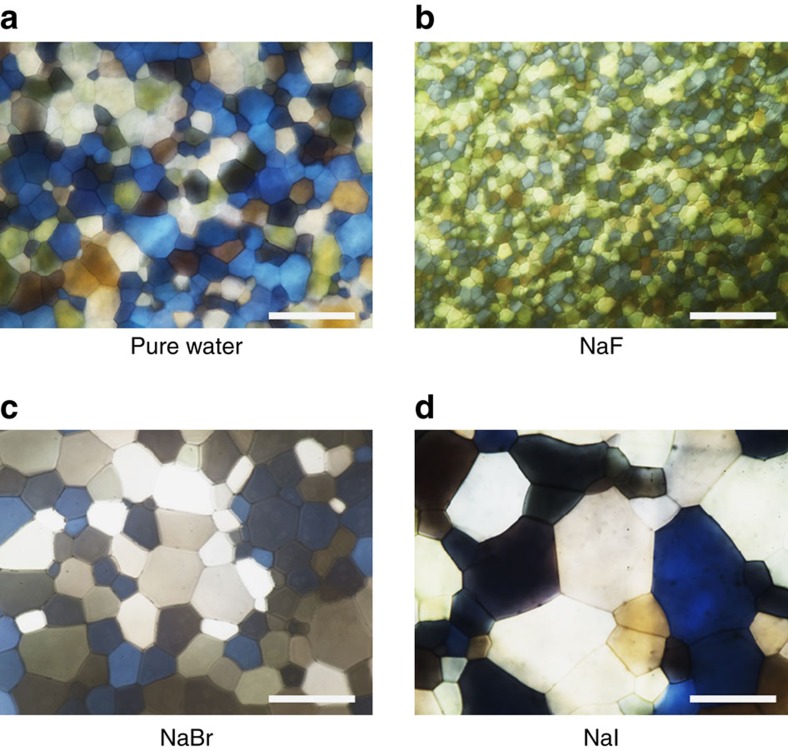
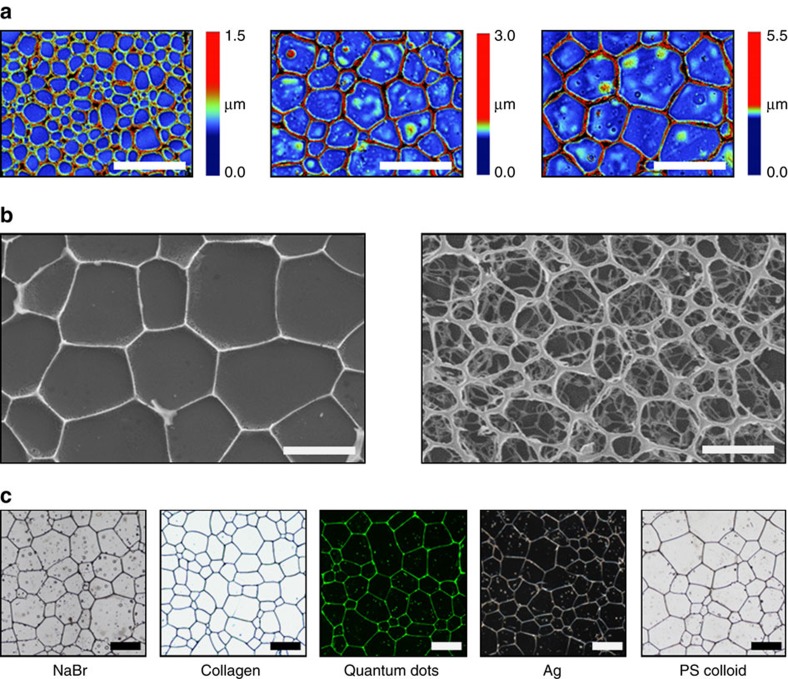
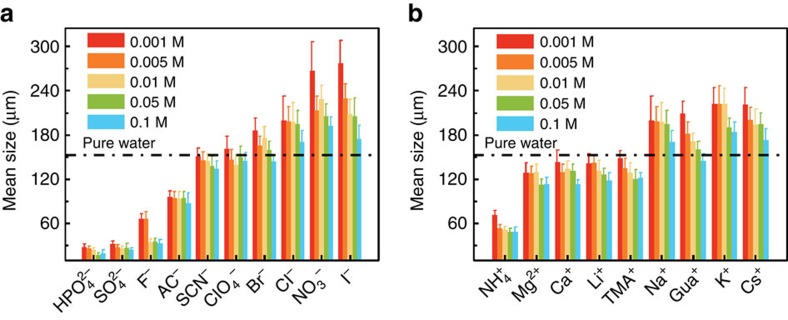
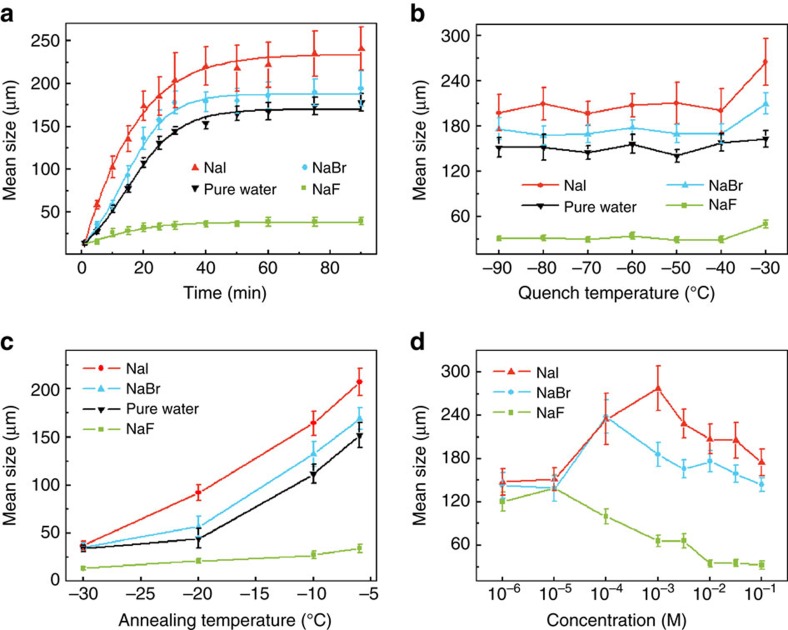
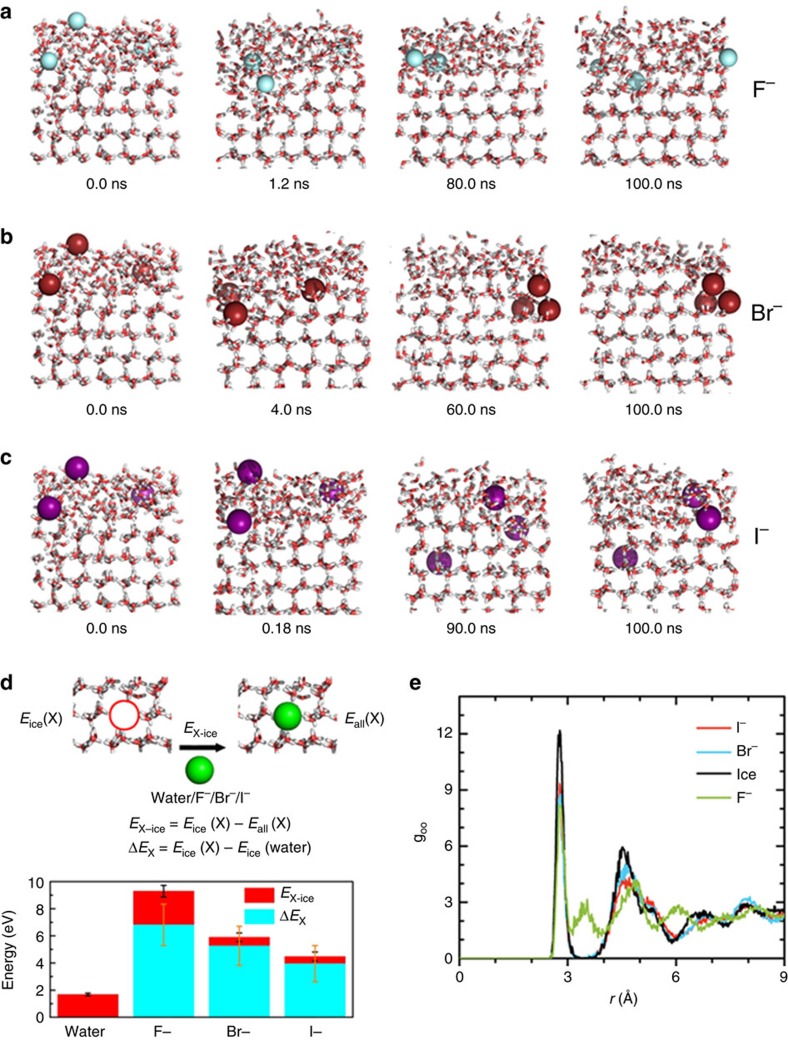
Ice recrystallization is of great importance to both fundamental research and practical applications, however understanding and controlling ice recrystallization processes remains challenging. Here, we report the discovery of an ion-specific effect on ice recrystallization. By simply changing the initial type and concentration of ions in an aqueous solution, the size of ice grains after recrystallization can be tuned from 27.4±4.1 to 277.5±30.9 μm. Molecular dynamics simulations show that the ability of the ion to be incorporated into the ice phase plays a key role in the ultimate size of the ice grains after recrystallization. Moreover, by using recrystallized ice crystals as templates, 2D and 3D porous networks with tuneable pore sizes could be prepared from various materials, for example, NaBr, collagen, quantum dots, silver and polystyrene colloids. These porous materials are suitable for a wide range of applications, for example, in organic electronics, catalysis and bioengineering.
冰晶再结晶对于基础研究和实际应用都非常重要,然而理解和控制冰晶再结晶过程仍然具有挑战性。在这里,我们报告了一种离子对冰晶再结晶的特异性影响的发现。通过简单地改变水溶液中初始离子的类型和浓度,可以将再结晶后冰粒的大小从 27.4±4.1μm 调至 277.5±30.9μm。分子动力学模拟表明,离子掺入冰相的能力在再结晶后冰粒的最终尺寸中起着关键作用。此外,通过使用再结晶的冰晶作为模板,可以从各种材料(例如 NaBr、胶原蛋白、量子点、银和聚苯乙烯胶体)制备具有可调孔径的二维和三维多孔网络。这些多孔材料适用于广泛的应用,例如在有机电子学、催化和生物工程中。