Antonini-Canterin Francesco, Poli Stefano, Vriz Olga, Pavan Daniela, Bello Vitantonio Di, Nicolosi Gian Luigi
Cardiologia Preventiva e Riabilitativa, Azienda Ospedaliera S. Maria degli Angeli, Pordenone, Italy.
Scuola di Specializzazione in Malattie Cardiovascolari, Università di Trieste, Trieste, Italy.
J Cardiovasc Echogr. 2013 Oct-Dec;23(4):91-95. doi: 10.4103/2211-4122.127408.
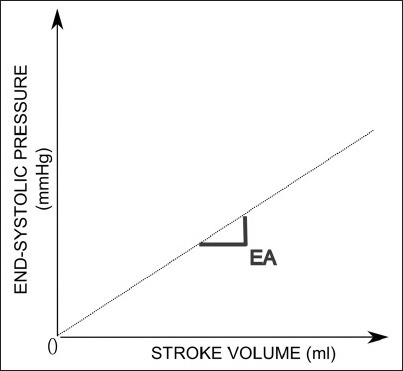
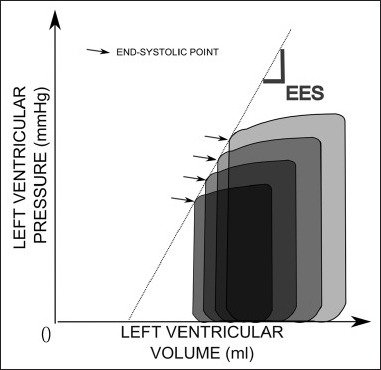
The interplay between cardiac function and arterial system, which in turn affects ventricular performance, is defined commonly ventricular-arterial coupling and is an expression of global cardiovascular efficiency. This relation can be expressed in mathematical terms as the ratio between arterial elastance (EA) and end-systolic elastance (EES) of the left ventricle (LV). The noninvasive calculation requires complicated formulae, which can be, however, easily implemented in computerized algorithms, allowing the adoption of this index in the clinical evaluation of patients. This review summarizes the up-to-date literature on the topic, with particular focus on the main clinical studies, which range over different clinical scenarios, namely hypertension, heart failure, coronary artery disease, and valvular heart disease.
心脏功能与动脉系统之间的相互作用,反过来又会影响心室功能,通常被定义为心室-动脉耦合,是整体心血管效率的一种表现。这种关系可以用数学术语表示为左心室(LV)的动脉弹性(EA)与收缩末期弹性(EES)之比。无创计算需要复杂的公式,不过这些公式可以很容易地在计算机算法中实现,从而使该指标能够应用于患者的临床评估。本综述总结了关于该主题的最新文献,特别关注了主要的临床研究,这些研究涵盖了不同的临床场景,即高血压、心力衰竭、冠状动脉疾病和心脏瓣膜病。