Chaney Sarah B, Ganesh Kasturi, Mathew-Steiner Shomita, Stromberg Paul, Roy Sashwati, Sen Chandan K, Wozniak Daniel J
Department of Veterinary Bioscience, College of Veterinary Medicine, The Ohio State University, Columbus, Ohio.
Department of Microbial Infection and Immunity, The Ohio State University, Columbus, Ohio.
Wound Repair Regen. 2017 May;25(3):541-549. doi: 10.1111/wrr.12527. Epub 2017 May 18.
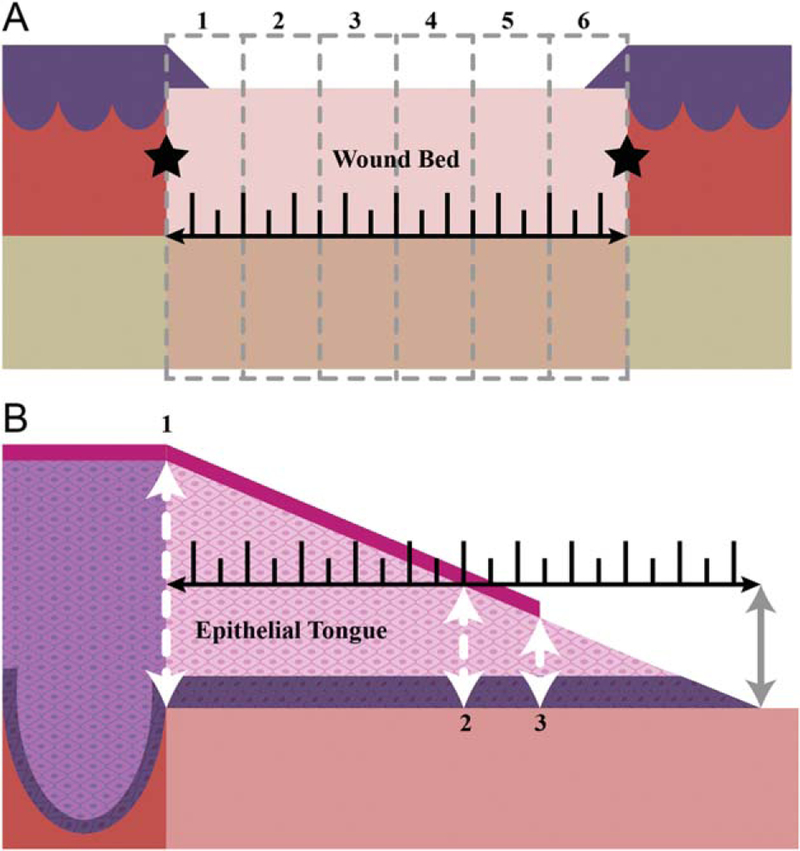
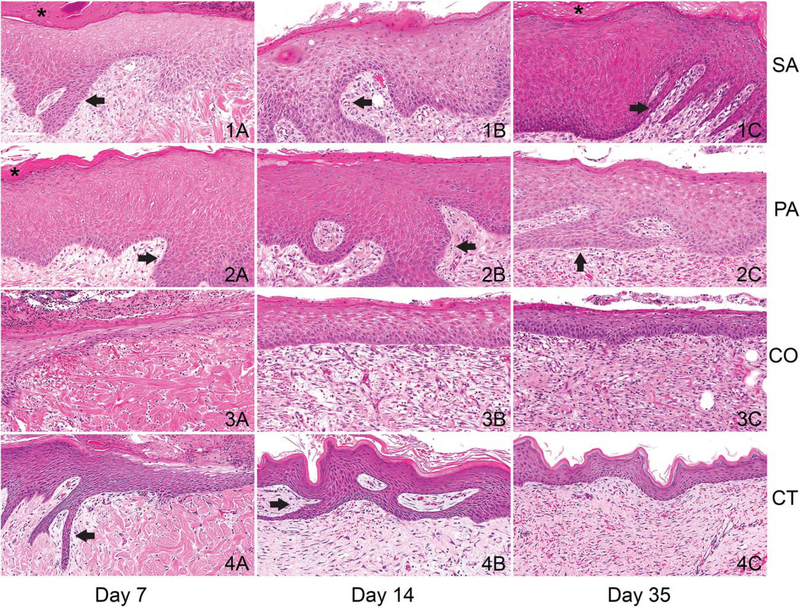
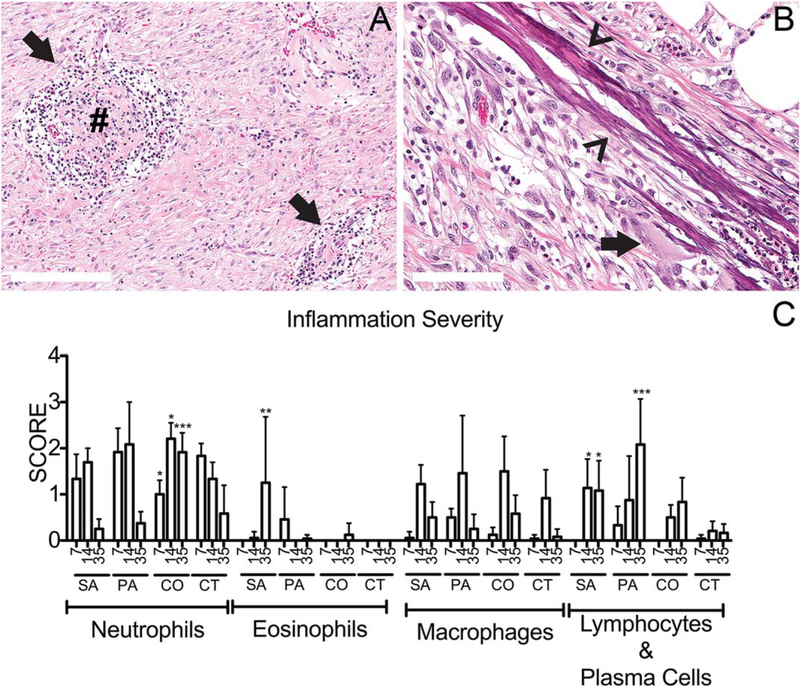
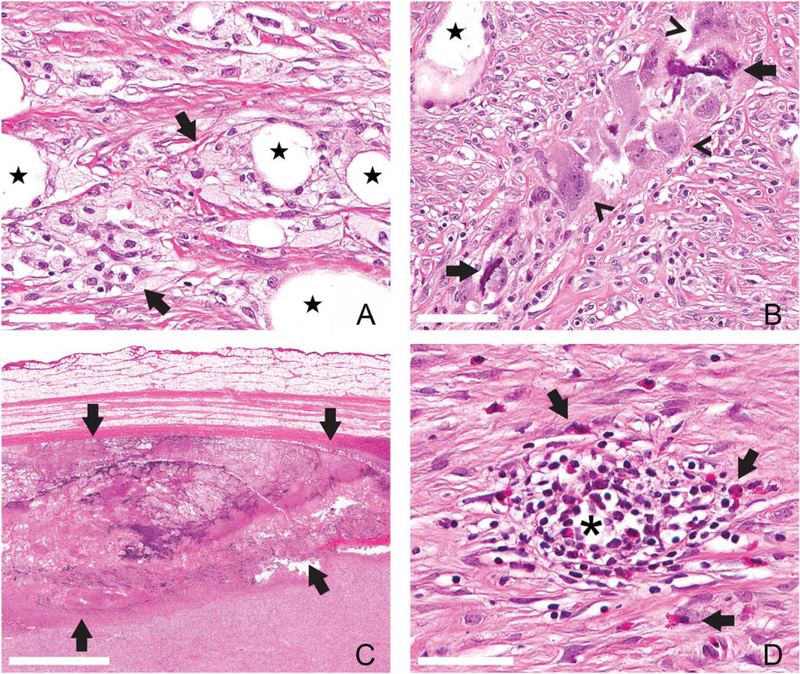
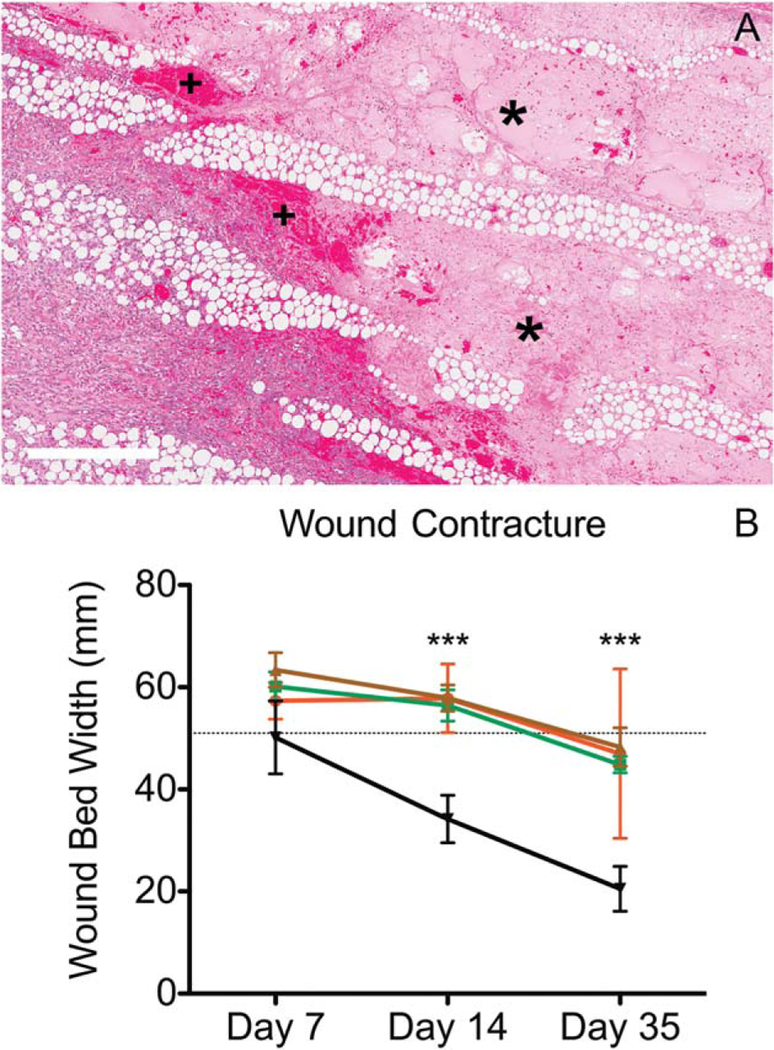
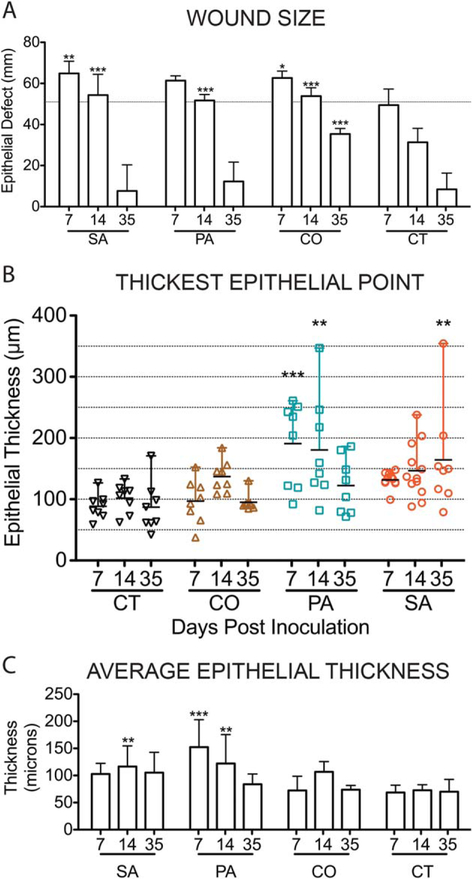
Chronic skin wounds are a significant human health concern and are often complicated by infection with Pseudomonas aeruginosa and Staphylococcus aureus, particularly methicillin resistant S. aureus (MRSA). Translating the knowledge gained from extensive study of virulence mechanisms and pathogenesis of these bacterial species to new treatment modalities has been lacking in part due to a paucity of animal models able to recapitulate human disease. Our groups recently described a novel porcine chronic burn wound model for the study of bacterial infection; however, the histopathology of infection has yet to be described. The objective of this study is to define the histopathology of this model using important human chronic wound bacterial isolates. Porcine full-thickness burn wounds topically inoculated with P. aeruginosa strain PAO1, MRSA S. aureus strain USA300 or both bacteria were used to define and quantify histopathologic lesions. The development of a systemic, well-defined rubric for analysis allowed for evaluation of differences between infection groups. These differences, which included epithelial migration and proliferation, stromal necrosis, fluid accumulation and intensity and character of the innate and adaptive inflammatory cell responses, were identified temporally between infection groups. Mono-species infected wounds developed a hyper-proliferative wound edge. Coinfected wounds at day 35 had the largest wound sizes, increased amounts of neutrophilic inflammation, immaturity of the wound bed, and retention of necrotic tissue. Infection, regardless of species, inhibited wound contracture at all time points evaluated. Most importantly, this model recapitulated key features of chronic human wounds. Thus, this model will allow researchers to study novel treatment modalities in a biologically relevant animal model while monitoring both host and bacterial responses.
慢性皮肤伤口是一个重大的人类健康问题,常因感染铜绿假单胞菌和金黄色葡萄球菌而复杂化,尤其是耐甲氧西林金黄色葡萄球菌(MRSA)。由于缺乏能够重现人类疾病的动物模型,将从对这些细菌物种的毒力机制和发病机制的广泛研究中获得的知识转化为新的治疗方法一直存在不足。我们的团队最近描述了一种用于研究细菌感染的新型猪慢性烧伤伤口模型;然而,感染的组织病理学尚未被描述。本研究的目的是使用重要的人类慢性伤口细菌分离株来定义该模型的组织病理学。用铜绿假单胞菌PAO1菌株、MRSA金黄色葡萄球菌USA300菌株或两种细菌局部接种的猪全层烧伤伤口用于定义和量化组织病理学病变。开发一种系统的、明确的分析标准允许评估感染组之间的差异。这些差异,包括上皮迁移和增殖、基质坏死、液体积聚以及先天性和适应性炎症细胞反应的强度和特征,在感染组之间随时间被识别出来。单物种感染的伤口形成了过度增殖的伤口边缘。在第35天,混合感染的伤口具有最大的伤口尺寸、嗜中性粒细胞炎症增加、伤口床不成熟以及坏死组织的残留。无论感染的物种如何,在所有评估的时间点,感染都抑制了伤口收缩。最重要的是,该模型重现了慢性人类伤口的关键特征。因此,该模型将使研究人员能够在生物学相关的动物模型中研究新的治疗方法,同时监测宿主和细菌的反应。