Lee Tristan J, Lee Jacob W, Haynes Elizabeth M, Eliceiri Kevin W, Halloran Mary C
Department of Zoology, University of Wisconsin-MadisonMadison, WI, USA.
Department of Neuroscience, University of Wisconsin-MadisonMadison, WI, USA.
Front Cell Neurosci. 2017 Apr 20;11:107. doi: 10.3389/fncel.2017.00107. eCollection 2017.
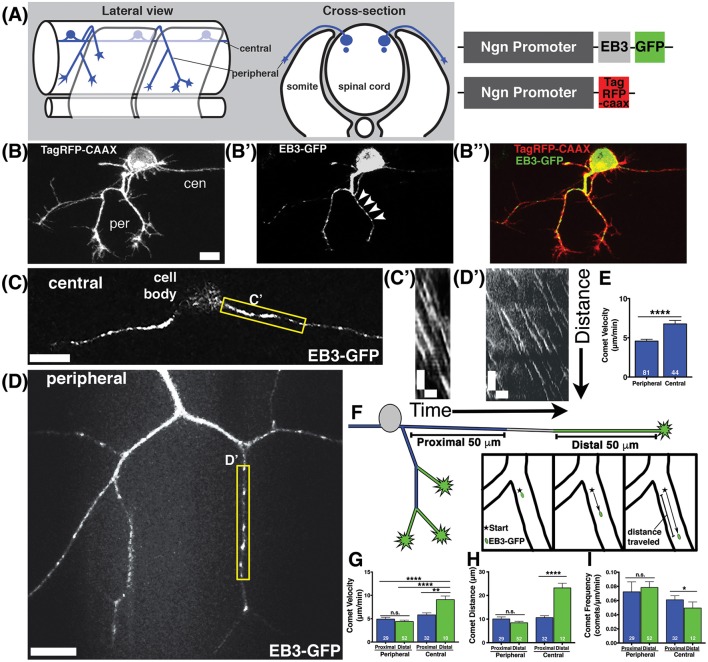
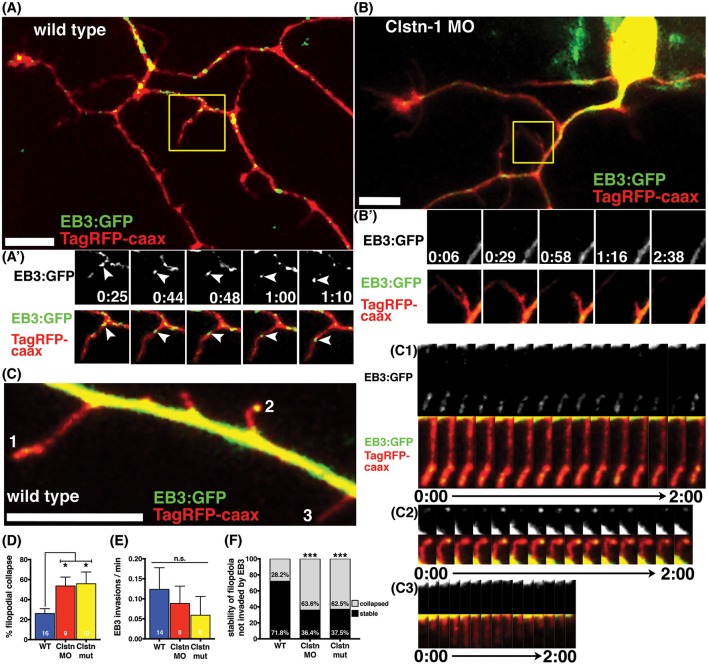
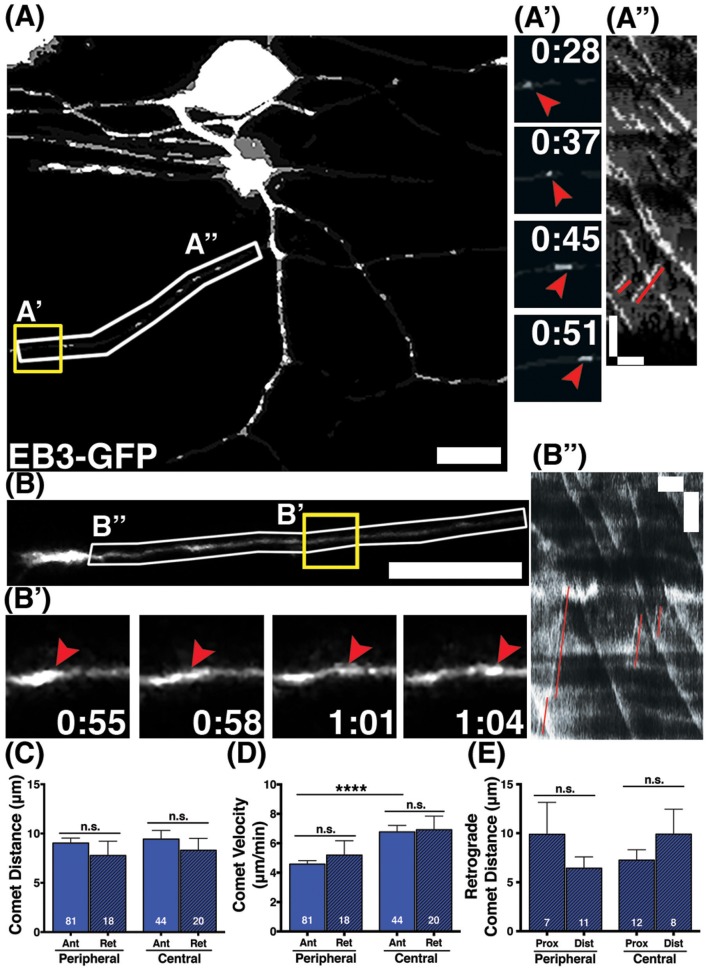
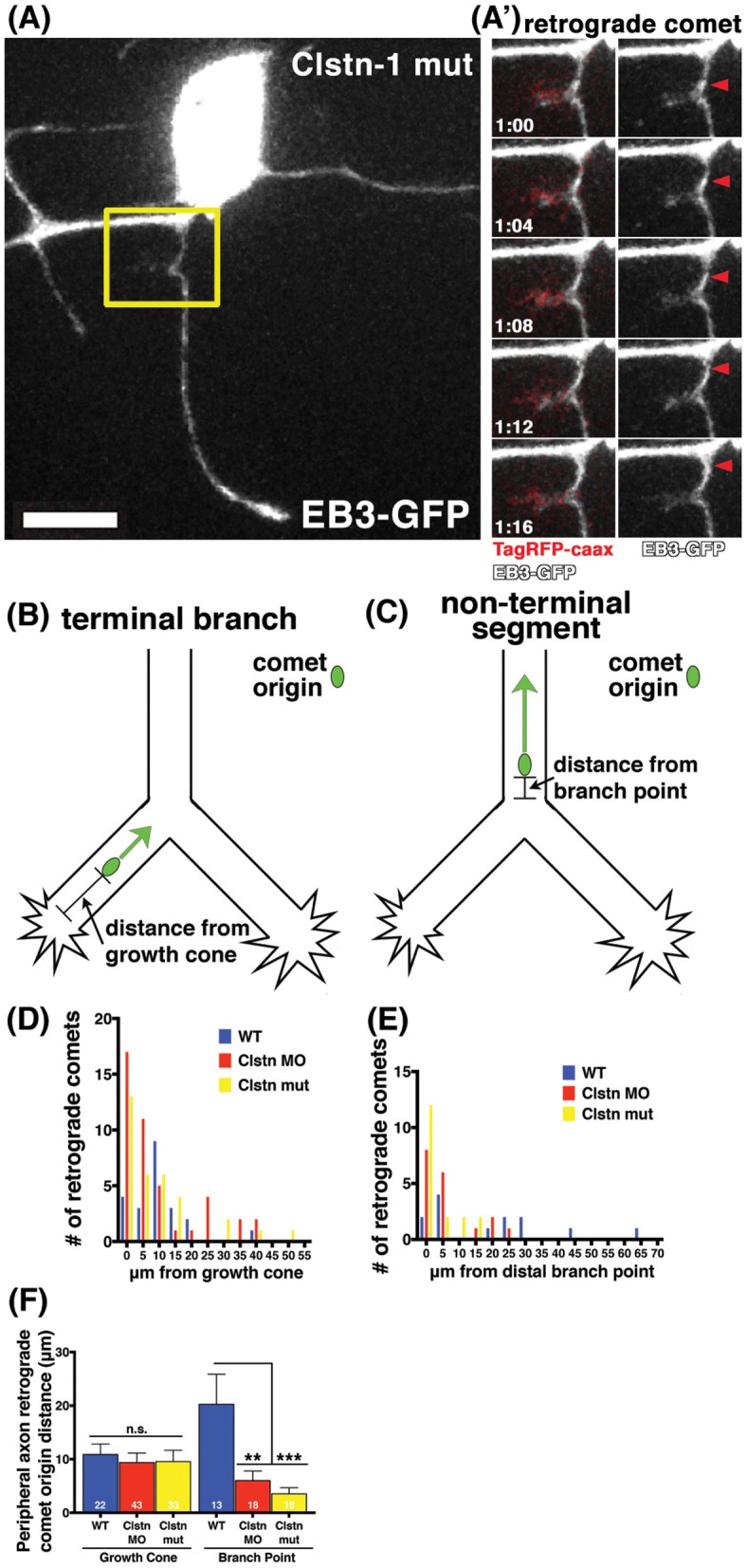
Axon growth and branching, and development of neuronal polarity are critically dependent on proper organization and dynamics of the microtubule (MT) cytoskeleton. MTs must organize with correct polarity for delivery of diverse cargos to appropriate subcellular locations, yet the molecular mechanisms regulating MT polarity remain poorly understood. Moreover, how an actively branching axon reorganizes MTs to direct their plus ends distally at branch points is unknown. We used high-speed, imaging of polymerizing MT plus ends to characterize MT dynamics in developing sensory axon arbors in zebrafish embryos. We find that axonal MTs are highly dynamic throughout development, and that the peripheral and central axons of sensory neurons show differences in MT behaviors. Furthermore, we show that Calsyntenin-1 (Clstn-1), a kinesin adaptor required for sensory axon branching, also regulates MT polarity in developing axon arbors. In wild type neurons the vast majority of MTs are directed in the correct plus-end-distal orientation from early stages of development. Loss of Clstn-1 causes an increase in MTs polymerizing in the retrograde direction. These misoriented MTs most often are found near growth cones and branch points, suggesting Clstn-1 is particularly important for organizing MT polarity at these locations. Together, our results suggest that Clstn-1, in addition to regulating kinesin-mediated cargo transport, also organizes the underlying MT highway during axon arbor development.
轴突的生长与分支以及神经元极性的发育,严重依赖于微管(MT)细胞骨架的正确组织和动态变化。微管必须以正确的极性进行组织,以便将各种货物运输到合适的亚细胞位置,然而调节微管极性的分子机制仍知之甚少。此外,活跃分支的轴突如何在分支点重新组织微管,以将其正端向远端引导,目前尚不清楚。我们利用高速成像技术观察聚合微管正端的动态变化,以表征斑马鱼胚胎发育中的感觉轴突分支中的微管动态。我们发现轴突微管在整个发育过程中高度动态,并且感觉神经元的外周和中枢轴突在微管行为上存在差异。此外,我们表明,钙结合蛋白-1(Clstn-1)是感觉轴突分支所需的驱动蛋白适配器,它也调节发育中的轴突分支中的微管极性。在野生型神经元中,从发育早期开始,绝大多数微管就以正确的正端向远端方向定向。Clstn-1的缺失导致逆行方向聚合的微管增加。这些方向错误的微管最常出现在生长锥和分支点附近,这表明Clstn-1对于在这些位置组织微管极性尤为重要。总之,我们的结果表明,Clstn-1除了调节驱动蛋白介导的货物运输外,还在轴突分支发育过程中组织潜在的微管通道。