Beghè Deborah, Dall'Asta Luca, Garavelli Claudia, Pastorelli Augusto Alberto, Muscarella Marilena, Saccani Gloria, Aiello Marina, Crisafulli Ernesto, Corradi Massimo, Stacchini Paolo, Chetta Alfredo, Bertorelli Giuseppina
Department of Food and Drug, University of Parma, Parma, Italy.
Department of Applied Science and Technology, Polytechnic University of Turin, Turin, Italy.
PLoS One. 2017 May 5;12(5):e0176859. doi: 10.1371/journal.pone.0176859. eCollection 2017.
Sarcoidosis is a systemic granulomatous inflammatory disease whose causes are still unknown and for which epidemiological data are often discordant. The aim of our study is to investigate prevalence and spatial distribution of cases, and identify environmental exposures associated with sarcoidosis in an Italian province.
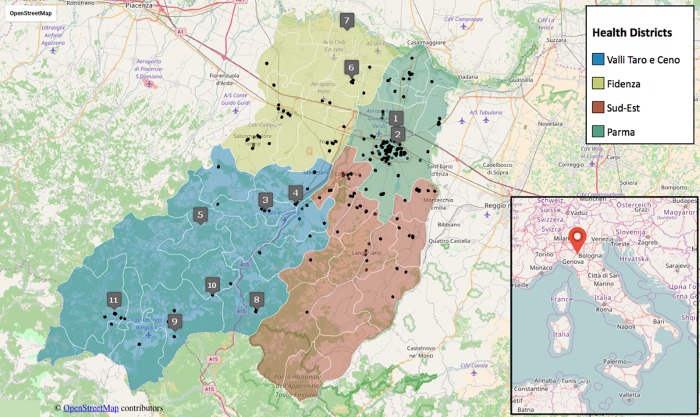
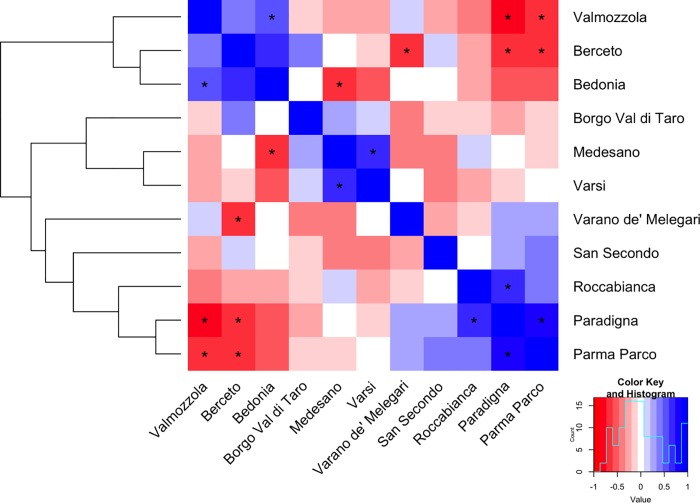
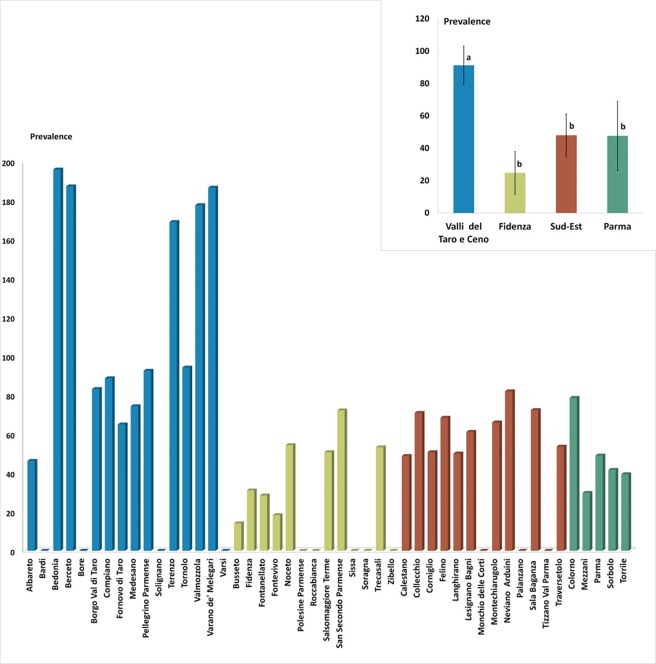
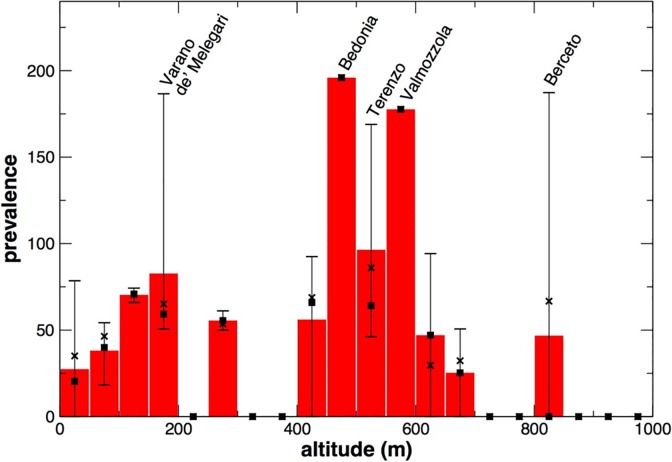
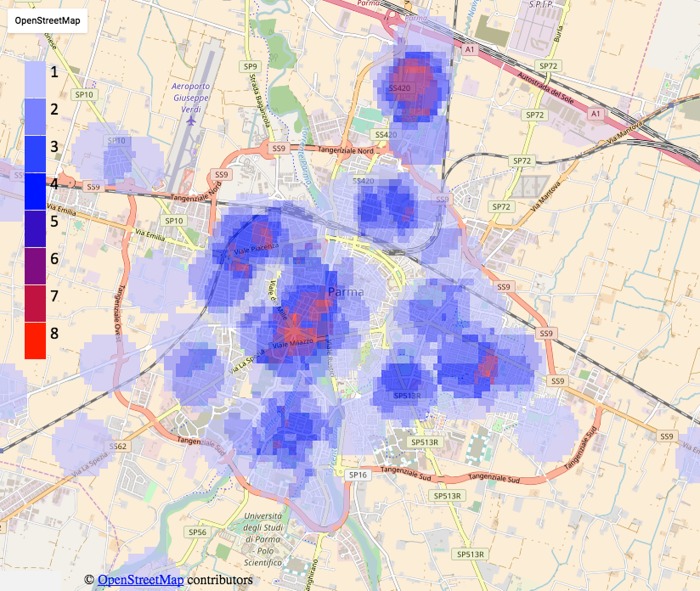
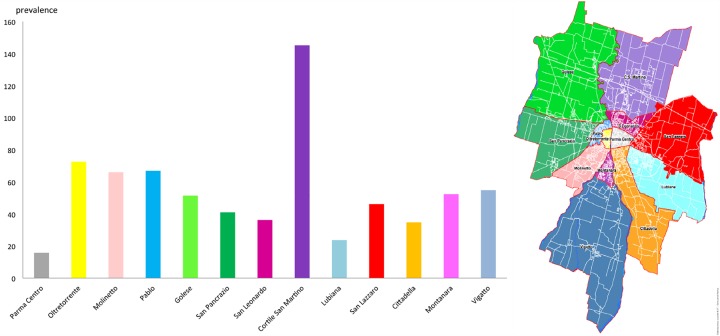
After georeferentiation of cases, the area under study was subdivided with respect to Municipality and Health Districts and to the altitude in order to identify zonal differences in prevalence. The bioaccumulation levels of 12 metals in lichen tissues were analyzed, in order to determine sources of air pollution. Finally, the analysis of the correlation between metals and between pickup stations was performed.
223 patients were identified (58.3% female and 41.7% male of total) and the mean age was 50.6±15.4 years (53.5±15.5 years for the females and 46.5±14.4 for the males). The mean prevalence was 49 per 100.000 individuals. However, we observed very heterogeneous prevalence in the area under study. The correlations among metals revealed different deposition patterns in lowland area respect to hilly and mountain areas.
The study highlights a high prevalence of sarcoidosis cases, characterized by a very inhomogeneous and patchy distribution with phenomena of local aggregation. Moreover, the bioaccumulation analysis was an effective method to identify the mineral particles that mostly contribute to air pollution in the different areas, but it was not sufficient to establish a clear correlation between the onset of sarcoidosis and environmental risk factors.
结节病是一种全身性肉芽肿性炎症性疾病,其病因尚不明确,流行病学数据也常常不一致。我们研究的目的是调查意大利一个省份结节病病例的患病率和空间分布,并确定与结节病相关的环境暴露因素。
对病例进行地理定位后,根据市镇、卫生区和海拔高度对研究区域进行细分,以确定患病率的区域差异。分析地衣组织中12种金属的生物累积水平,以确定空气污染来源。最后,对金属之间以及采样点之间的相关性进行分析。
共识别出223例患者(女性占总数的58.3%,男性占41.7%),平均年龄为50.6±15.4岁(女性为53.5±15.5岁,男性为46.5±14.4岁)。平均患病率为每10万人中有49例。然而,我们在研究区域观察到患病率差异很大。金属之间的相关性显示,低地地区与丘陵和山区的沉积模式不同。
该研究突出了结节病病例的高患病率,其特点是分布极不均匀且呈斑块状,并存在局部聚集现象。此外,生物累积分析是识别不同区域主要造成空气污染的矿物颗粒的有效方法,但不足以明确结节病的发病与环境危险因素之间的相关性。