Jiang Ming, Sun Liang, Feng Dong-Xia, Yu Zheng-Quan, Gao Rong, Sun Yuan-Zhao, Chen Gang
Department of Neurosurgery & Brain and Nerve Research Laboratory, the First Affiliated Hospital of Soochow University, Suzhou, Jiangsu Province, China.
Scott & White Clinic-Temple, Temple, TX, USA.
Med Gas Res. 2017 Mar 30;7(1):48-55. doi: 10.4103/2045-9912.202910. eCollection 2017 Jan-Mar.
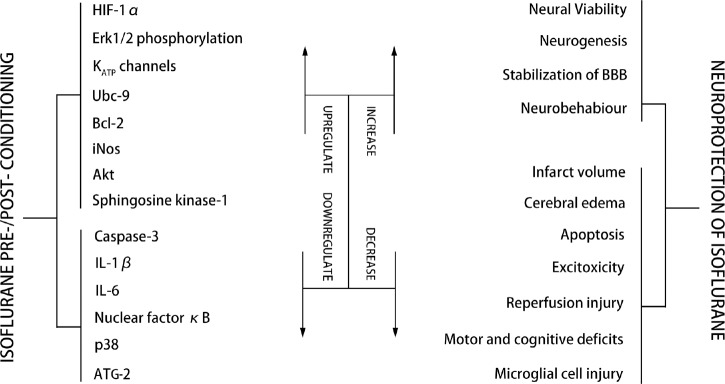
Isoflurane, a volatile and inhalational anesthetic, has been extensively used in perioperative period for several decades. A large amount of experimental studies have indicated that isoflurane exhibits neuroprotective properties when it is administrated before or after (pre-conditioning and post-conditioning) neurodegenerative diseases (., hypoxic ischemia, stroke and trauma). Multiple mechanisms are involved in isoflurane induced neuroprotection, including activation of glycine and γ-aminobutyric acid receptors, antagonism of ionic channels and alteration of the function and activity of other cellular proteins. Although neuroprotection provided by isoflurane is observed in many animal studies, convincing evidence is lacking in human trials. Therefore, there is still a long way to go before translating its neuroprotective properties into clinical practice.
异氟烷是一种挥发性吸入性麻醉剂,几十年来一直在围手术期广泛使用。大量实验研究表明,在神经退行性疾病(如缺氧缺血、中风和创伤)之前或之后(预处理和后处理)给予异氟烷,它具有神经保护特性。异氟烷诱导神经保护涉及多种机制,包括甘氨酸和γ-氨基丁酸受体的激活、离子通道的拮抗作用以及其他细胞蛋白功能和活性的改变。尽管在许多动物研究中观察到了异氟烷提供的神经保护作用,但人体试验中缺乏令人信服的证据。因此,将其神经保护特性转化为临床实践仍有很长的路要走。