Won Jinyoung, Khan Zeeshan Ahmad, Hong Yonggeun
Department of Rehabilitation Science, Graduate School of Inje University, 197 Inje-ro, Gimhae, Gyeong-nam, 50834, Republic of Korea.
Research Center for Aged-life Redesign (RCAR), Inje University, Gimhae, Republic of Korea.
Lab Anim Res. 2023 Jun 1;39(1):11. doi: 10.1186/s42826-023-00163-6.
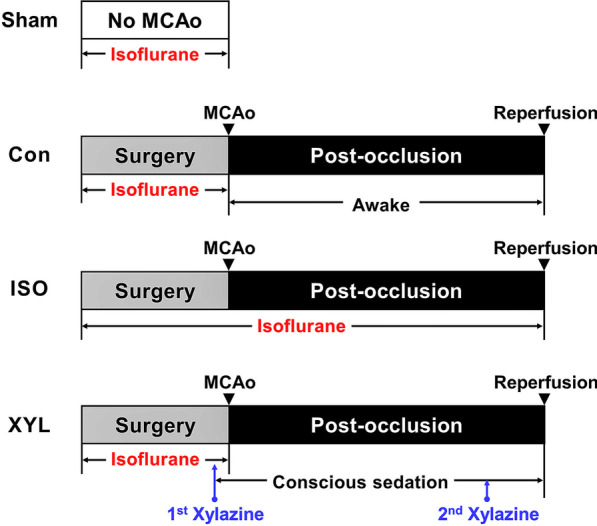
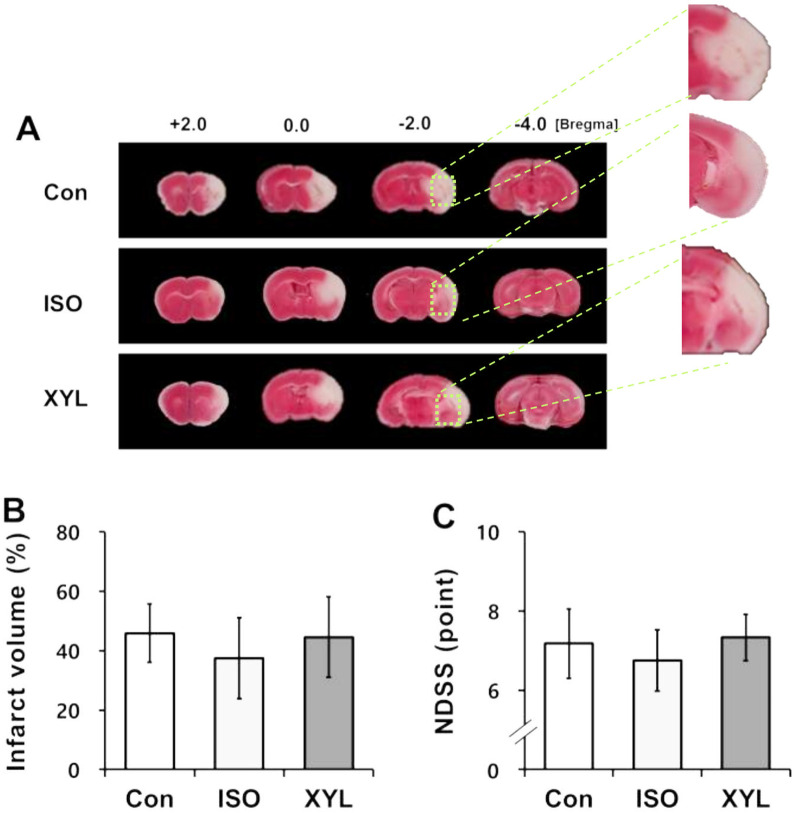
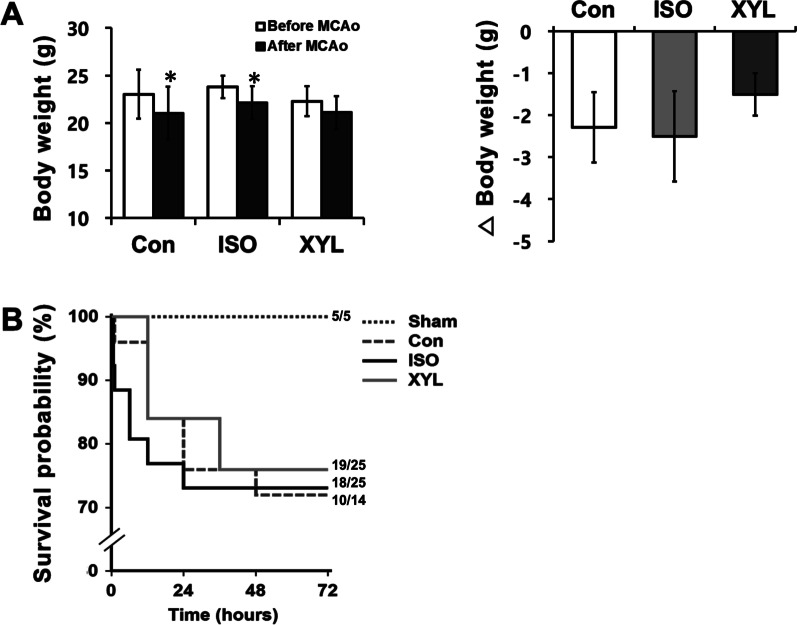
Preclinical ischemic stroke studies extensively utilize the intraluminal suture method of middle cerebral artery occlusion (MCAo). General anesthesia administration is an essential step for MCAo, but anesthetic agents can lead to adverse effects causing death and making a considerable impact on inducing cerebral ischemia. The purpose of this study was to comparatively assess the effect of isoflurane and xylazine on transient cerebral ischemia in a mouse model of MCAo. Twenty animals were randomly divided into four groups: sham group (no MCAo), control group (MCAo under isoflurane, no agent till reperfusion), isoflurane group (MCAo under isoflurane continued till reperfusion), xylazine group (MCAo under isoflurane, and administration of xylazine till reperfusion). The survival rate, brain infarct volume, and neurologic deficits were studied to assess the effect of isoflurane and xylazine on the stroke model. Our results showed that the body weight showed statistically significant change before and 24 h after surgery in the control and Isoflurane groups, but no difference in the Xylazine group. Also, the survival rate, brain infarct volume, and neurologic deficits were slightly reduced in the isoflurane group at 24 h after reperfusion injury. However, the xylazine and control groups showed similar BIV and neurologic deficits. Interestingly, a high survival rate was observed in the xylazine group. Our results indicate that the modified method of inhalation anesthetics combined with xylazine can reduce the risk of mortality and develop a reproducible MCAo model with predictable brain ischemia. In addition, extended isoflurane anesthesia after MCAo is associated with the risk of mortality.
临床前缺血性中风研究广泛采用大脑中动脉闭塞(MCAo)的腔内缝合方法。全身麻醉给药是MCAo的一个重要步骤,但麻醉剂可能会导致不良反应,引起死亡,并对诱导脑缺血产生相当大的影响。本研究的目的是比较评估异氟烷和赛拉嗪对MCAo小鼠模型短暂性脑缺血的影响。将20只动物随机分为四组:假手术组(未进行MCAo)、对照组(异氟烷麻醉下进行MCAo,再灌注前不使用其他药物)、异氟烷组(异氟烷麻醉下进行MCAo并持续至再灌注)、赛拉嗪组(异氟烷麻醉下进行MCAo,再灌注前给予赛拉嗪)。研究存活率、脑梗死体积和神经功能缺损,以评估异氟烷和赛拉嗪对中风模型的影响。我们的结果表明,对照组和异氟烷组术后24小时体重有统计学显著变化,但赛拉嗪组无差异。此外,再灌注损伤后24小时,异氟烷组的存活率、脑梗死体积和神经功能缺损略有降低。然而,赛拉嗪组和对照组的脑梗死体积和神经功能缺损相似。有趣的是,赛拉嗪组观察到较高的存活率。我们的结果表明,吸入麻醉剂与赛拉嗪联合使用的改良方法可以降低死亡率风险,并建立一个具有可预测脑缺血的可重复MCAo模型。此外,MCAo后延长异氟烷麻醉与死亡风险相关。