Muppala S, Xiao R, Krukovets I, Verbovetsky D, Yendamuri R, Habib N, Raman P, Plow E, Stenina-Adognravi O
Department of Molecular Cardiology, Cleveland Clinic, Cleveland, OH, USA.
Department of Integrative Medical Sciences, North Ohio Medical University, Rootstown, OH, USA.
Oncogene. 2017 Sep 7;36(36):5189-5198. doi: 10.1038/onc.2017.140. Epub 2017 May 8.
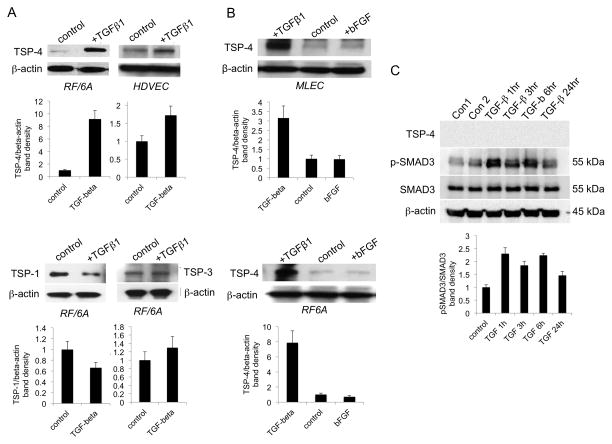
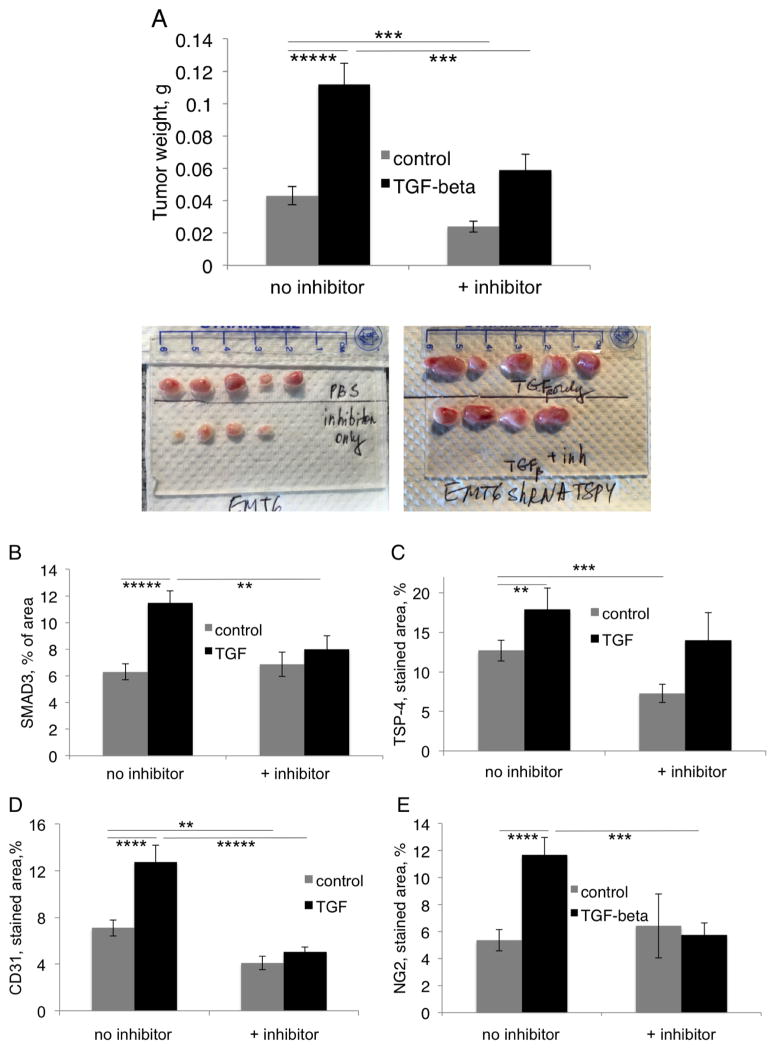
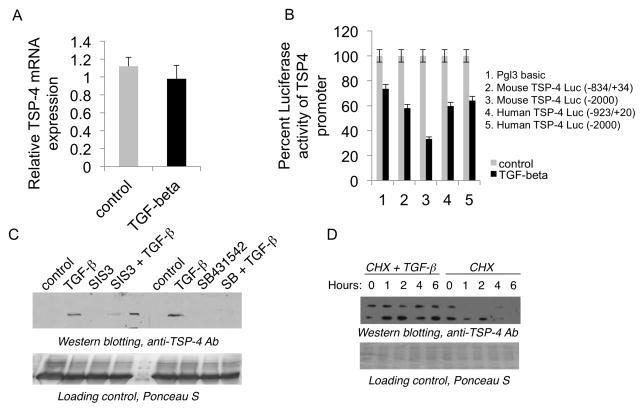
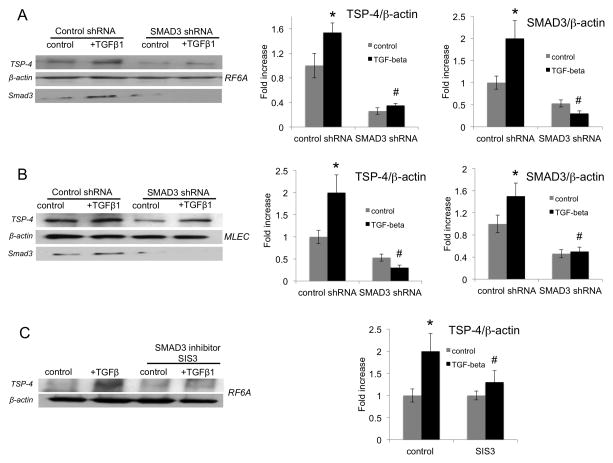
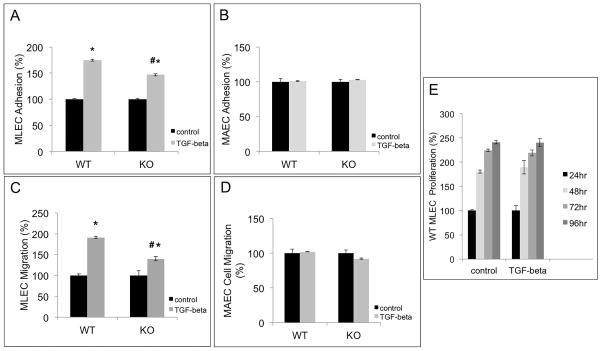
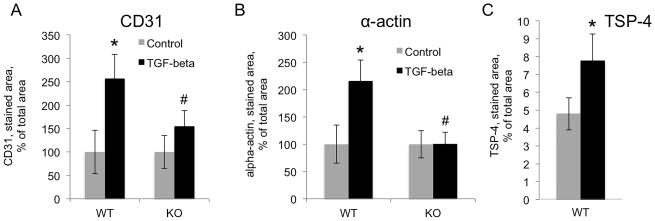
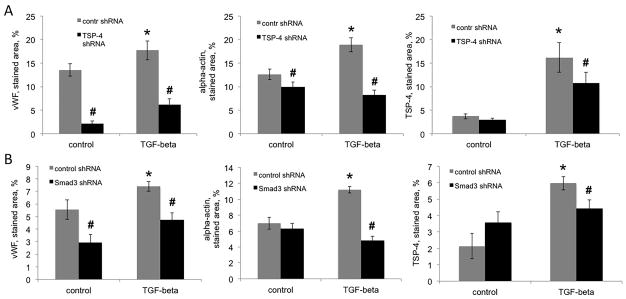
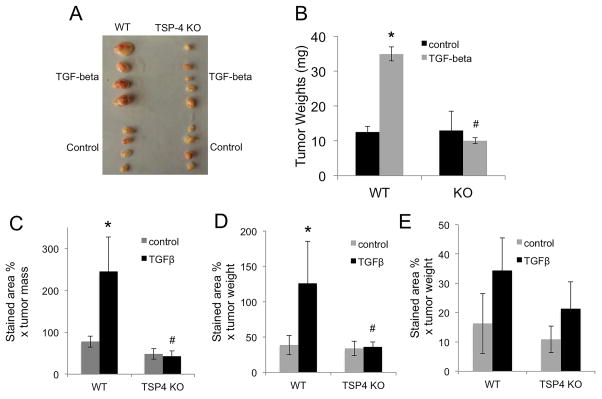
TGF-β is a multifunctional cytokine affecting many cell types and implicated in tissue remodeling processes. Due to its many functions and cell-specific effects, the consequences of TGF-β signaling are process-and stage-dependent, and it is not uncommon that TGF-β exerts distinct and sometimes opposing effects on a disease progression depending on the stage and on the pathological changes associated with the stage. The mechanisms underlying cell- and process-specific effects of TGF-β are poorly understood. We are describing a novel pathway that mediates induction of angiogenesis in response to TGF-β1. We found that in endothelial cells (EC) thrombospondin-4 (TSP-4), a secreted extracellular matrix (ECM) protein, is upregulated in response to TGF-β1 and mediates the effects of TGF-β1 on angiogenesis. Upregulation of TSP-4 does not require the synthesis of new protein, is not caused by decreased secretion of TSP-4, and is mediated by activation of SMAD3. Using Thbs4 mice and TSP-4 shRNA, we found that TSP-4 mediated pro-angiogenic functions in cultured EC and angiogenesis in vivo in response to TGF-β1. We observed~3-fold increases in tumor mass and levels of angiogenesis markers in animals injected with TGF-β1, and these effects did not occur in Thbs4 animals. Injections of an inhibitor of TGF-β1 signaling SB-431542 also decreased the weights of tumors and cancer angiogenesis. Our results from in vivo angiogenesis models and cultured EC document that TSP-4 mediates upregulation of angiogenesis by TGF-β1. Upregulation of pro-angiogenic TSP-4 and selective effects of TSP-4 on EC may contribute to stimulation of tumor growth by TGF-β despite the inhibition of cancer cell proliferation.
转化生长因子-β(TGF-β)是一种多功能细胞因子,可影响多种细胞类型,并参与组织重塑过程。由于其具有多种功能和细胞特异性效应,TGF-β信号传导的后果因过程和阶段而异,TGF-β根据疾病阶段以及与该阶段相关的病理变化对疾病进展产生不同甚至有时相反的影响并不罕见。TGF-β细胞特异性和过程特异性效应的潜在机制尚不清楚。我们正在描述一种介导对TGF-β1作出反应诱导血管生成的新途径。我们发现,在内皮细胞(EC)中,血小板反应蛋白-4(TSP-4),一种分泌的细胞外基质(ECM)蛋白,会因TGF-β1而上调,并介导TGF-β1对血管生成的影响。TSP-4的上调不需要合成新蛋白质,不是由TSP-4分泌减少引起的,而是由SMAD3的激活介导的。使用Thbs4基因敲除小鼠和TSP-4短发夹RNA,我们发现TSP-4介导培养的内皮细胞中的促血管生成功能以及体内对TGF-β1作出反应的血管生成。我们观察到,注射TGF-β1的动物肿瘤质量和血管生成标志物水平增加了约3倍,而这些效应在Thbs4基因敲除动物中未出现。注射TGF-β1信号抑制剂SB-431542也会降低肿瘤重量和癌症血管生成。我们在体内血管生成模型和培养的内皮细胞中的结果证明,TSP-4介导TGF-β1对血管生成的上调。促血管生成的TSP-4的上调以及TSP-4对内皮细胞的选择性作用可能有助于TGF-β刺激肿瘤生长,尽管它抑制癌细胞增殖。