Teng Huajing, Zhang Yaohua, Shi Chengmin, Mao Fengbiao, Cai Wanshi, Lu Liang, Zhao Fangqing, Sun Zhongsheng, Zhang Jianxu
The State Key Laboratory of Integrated Management of Pest Insects and Rodents, Institute of Zoology, Chinese Academy of Sciences, Beijing, China.
Beijing Institutes of Life Science, Chinese Academy of Sciences, Beijing, China.
Mol Biol Evol. 2017 Sep 1;34(9):2214-2228. doi: 10.1093/molbev/msx157.
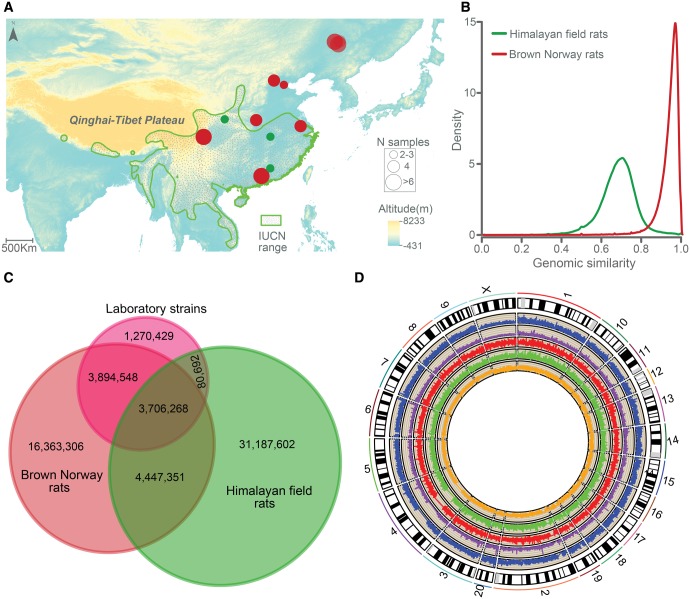
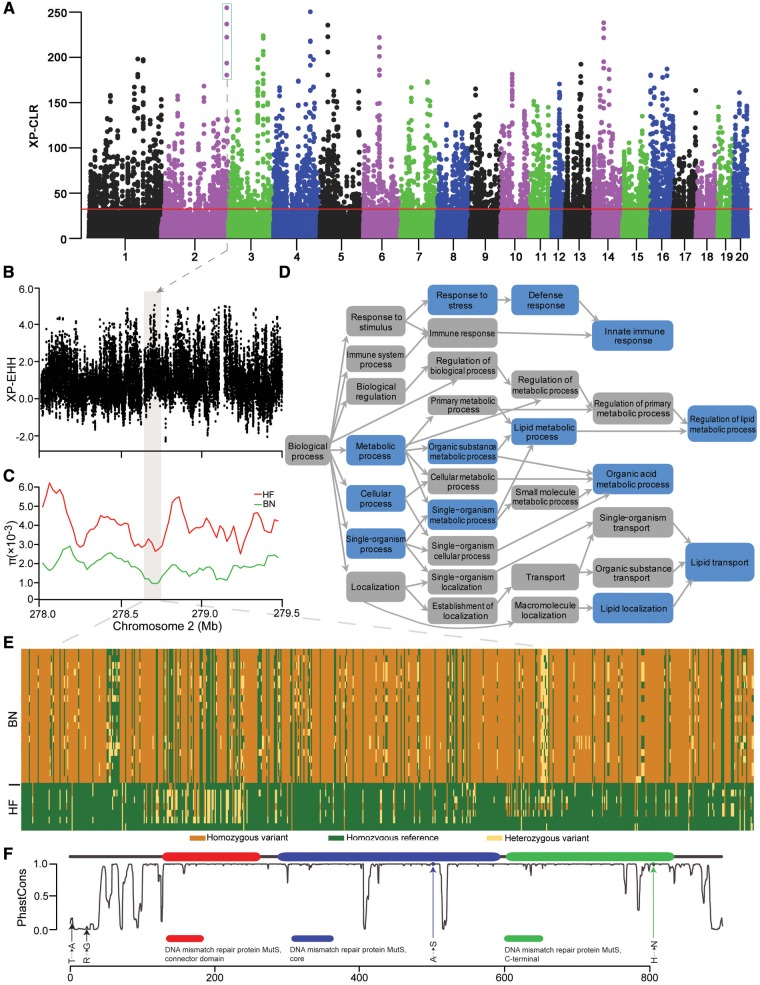
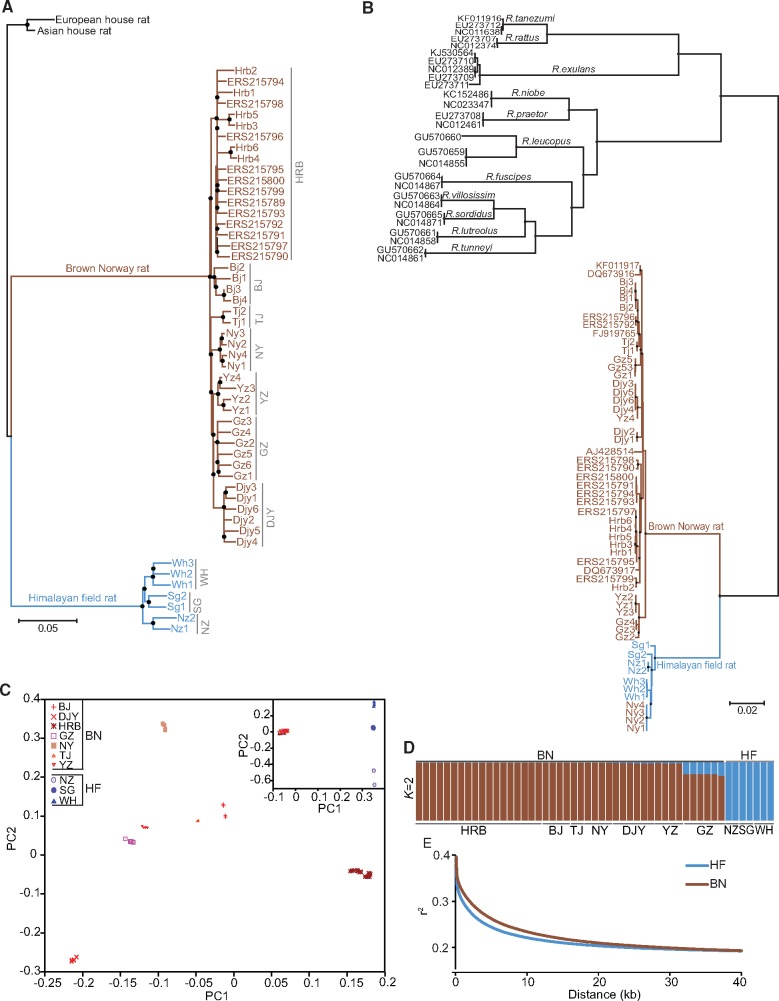
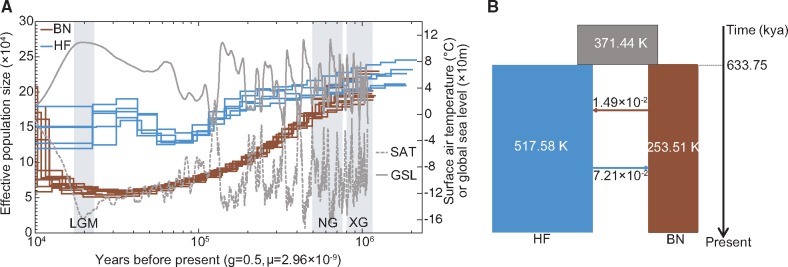
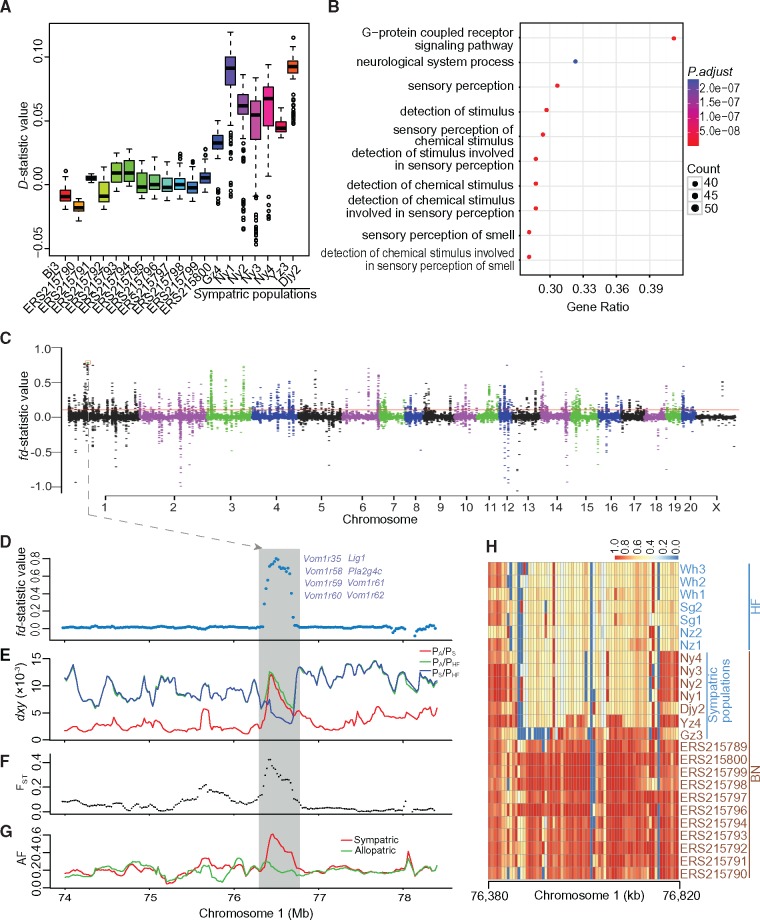
Murine rodents are excellent models for study of adaptive radiations and speciation. Brown Norway rats (Rattus norvegicus) are successful global colonizers and the contributions of their domesticated laboratory strains to biomedical research are well established. To identify nucleotide-based speciation timing of the rat and genomic information contributing to its colonization capabilities, we analyzed 51 whole-genome sequences of wild-derived Brown Norway rats and their sibling species, R. nitidus, and identified over 20 million genetic variants in the wild Brown Norway rats that were absent in the laboratory strains, which substantially expand the reservoir of rat genetic diversity. We showed that divergence of the rat and its siblings coincided with drastic climatic changes that occurred during the Middle Pleistocene. Further, we revealed that there was a geographically widespread influx of genes between Brown Norway rats and the sibling species following the divergence, resulting in numerous introgressed regions in the genomes of admixed Brown Norway rats. Intriguing, genes related to chemical communications among these introgressed regions appeared to contribute to the population-specific adaptations of the admixed Brown Norway rats. Our data reveals evolutionary history of the Brown Norway rat, and offers new insights into the role of climatic changes in speciation of animals and the effect of interspecies introgression on animal adaptation.
鼠类是研究适应性辐射和物种形成的优秀模型。褐家鼠(Rattus norvegicus)是成功的全球殖民者,其驯化的实验室品系对生物医学研究的贡献已得到充分证实。为了确定大鼠基于核苷酸的物种形成时间以及有助于其殖民能力的基因组信息,我们分析了51个野生来源的褐家鼠及其近缘物种黑家鼠(R. nitidus)的全基因组序列,并在野生褐家鼠中鉴定出超过2000万个实验室品系中不存在的遗传变异,这极大地扩展了大鼠遗传多样性的储备。我们发现大鼠与其近缘物种的分化与中更新世期间发生的剧烈气候变化相吻合。此外,我们还揭示,分化后褐家鼠与近缘物种之间存在广泛的基因流入,导致杂交褐家鼠基因组中出现大量渗入区域。有趣的是,这些渗入区域中与化学通讯相关的基因似乎促成了杂交褐家鼠群体特异性的适应性。我们的数据揭示了褐家鼠的进化历史,并为气候变化在动物物种形成中的作用以及种间基因渗入对动物适应性的影响提供了新的见解。