Wang Jixiang, Wang Yunyun, Qiu Hao, Sun Lin, Dai Xiaohui, Pan Jianming, Yan Yongsheng
School of Chemistry and Chemical Engineering, Jiangsu University, Zhenjiang 212013, People's Republic of China.
Institute of Green Chemistry and Chemical Technology, Jiangsu University, Zhenjiang 212013, People's Republic of China.
Sci Rep. 2017 May 9;7:46635. doi: 10.1038/srep46635.
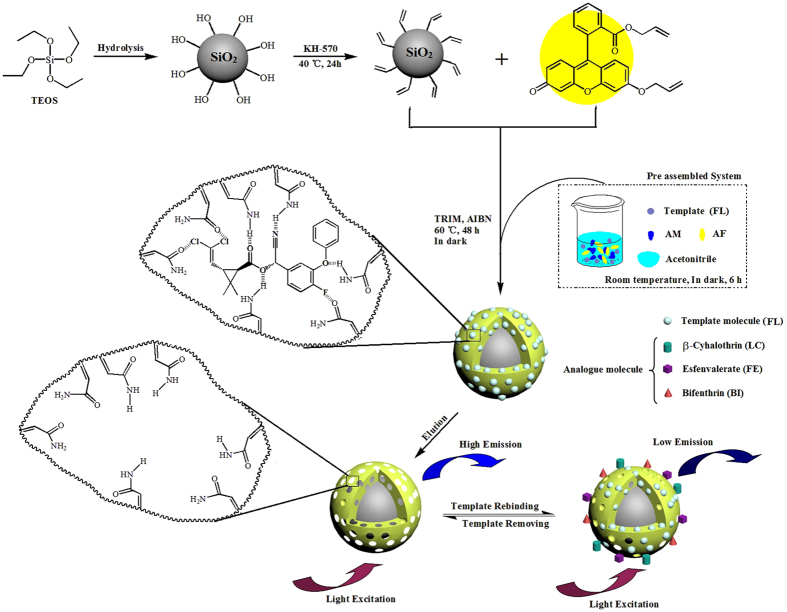
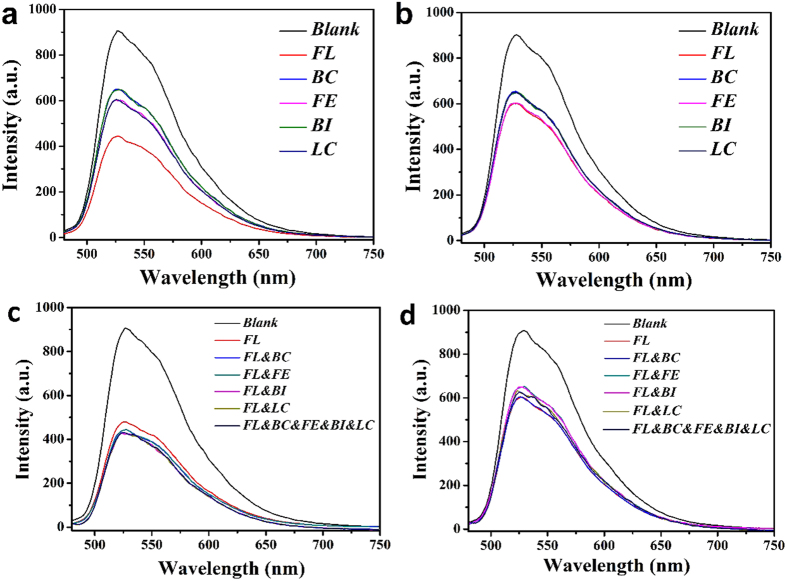
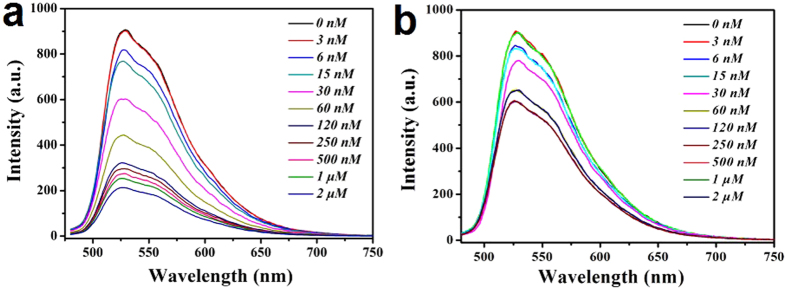
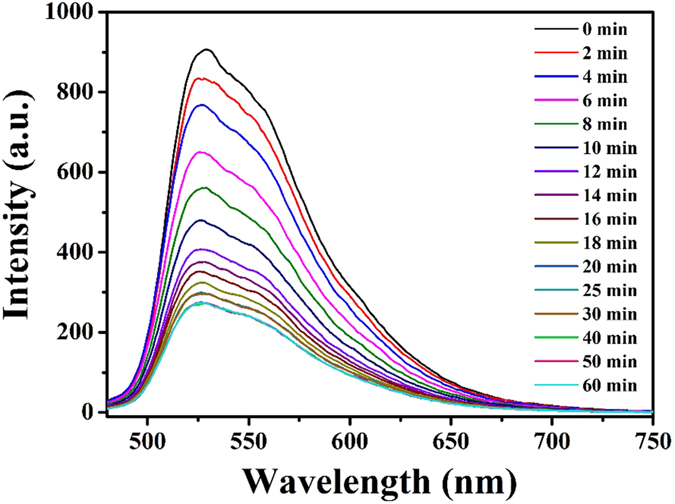
Fluorescent molecularly imprinted polymers have shown great promise in biological or chemical separations and detection, due to their high stability, selectivity and sensitivity. In this work, fluorescent molecularly imprinted microsphere was synthesized via precipitation polymerization, which could separate efficiently and rapidly detect τ-fluvalinate (a toxic insecticide) in water samples, was reported. The fluorescent imprinted sensor showed excellent stability, outstanding selectivity and the limit of detection low to 12.14 nM, good regeneration ability which still kept good sensitivity after 8 cycling experiments and fluorescence quenching mechanism was illustrated in details. In addition, the fluorescent sensor was further used to detect τ-fluvalinate in real samples from Taihu Lake. Despite the relatively complex components of the environment water, the fluorescent imprinted microspheres sitll showed good recovery, clearly demonstrating the potental value of this smart sensor nanomaterial in environment monitoring.
荧光分子印迹聚合物因其高稳定性、选择性和灵敏度,在生物或化学分离与检测中展现出巨大潜力。本文报道了通过沉淀聚合法合成荧光分子印迹微球,该微球能有效分离并快速检测水样中的氟胺氰菊酯(一种有毒杀虫剂)。该荧光印迹传感器表现出优异的稳定性、出色的选择性,检测限低至12.14 nM,具有良好的再生能力,在8次循环实验后仍保持良好的灵敏度,并详细阐述了荧光猝灭机制。此外,该荧光传感器还被进一步用于检测太湖实际水样中的氟胺氰菊酯。尽管环境水样成分相对复杂,但荧光印迹微球仍表现出良好的回收率,清楚地证明了这种智能传感器纳米材料在环境监测中的潜在价值。