Zhang Hongna, Shen Jiyuan, Wei Yongzan, Chen Houbin
College of Horticulture, South China Agricultural University, Guangzhou, 510642, China.
Key Laboratory of Tropical Fruit Biology (Ministry of Agriculture), South Subtropical Crops Research Institute, Chinese Academy of Tropical Agricultural Sciences, Zhanjiang, 524091, China.
BMC Genomics. 2017 May 10;18(1):363. doi: 10.1186/s12864-017-3747-x.
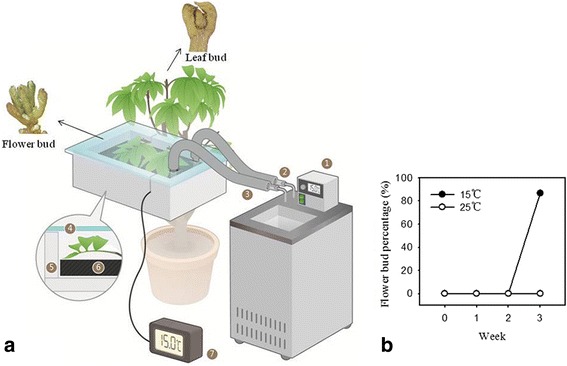
Litchi (Litchi chinensis Sonn.) is an economically important evergreen fruit tree widely cultivated in subtropical areas. Low temperature is absolutely required for floral induction of litchi, but its molecular mechanism is not fully understood. Leaves of litchi played a key role during floral induction and could be the site of low temperature perception. Therefore, leaves were treated under different temperature (15 °C/25 °C), and high-throughput RNA sequencing (RNA-Seq) performed with leaf samples for the de novo assembly and digital gene expression (DGE) profiling analyses to investigate low temperature-induced gene expression changes.
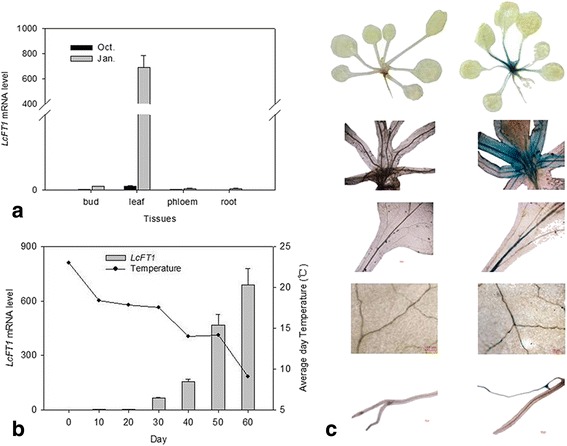
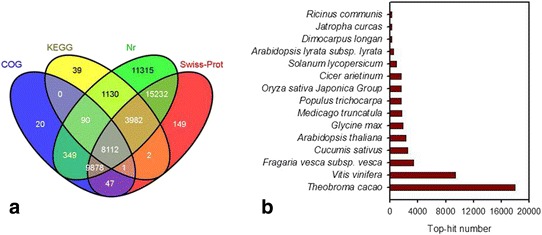
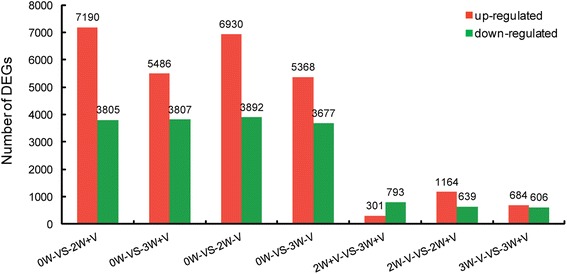
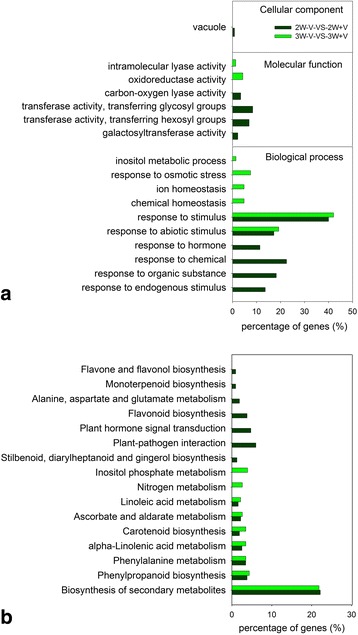
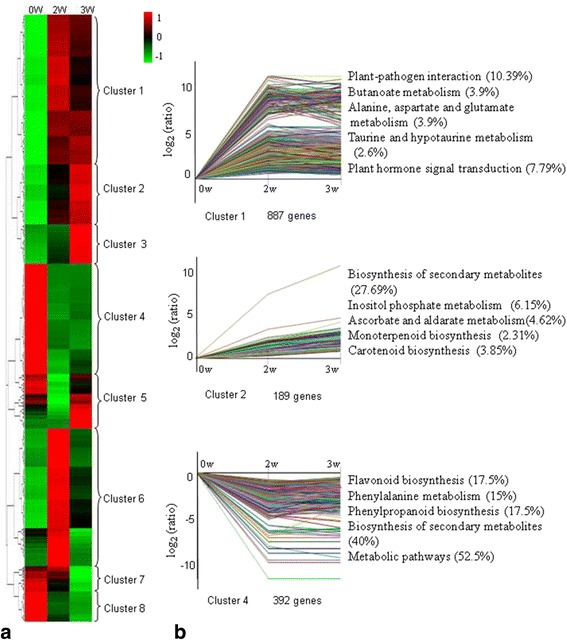
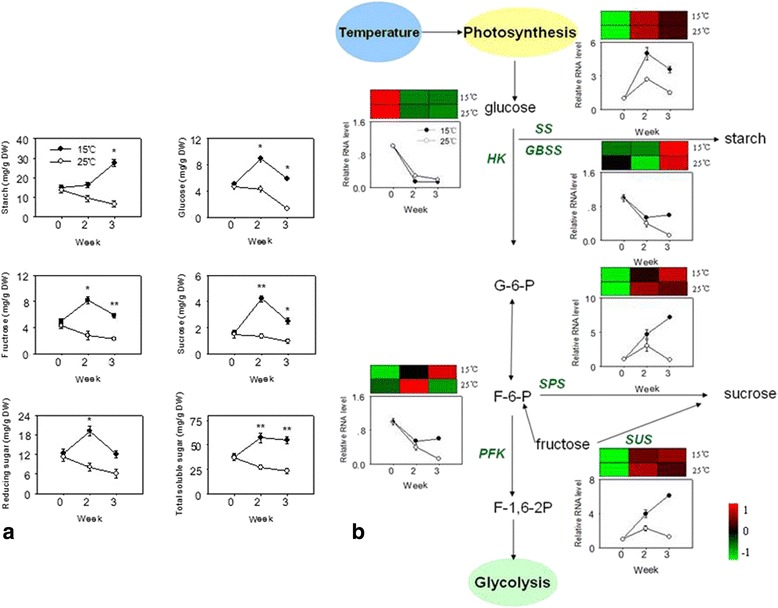
83,107 RNA-Seq unigenes were de novo assembled with a mean length of 1221 bp and approximately 61% of these unigenes (50,345) were annotated against public protein databases. Differentially-expressed genes (DEGs) under low temperature treatment in comparison with the control group were the main focus of our study. Hierarchical clustering analysis arranged 2755 DEGs into eight groups with three significant expression clusters (p-value ≤ 0.05) during floral induction. With the increasing contents of sugars and starch, the expression of genes involved in metabolism of sugars increased dramatically after low temperature induction. One FT gene (Unigene0025396, LcFT1) which produces a protein called 'florigen' was also detected among DEGs of litchi. LcFT1 exhibited an apparent specific tissue and its expression was highly increased after low temperature induction, GUS staining results also showed GUS activity driven by LcFT1 gene promoter can be induced by low temperature, which indicated LcFT1 probably played a pivotal role in the floral induction of litchi under low temperature.
Our study provides a global survey of transcriptomes to better understand the molecular mechanisms underlying changes of leaves in response to low temperature induction in litchi. The analyses of transcriptome profiles and physiological indicators will help us study the complicated metabolism of floral induction in the subtropic evergreen plants.
荔枝(Litchi chinensis Sonn.)是一种具有重要经济价值的常绿果树,广泛种植于亚热带地区。荔枝的花芽分化绝对需要低温,但对其分子机制尚未完全了解。荔枝叶片在花芽分化过程中起关键作用,可能是低温感知的部位。因此,对叶片进行不同温度(15℃/25℃)处理,并对叶片样本进行高通量RNA测序(RNA-Seq),用于从头组装和数字基因表达(DGE)谱分析,以研究低温诱导的基因表达变化。
从头组装了83107个RNA-Seq单基因,平均长度为1221bp,其中约61%(50345个)的单基因在公共蛋白质数据库中得到注释。与对照组相比,低温处理下的差异表达基因(DEGs)是本研究的主要重点。层次聚类分析将2755个DEGs分为八组,在花芽分化过程中有三个显著的表达簇(p值≤0.05)。随着糖和淀粉含量的增加,低温诱导后参与糖代谢的基因表达显著增加。在荔枝的DEGs中还检测到一个产生名为“成花素”蛋白质的FT基因(Unigene0025396,LcFT1)。LcFT1表现出明显的组织特异性,低温诱导后其表达高度增加,GUS染色结果也表明LcFT1基因启动子驱动的GUS活性可被低温诱导,这表明LcFT1可能在低温下荔枝的花芽分化中起关键作用。
我们的研究提供了转录组的全局概况,以更好地理解荔枝叶片响应低温诱导变化的分子机制。转录组谱和生理指标的分析将有助于我们研究亚热带常绿植物复杂的花芽分化代谢。