Aldhebiani Amal Y, Elbeshehy Esam K F, Baeshen Areej A, Elbeaino Toufic
Department of Biological Sciences, Faculty of Science, King Abdulaziz University, 21589 Jeddah, Saudi Arabia.
Agriculture Botany Dept, Faculty of Agriculture, Suez Canal University, Ismailia, Egypt.
Saudi J Biol Sci. 2017 May;24(4):936-944. doi: 10.1016/j.sjbs.2015.11.005. Epub 2015 Nov 10.
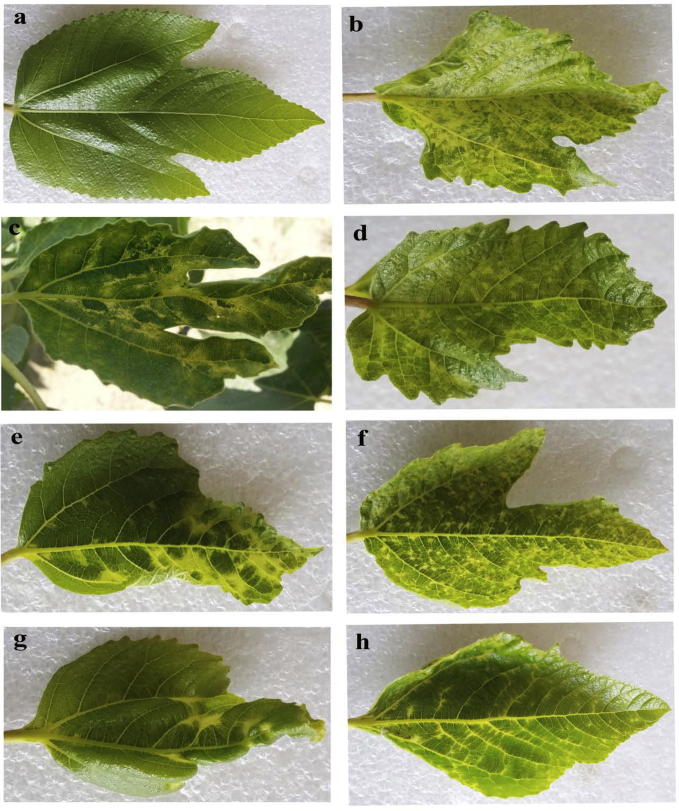
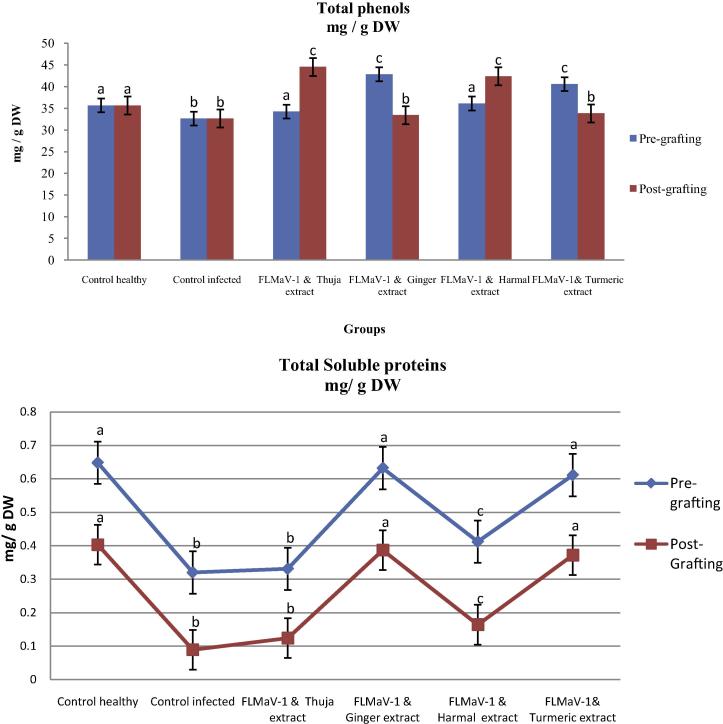
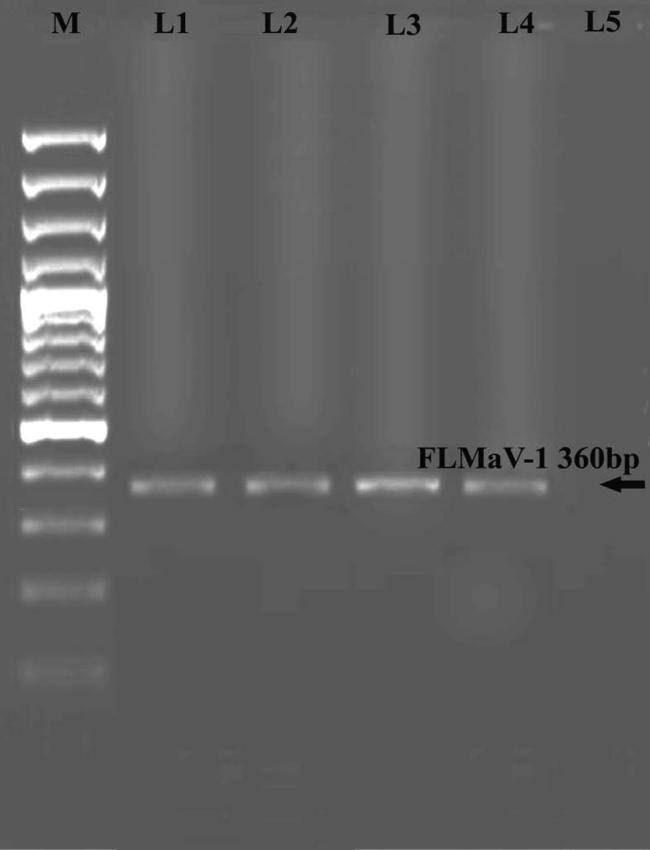
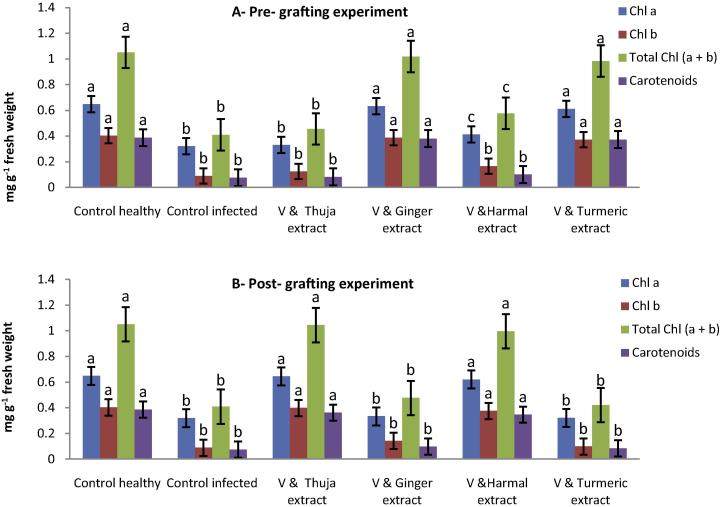
Fig leaf mottle-associated virus-1 (FLMaV-1) is a closterovirus newly identified in fig trees, in the Mecca region, suffering from mosaic disease symptoms and apparently is compromising the fig plantation in the country. In the present study, we demonstrated the efficiency of two in vivo experiments including pre and post treatments using Thuja leaf, ginger roots, Harmal seeds and turmeric rhizome extracts on symptoms expression of rooted cuttings infected with FLMaV-1- and their impact on virus multiplication. Results showed that individual treatments with ginger roots and turmeric rhizomes in pre-grafting experiments and Thuja extract following Harmal seeds in post grafting experiments were efficient against symptom development. In addition, results showed that the total photosynthesis pigments; total soluble intracellular proteins and total phenol contents were higher in infected treated cuttings compared with healthy ones, thus it was taken as evidence on a mutual interaction between these extracts and virus multiplication.