Department of Chemistry and Centre for Plastic Electronics, Imperial College London, South Kensington Campus, London SW7 2AZ, U.K.
Department of Chemistry, University of Bath, Bath BA2 7AY, UK.
Nat Commun. 2017 May 11;8:15218. doi: 10.1038/ncomms15218.
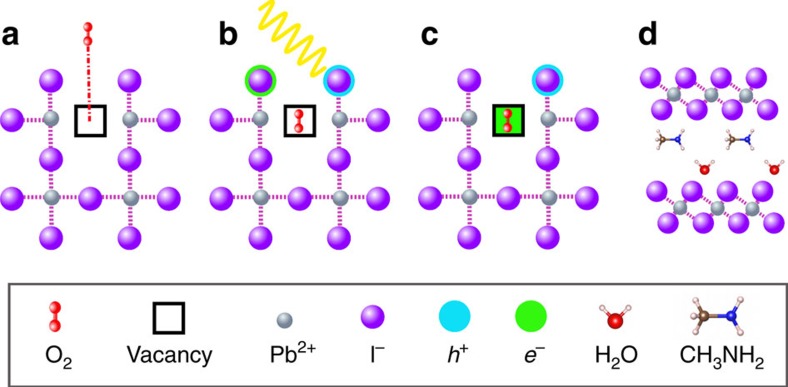
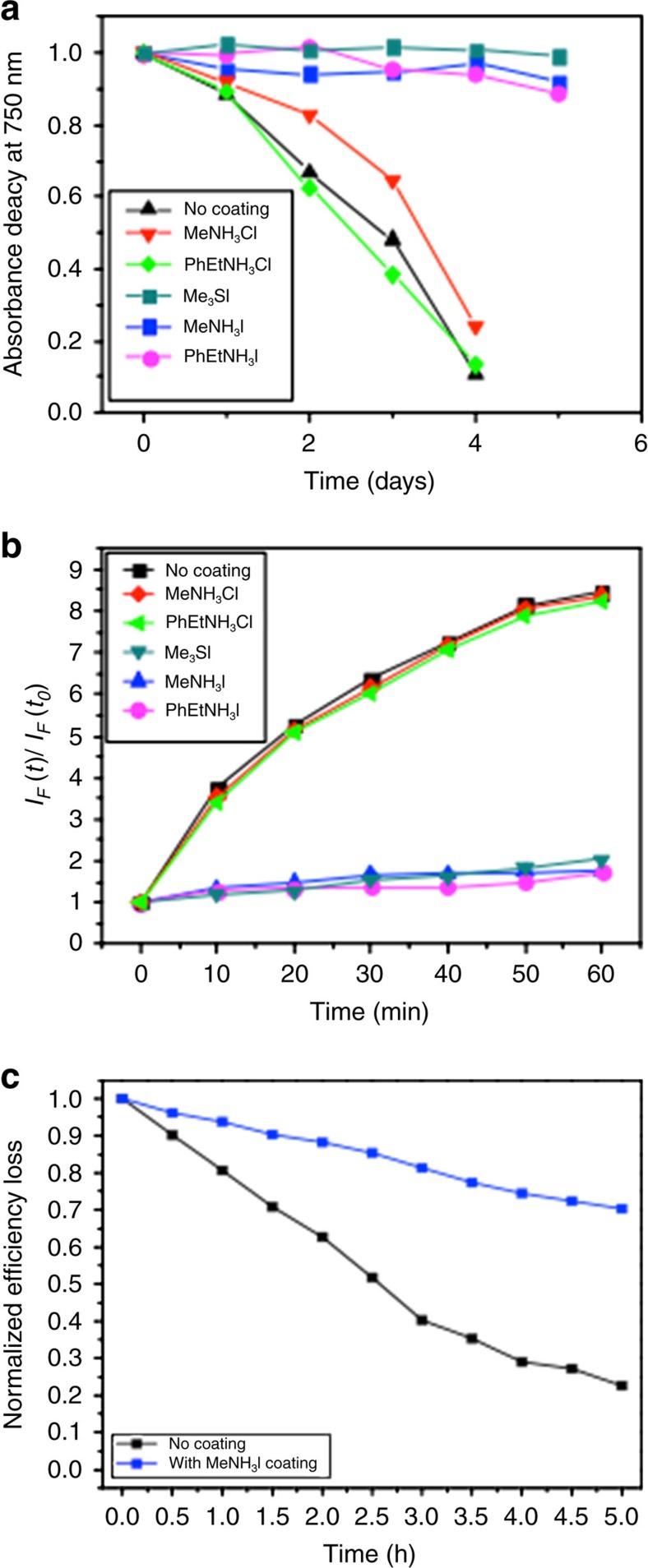
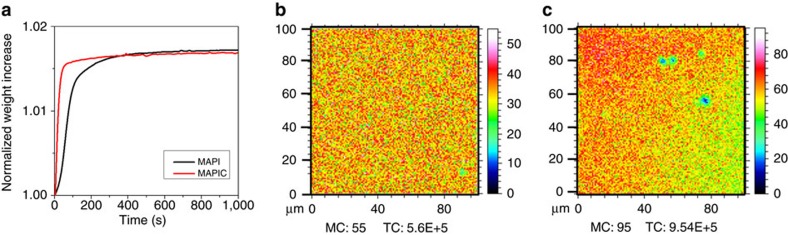
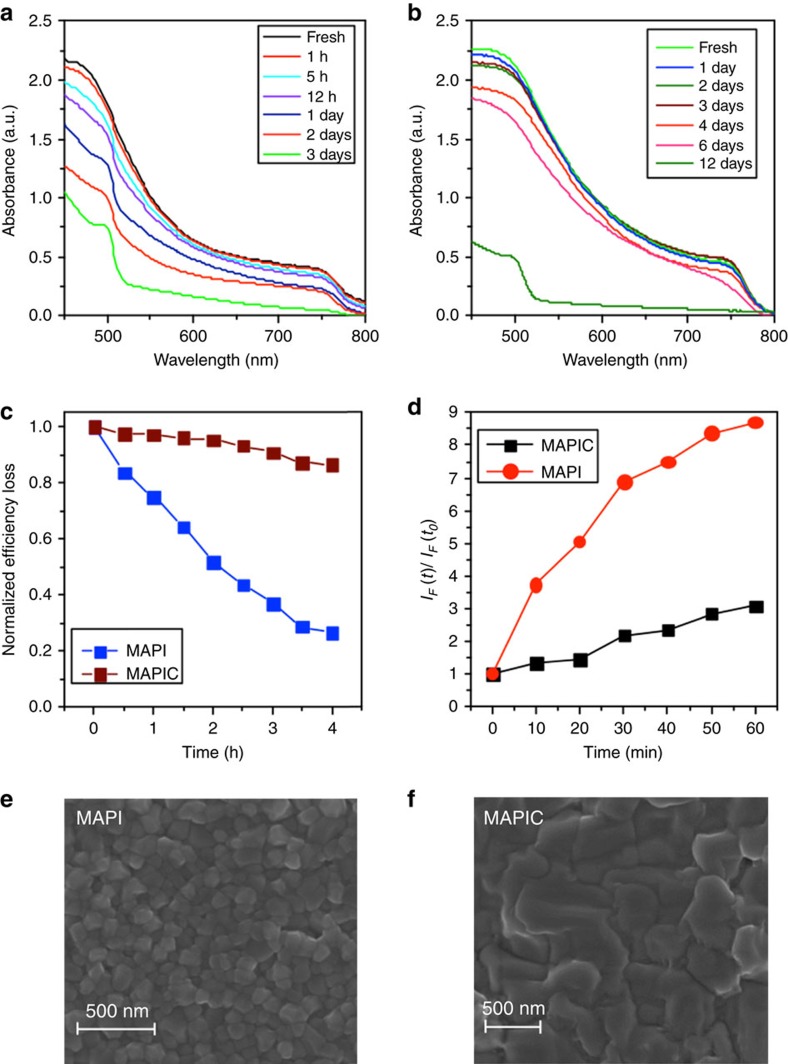
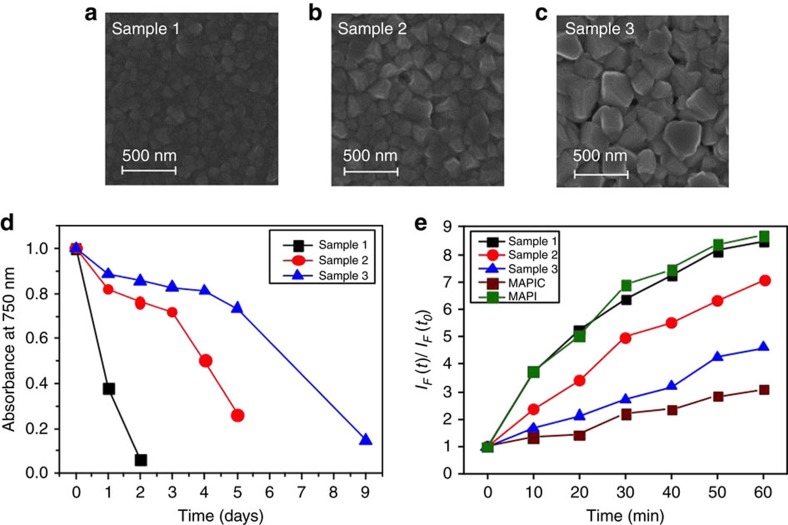
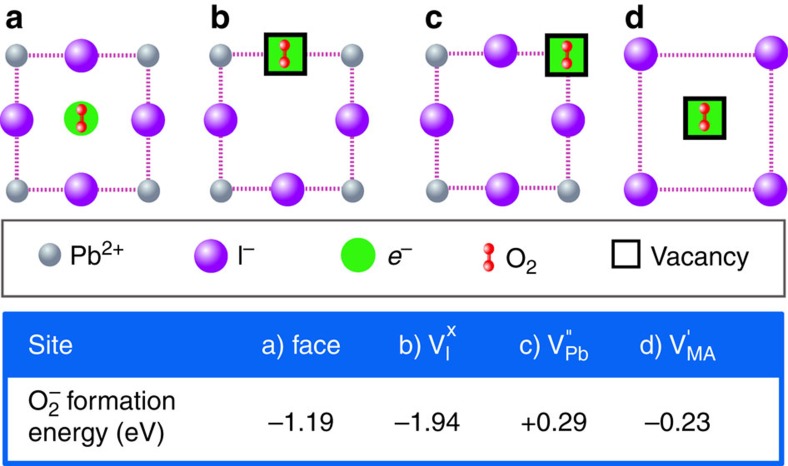
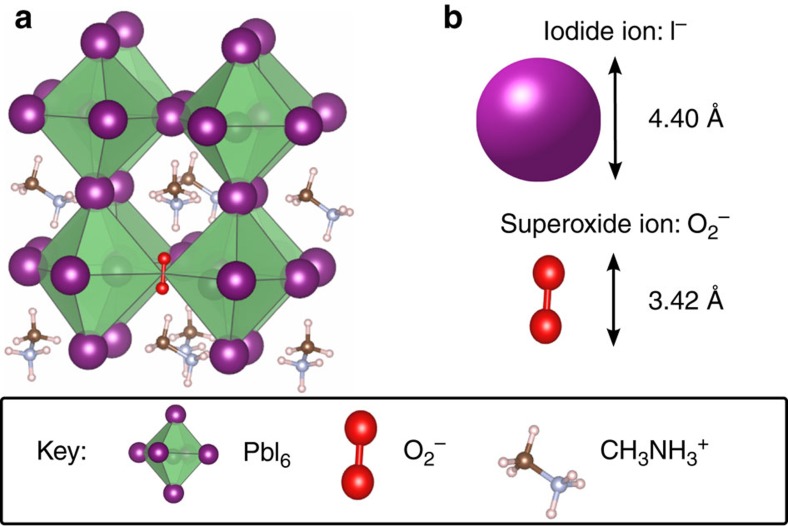
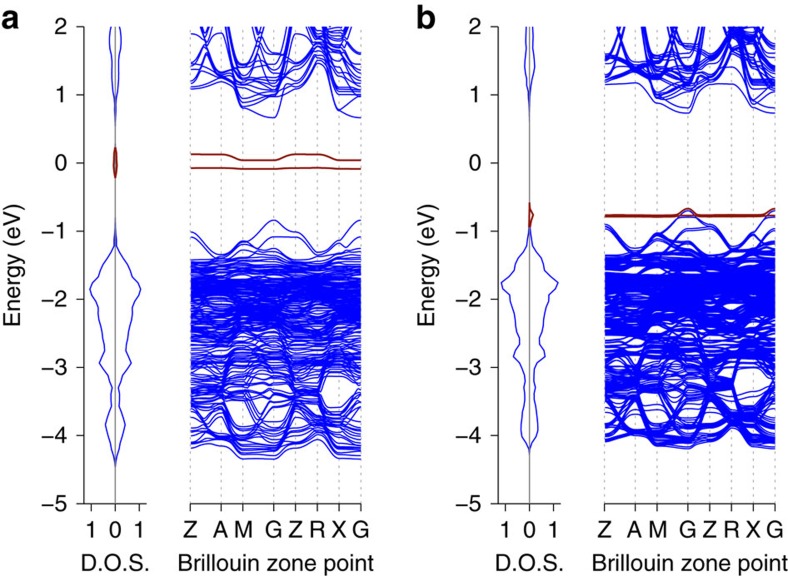
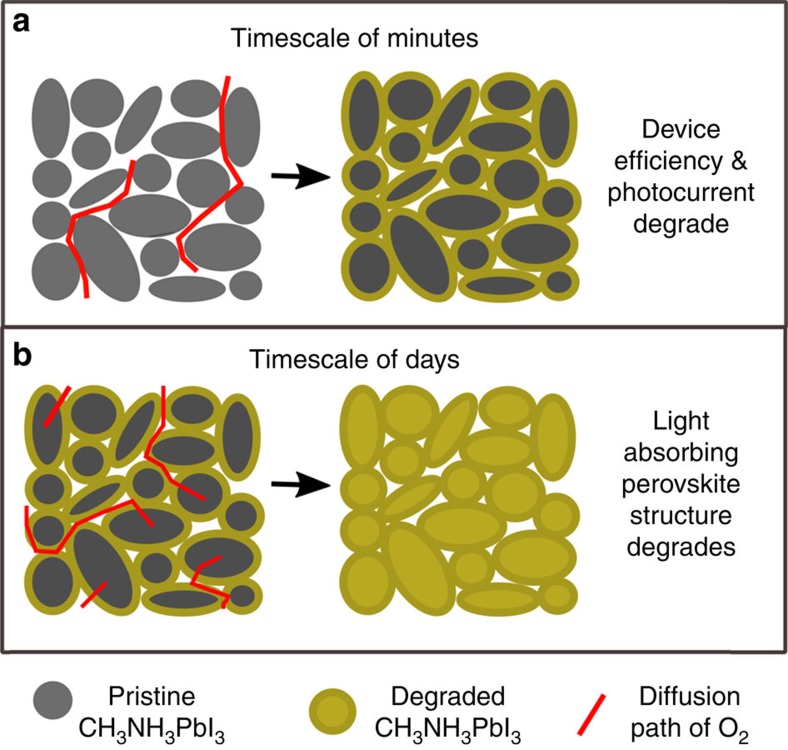
Methylammonium lead halide perovskites are attracting intense interest as promising materials for next-generation solar cells, but serious issues related to long-term stability need to be addressed. Perovskite films based on CHNHPbI undergo rapid degradation when exposed to oxygen and light. Here, we report mechanistic insights into this oxygen-induced photodegradation from a range of experimental and computational techniques. We find fast oxygen diffusion into CHNHPbI films is accompanied by photo-induced formation of highly reactive superoxide species. Perovskite films composed of small crystallites show higher yields of superoxide and lower stability. Ab initio simulations indicate that iodide vacancies are the preferred sites in mediating the photo-induced formation of superoxide species from oxygen. Thin-film passivation with iodide salts is shown to enhance film and device stability. The understanding of degradation phenomena gained from this study is important for the future design and optimization of stable perovskite solar cells.
甲胺铅卤钙钛矿作为下一代太阳能电池有前途的材料引起了人们的浓厚兴趣,但仍需要解决与长期稳定性相关的严重问题。在氧气和光的暴露下,基于 CHNHPbI 的钙钛矿薄膜会迅速降解。在这里,我们通过一系列实验和计算技术报告了对此氧致光降解的机制见解。我们发现,氧气快速扩散到 CHNHPbI 薄膜中,伴随着光诱导形成高反应性的超氧化物。由小晶粒组成的钙钛矿薄膜表现出更高的超氧化物产率和更低的稳定性。从头算模拟表明,碘空位是介导氧气光诱导形成超氧化物的首选位点。用碘盐进行薄膜钝化被证明可以提高薄膜和器件的稳定性。从这项研究中获得的降解现象的理解对于未来设计和优化稳定的钙钛矿太阳能电池是重要的。