
微小RNA-338-3p调控神经元成熟并抑制胶质母细胞瘤增殖。
MiR-338-3p regulates neuronal maturation and suppresses glioblastoma proliferation.
作者信息
Howe James R, Li Emily S, Streeter Sarah E, Rahme Gilbert J, Chipumuro Edmond, Russo Grace B, Litzky Julia F, Hills L Benjamin, Rodgers Kyla R, Skelton Patrick D, Luikart Bryan W
机构信息
Department of Physiology and Neurobiology, Geisel School of Medicine at Dartmouth College, Lebanon, New Hampshire, United States of America.
Department of Genetics, Geisel School of Medicine at Dartmouth College, Lebanon, New Hampshire, United States of America.
出版信息
PLoS One. 2017 May 11;12(5):e0177661. doi: 10.1371/journal.pone.0177661. eCollection 2017.
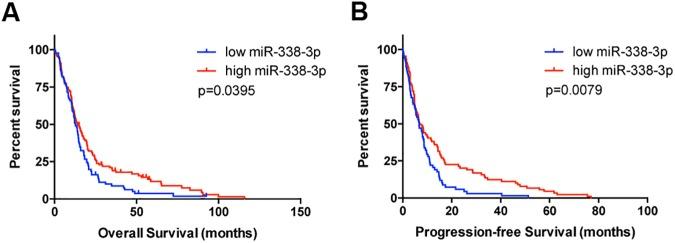
Neurogenesis is a highly-regulated process occurring in the dentate gyrus that has been linked to learning, memory, and antidepressant efficacy. MicroRNAs (miRNAs) have been previously shown to play an important role in the regulation of neuronal development and neurogenesis in the dentate gyrus via modulation of gene expression. However, this mode of regulation is both incompletely described in the literature thus far and highly multifactorial. In this study, we designed sensors and detected relative levels of expression of 10 different miRNAs and found miR-338-3p was most highly expressed in the dentate gyrus. Comparison of miR-338-3p expression with neuronal markers of maturity indicates miR-338-3p is expressed most highly in the mature neuron. We also designed a viral "sponge" to knock down in vivo expression of miR-338-3p. When miR-338-3p is knocked down, neurons sprout multiple primary dendrites that branch off of the soma in a disorganized manner, cellular proliferation is upregulated, and neoplasms form spontaneously in vivo. Additionally, miR-338-3p overexpression in glioblastoma cell lines slows their proliferation in vitro. Further, low miR-338-3p expression is associated with increased mortality and disease progression in patients with glioblastoma. These data identify miR-338-3p as a clinically relevant tumor suppressor in glioblastoma.
神经发生是一个在齿状回中发生的高度调控过程,它与学习、记忆及抗抑郁疗效相关。此前研究表明,微小RNA(miRNA)通过调节基因表达,在齿状回神经元发育和神经发生的调控中发挥重要作用。然而,迄今为止,这种调控模式在文献中描述并不完整,且具有高度多因素性。在本研究中,我们设计了传感器并检测了10种不同miRNA的相对表达水平,发现miR-338-3p在齿状回中表达最高。将miR-338-3p的表达与成熟神经元标记物进行比较,表明miR-338-3p在成熟神经元中表达最高。我们还设计了一种病毒“海绵”来敲低miR-338-3p的体内表达。当miR-338-3p被敲低时,神经元会从胞体无序地长出多个初级树突,细胞增殖上调,并且在体内会自发形成肿瘤。此外,胶质母细胞瘤细胞系中miR-338-3p的过表达会减缓其体外增殖。此外,胶质母细胞瘤患者中miR-338-3p低表达与死亡率增加和疾病进展相关。这些数据表明miR-338-3p是胶质母细胞瘤中一种与临床相关的肿瘤抑制因子。


 Zotero 插件