Tran Diana Hoang-Ngoc, Wang Jiani, Ha Christina, Ho Wendy, Mattai S Anjani, Oikonomopoulos Angelos, Weiss Guy, Lacey Precious, Cheng Michelle, Shieh Christine, Mussatto Caroline C, Ho Samantha, Hommes Daniel, Koon Hon Wai
Vatche and Tamar Manoukian Division of Digestive Diseases, David Geffen School of Medicine at the University of California Los Angeles, Los Angeles, CA, 90095, USA.
Department of Gastroenterology, First Affiliated Hospital, China Medical University, Shenyang City, Liaoning Province, China.
BMC Gastroenterol. 2017 May 12;17(1):63. doi: 10.1186/s12876-017-0619-4.
Cathelicidin (LL-37) is an antimicrobial peptide known to be associated with various autoimmune diseases. We attempt to determine if cathelicidin can accurately reflect IBD disease activity. We hypothesize that serum cathelicidin correlates with mucosal disease activity, stricture, and clinical prognosis of IBD patients.
Serum samples were collected from two separate cohorts of patients at the University of California, Los Angeles. Cohort 1 consisted of 50 control, 23 UC, and 28 CD patients. Cohort 2 consisted of 20 control, 57 UC, and 67 CD patients. LL-37 levels were determined by ELISA. Data from both cohorts were combined for calculation of accuracies in indicating mucosal disease activity, relative risks of stricture, and odds ratios of predicting disease development.
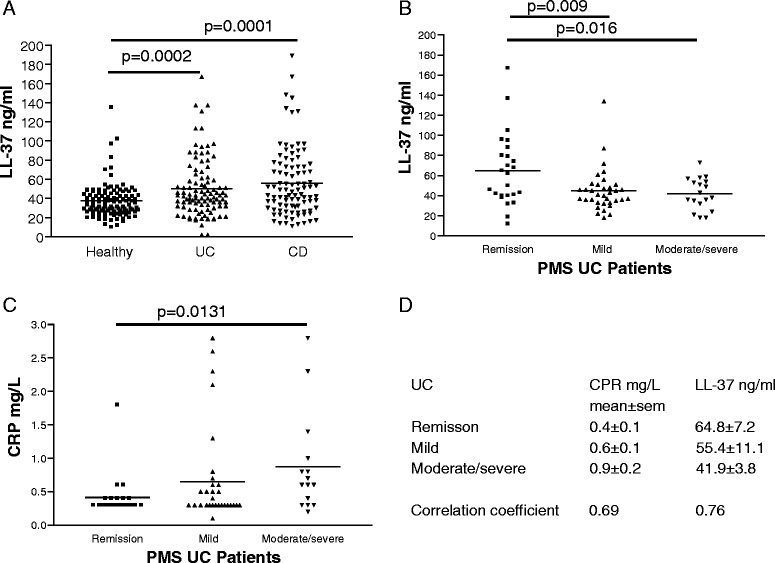
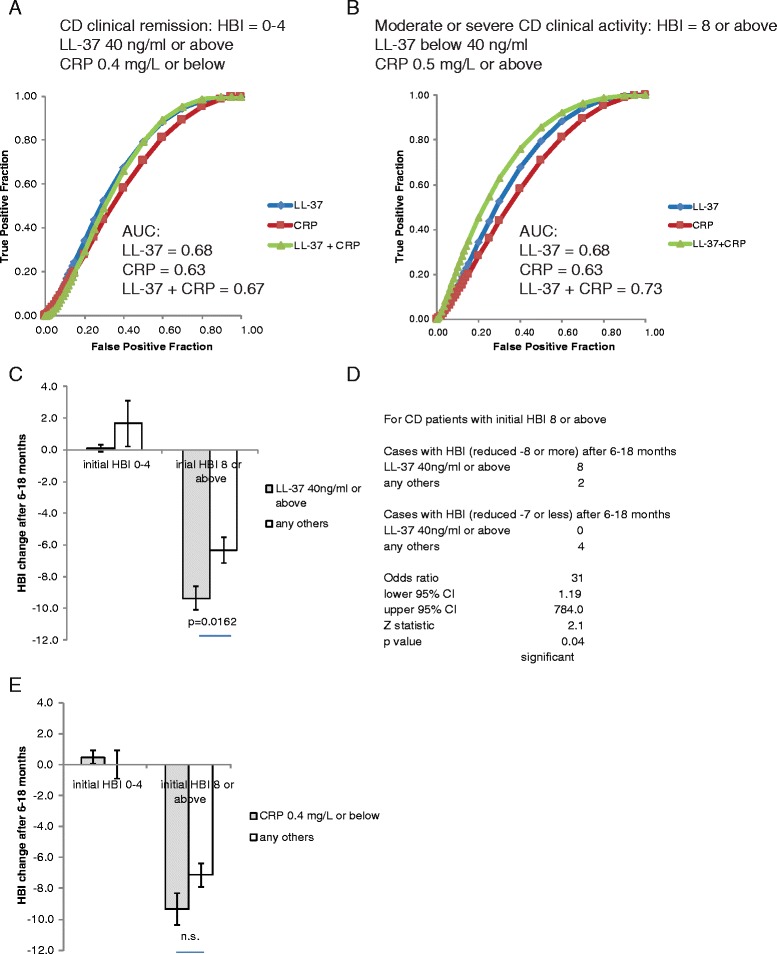
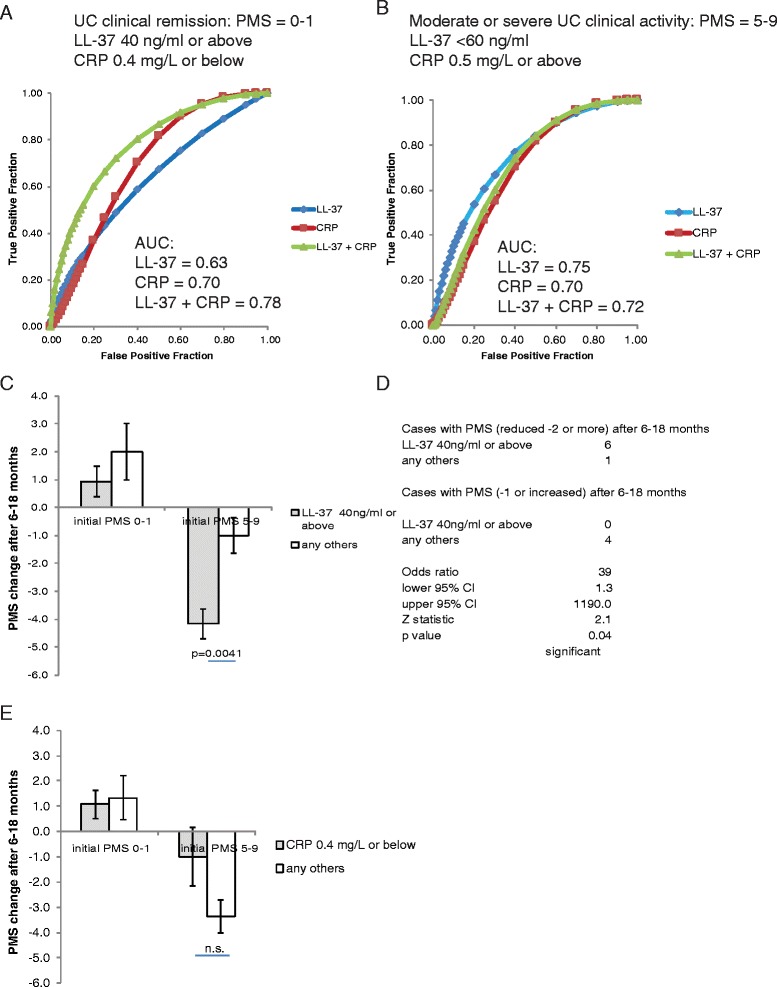
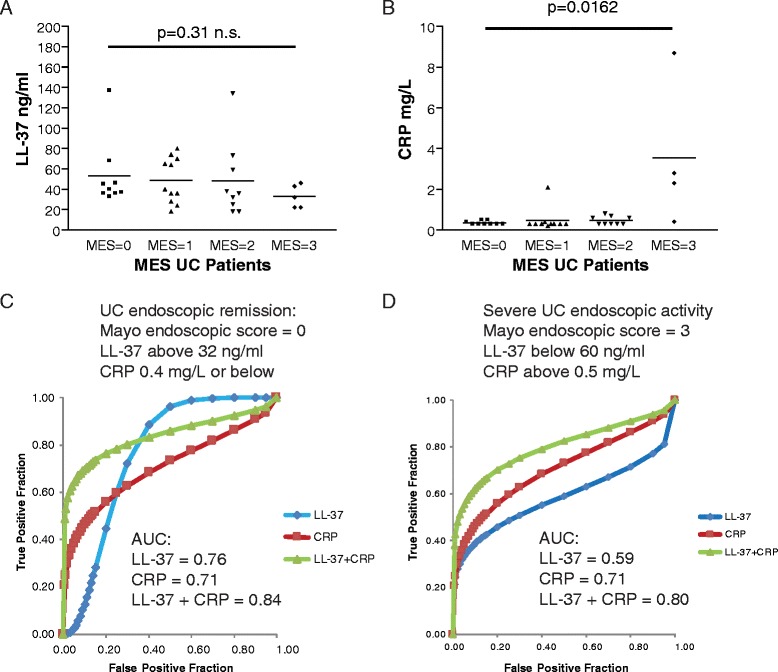
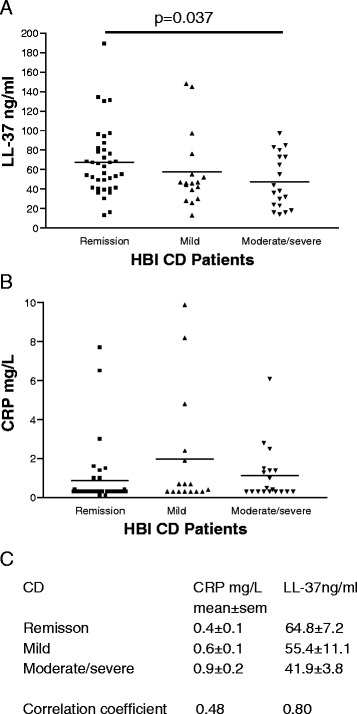
Serum cathelicidin levels were inversely correlated with Partial Mayo Scores of UC patients and Harvey-Bradshaw Indices of CD patients. Among IBD patients with moderate or severe initial disease activity, the patients with high initial LL-37 levels had significantly better recovery than the patients with low initial LL-37 levels after 6-18 months, suggesting that high LL-37 levels correlate with good prognosis. Co-evaluation of LL-37 and CRP levels was more accurate than CRP alone or LL-37 alone in the correlation with Mayo Endoscopic Score of UC patients. Low LL-37 levels indicated a significantly elevated risk of intestinal stricture in CD patients.
Co-evaluation of LL-37 and CRP can indicate mucosal disease activity in UC patients. LL-37 can predict future clinical activity in IBD patients and indicate risk of intestinal stricture in CD patients.
杀菌肽(LL-37)是一种抗菌肽,已知与多种自身免疫性疾病相关。我们试图确定杀菌肽是否能准确反映炎症性肠病(IBD)的疾病活动度。我们假设血清杀菌肽与IBD患者的黏膜疾病活动度、狭窄及临床预后相关。
从加利福尼亚大学洛杉矶分校的两个不同患者队列中收集血清样本。队列1包括50名对照者、23名溃疡性结肠炎(UC)患者和28名克罗恩病(CD)患者。队列2包括20名对照者、57名UC患者和67名CD患者。通过酶联免疫吸附测定(ELISA)法测定LL-37水平。将两个队列的数据合并,以计算在指示黏膜疾病活动度、狭窄的相对风险及预测疾病发展的比值比方面的准确性。
血清杀菌肽水平与UC患者的梅奥部分评分及CD患者的哈维-布拉德肖指数呈负相关。在初始疾病活动度为中度或重度的IBD患者中,初始LL-37水平高的患者在6至18个月后的恢复情况明显好于初始LL-37水平低的患者,这表明高LL-37水平与良好预后相关。在与UC患者的梅奥内镜评分的相关性方面,LL-37和C反应蛋白(CRP)水平的联合评估比单独使用CRP或单独使用LL-37更准确。低LL-37水平表明CD患者肠道狭窄的风险显著升高。
LL-37和CRP的联合评估可指示UC患者的黏膜疾病活动度。LL-37可预测IBD患者未来的临床活动度,并指示CD患者肠道狭窄的风险。