Zheng Zhi, Xu Liting, Zhang Shuofeng, Li Wuping, Tou Fangfang, He Qinsi, Rao Jun, Shen Qiang
Department of Internal Medicine 5th Division, Jiangxi Provincial Key Laboratory of Translational Medicine and Oncology, Jiangxi Cancer Hospital, Jiangxi Cancer Center, Nanchang, 330029, PR China.
School of Graduate Study, Medical College of Nanchang University, Nanchang, 330029, PR China.
Oncotarget. 2017 Jul 18;8(29):47619-47631. doi: 10.18632/oncotarget.17411.
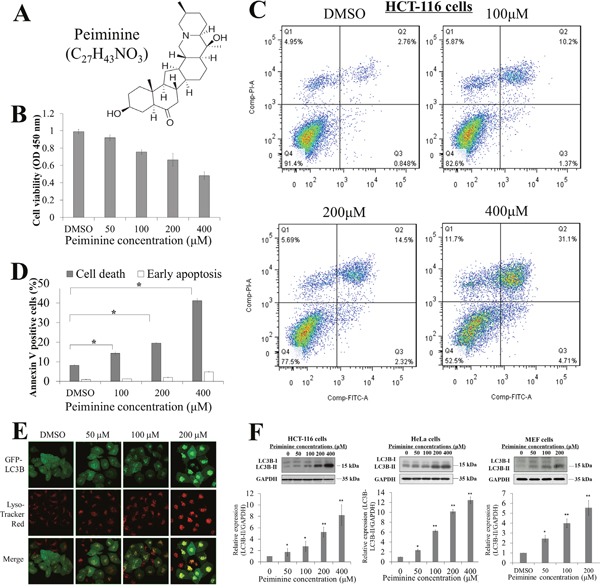
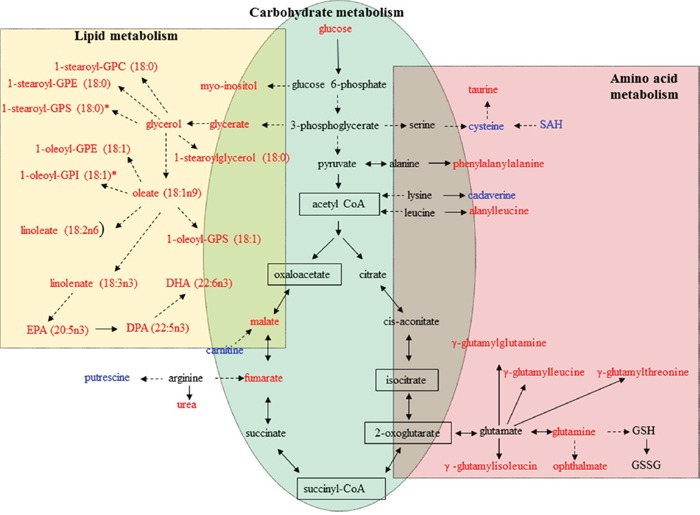
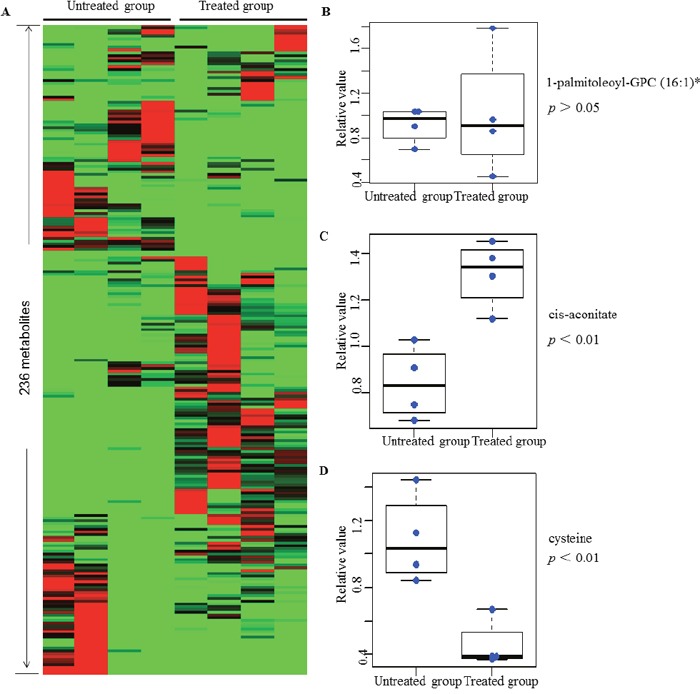
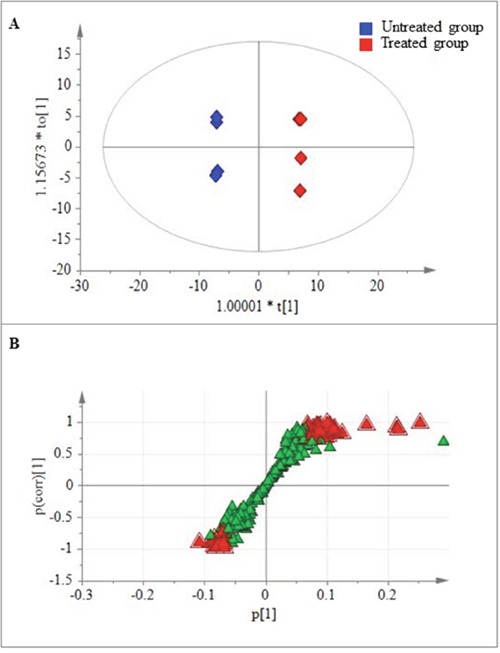
Peiminine, a compound extracted from the bulbs of Fritillaria thunbergii and traditionally used as a medication in China and other Asian countries, was reported to inhibit colorectal cancer cell proliferation and tumor growth by inducing autophagic cell death. However, its mechanism of anticancer action is not well understood, especially at the metabolic level, which was thought to primarily account for peiminine's efficacy against cancer. Using an established metabolomic profiling platform combining ultra-performance liquid chromatography/tandem mass spectrometry with gas chromatography/mass spectrometry, we identified metabolic alterations in colorectal cancer cell line HCT-116 after peiminine treatment. Among the identified 236 metabolites, the levels of 57 of them were significantly (p < 0.05) different between peiminine-treated and -untreated cells in which 45 metabolites were increased and the other 12 metabolites were decreased. Several of the affected metabolites, including glucose, glutamine, oleate (18:1n9), and lignocerate (24:0), may be involved in regulation of the phosphoinositide 3-kinase/Akt/mammalian target of rapamycin (mTOR) pathway and in the oxidative stress response upon peiminine exposure. Peiminine predominantly modulated the pathways responsible for metabolism of amino acids, carbohydrates, and lipids. Collectively, these results provide new insights into the mechanisms by which peiminine modulates metabolic pathways to inhibit colorectal cancer cell growth, supporting further exploration of peiminine as a potential new strategy for treating colorectal cancer.
浙贝母碱是从浙贝母鳞茎中提取的一种化合物,在中国和其他亚洲国家传统上用作药物,据报道它可通过诱导自噬性细胞死亡来抑制结肠癌细胞增殖和肿瘤生长。然而,其抗癌作用机制尚不清楚,尤其是在代谢水平上,而代谢水平被认为是浙贝母碱抗癌疗效的主要原因。我们使用一个成熟的代谢组学分析平台,将超高效液相色谱/串联质谱与气相色谱/质谱相结合,鉴定了浙贝母碱处理后结肠癌细胞系HCT-116中的代谢变化。在鉴定出的236种代谢物中,有57种在经浙贝母碱处理和未处理的细胞之间存在显著差异(p < 0.05),其中45种代谢物增加,另外12种代谢物减少。一些受影响的代谢物,包括葡萄糖、谷氨酰胺、油酸(18:1n9)和木蜡酸(24:0),可能参与了磷脂酰肌醇3激酶/蛋白激酶B/雷帕霉素哺乳动物靶蛋白(mTOR)通路的调节以及浙贝母碱暴露后的氧化应激反应。浙贝母碱主要调节负责氨基酸、碳水化合物和脂质代谢的途径。总的来说,这些结果为浙贝母碱调节代谢途径以抑制结肠癌细胞生长的机制提供了新的见解,支持进一步探索浙贝母碱作为治疗结肠癌的潜在新策略。