Fekete Marianna, Rayner Peter J, Green Gary G R, Duckett Simon B
Centre for Hyperpolarization in Magnetic Resonance, Department of Chemistry, University of York, York, YO10 5NY, UK.
Magn Reson Chem. 2017 Oct;55(10):944-957. doi: 10.1002/mrc.4607. Epub 2017 Jun 20.
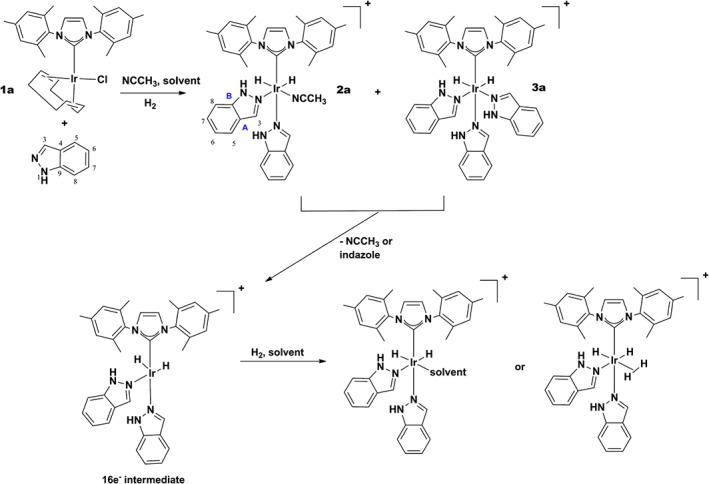
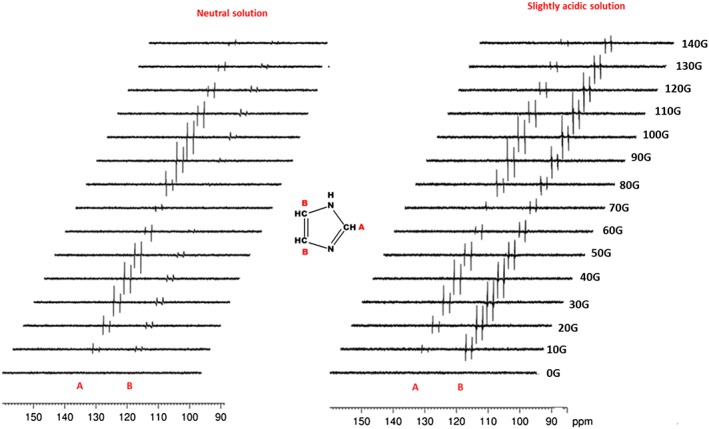
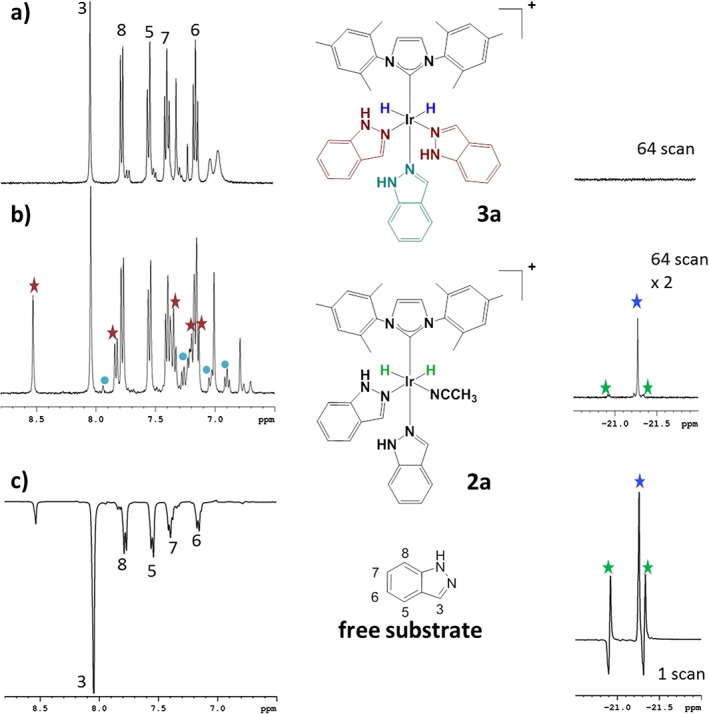
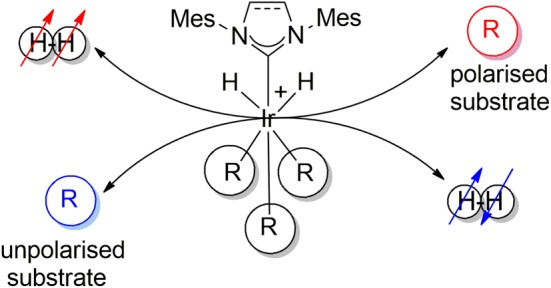
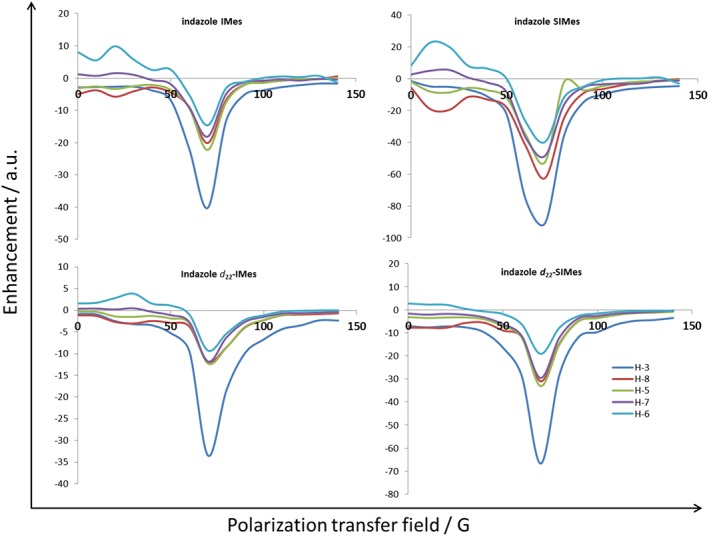
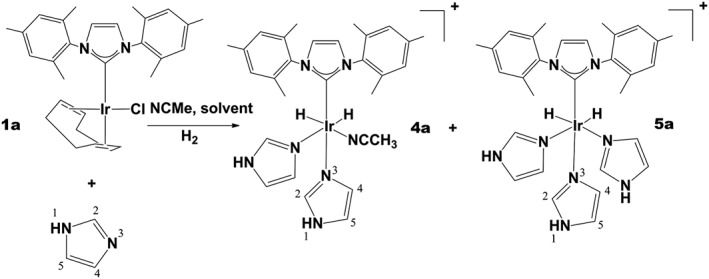
The signal amplification by reversible exchange (SABRE) approach has been used to hyperpolarise the substrates indazole and imidazole in the presence of the co-ligand acetonitrile through the action of the precataysts [IrCl(COD)(IMes)] and [IrCl(COD)(SIMes)]. H-labelled forms of these catalysts were also examined. Our comparison of the two precatalysts [IrCl(COD)(IMes)] and [IrCl(COD)(SIMes)], coupled with H labelling of the N-heterocyclic carbene and associated relaxation and polarisation field variation studies, demonstrates the critical and collective role these parameters play in controlling the efficiency of signal amplification by reversible exchange. Ultimately, with imidazole, a 700-fold H signal gain per proton is produced at 400 MHz, whilst for indazole, a 90-fold increase per proton is achieved. The co-ligand acetonitrile proved to optimally exhibit a 190-fold signal gain per proton in these measurements, with the associated studies revealing the importance the substrate plays in controlling this value. Copyright © 2017 The Authors. Magnetic Resonance in Chemistry published by John Wiley & Sons Ltd.
通过可逆交换进行信号放大(SABRE)方法已被用于在共配体乙腈存在下,通过前催化剂[IrCl(COD)(IMes)]和[IrCl(COD)(SIMes)]的作用使吲唑和咪唑底物超极化。还研究了这些催化剂的氢标记形式。我们对两种前催化剂[IrCl(COD)(IMes)]和[IrCl(COD)(SIMes)]的比较,结合氮杂环卡宾的氢标记以及相关的弛豫和极化场变化研究,证明了这些参数在控制可逆交换信号放大效率方面所起的关键和共同作用。最终,对于咪唑,在400 MHz时每个质子产生700倍的氢信号增益,而对于吲唑,每个质子实现90倍的增加。在这些测量中,共配体乙腈被证明每个质子最佳地表现出190倍的信号增益,相关研究揭示了底物在控制该值方面所起的重要作用。版权所有© 2017作者。《磁共振化学》由约翰·威利父子有限公司出版。