Department of Health Sciences, Faculty of Human Life and Environment, Nara Women's University, Nara, Japan.
Graduate School of Humanities and Sciences, Nara Women's University, Nara, Japan.
Sci Rep. 2017 Mar 7;7:43528. doi: 10.1038/srep43528.
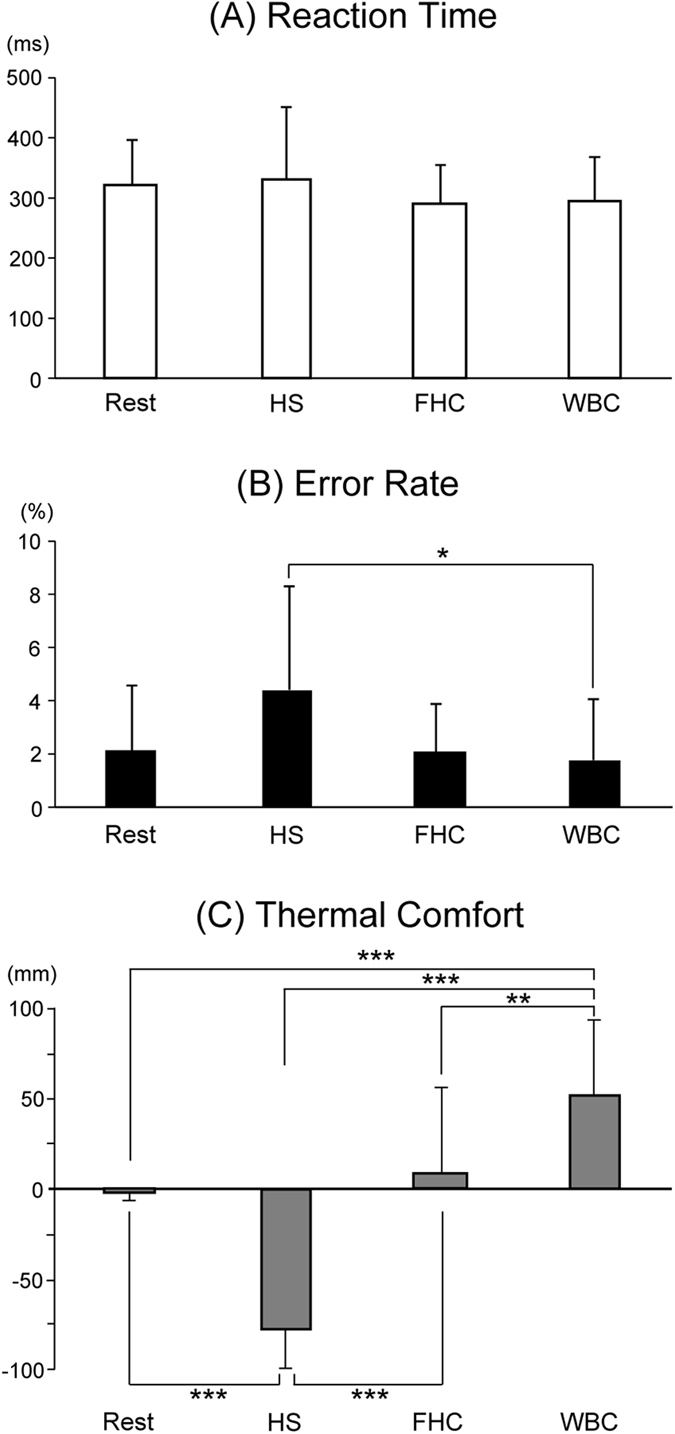
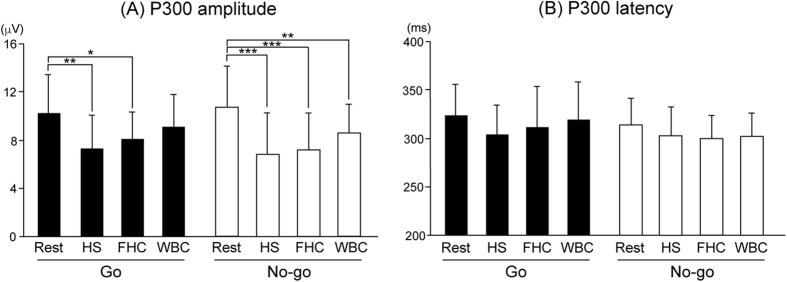
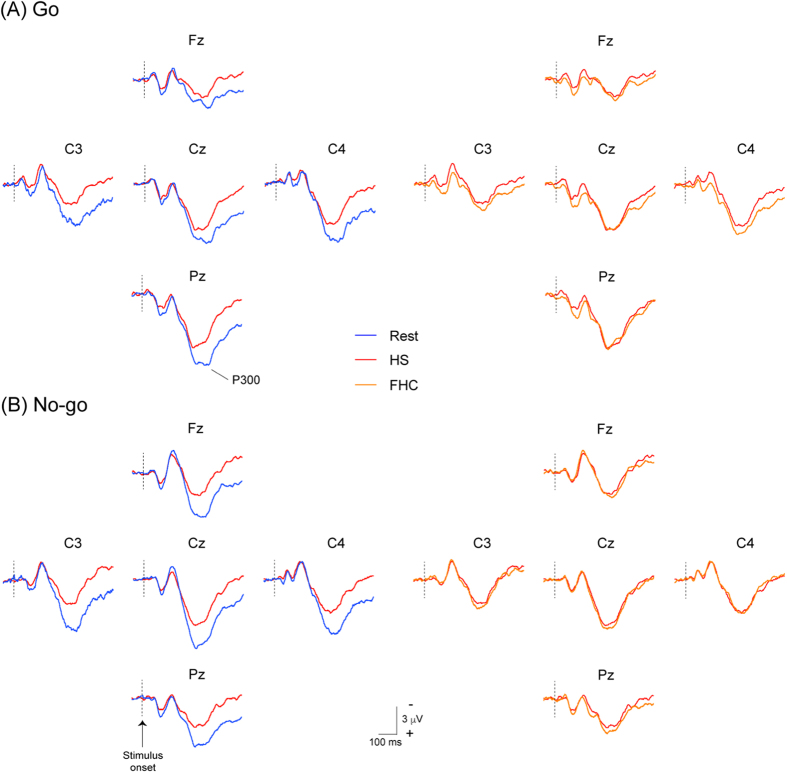
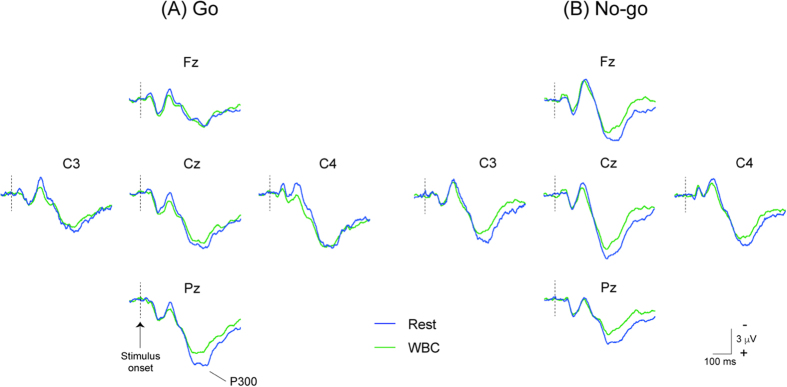
Climate change has had a widespread impact on humans and natural systems. Heat stroke is a life-threatening condition in severe environments. The execution or inhibition of decision making is critical for survival in a hot environment. We hypothesized that, even with mild heat stress, not only executive processing, but also inhibitory processing may be impaired, and investigated the effectiveness of body cooling approaches on these processes using the Go/No-go task with electroencephalographic event-related potentials. Passive heat stress increased esophageal temperature (Tes) by 1.30 ± 0.24 °C and decreased cerebral perfusion and thermal comfort. Mild heat stress reduced the amplitudes of the Go-P300 component (i.e. execution) and No-go-P300 component (i.e. inhibition). Cerebral perfusion and thermal comfort recovered following face/head cooling, however, the amplitudes of the Go-P300 and No-go-P300 components remained reduced. During whole-body cooling, the amplitude of the Go-P300 component returned to the pre-heat baseline, whereas that of the No-go-P300 component remained reduced. These results suggest that local cooling of the face and head does not restore impaired cognitive processing during mild heat stress, and response inhibition remains impaired despite the return to normothermia.
气候变化对人类和自然系统产生了广泛影响。热射病是严重环境下危及生命的病症。在炎热环境中,执行或抑制决策对于生存至关重要。我们假设,即使在轻度热应激下,不仅执行处理,而且抑制处理也可能受损,并使用脑电图事件相关电位的 Go/No-go 任务研究了身体冷却方法对这些过程的有效性。被动热应激使食管温度(Tes)升高 1.30±0.24°C,并降低脑灌注和热舒适度。轻度热应激降低了 Go-P300 成分(即执行)和 No-go-P300 成分(即抑制)的振幅。面部/头部冷却后,脑灌注和热舒适度恢复,但 Go-P300 和 No-go-P300 成分的振幅仍然降低。在全身冷却期间,Go-P300 成分的振幅恢复到热前基线,而 No-go-P300 成分的振幅仍然降低。这些结果表明,面部和头部的局部冷却并不能恢复轻度热应激期间受损的认知处理,并且尽管恢复到正常体温,反应抑制仍然受损。