Gupta Aditi, Mahnken Jonathan D, Johnson David K, Thomas Tashra S, Subramaniam Dipti, Polshak Tyler, Gani Imran, John Chen G, Burns Jeffrey M, Sarnak Mark J
Division of Nephrology, University of Kansas Medical Center, Kansas City, KS, USA.
Division of Nephrology and Hypertension, Department of Medicine, University of Kansas Medical Center, 3901 Rainbow Blvd, Kansas City, KS, 66160, USA.
BMC Nephrol. 2017 May 12;18(1):158. doi: 10.1186/s12882-017-0570-1.
There is a high prevalence of cognitive impairment in dialysis patients. The prevalence of cognitive impairment after kidney transplantation is unknown.
Study Design: Cross-sectional study.
Single center study of prevalent kidney transplant recipients from a transplant clinic in a large academic center.
Assessment of cognition using the Montreal Cognitive Assessment (MoCA). Demographic and clinical variables associated with cognitive impairment were also examined. Outcomes and Measurements: a) Prevalence of cognitive impairment defined by a MoCA score of <26. b) Multivariable linear and logistic regression to examine the association of demographic and clinical factors with cognitive impairment.
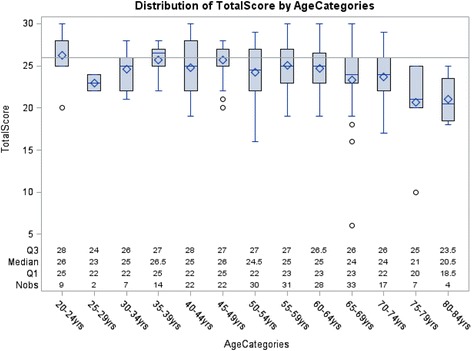
Data from 226 patients were analyzed. Mean (SD) age was 54 (13.4) years, 73% were white, 60% were male, 37% had diabetes, 58% had an education level of college or above, and the mean (SD) time since kidney transplant was 3.4 (4.1) years. The prevalence of cognitive impairment was 58.0%. Multivariable linear regression demonstrated that older age, male gender and absence of diabetes were associated with lower MoCA scores (p < 0.01 for all). Estimated glomerular filtration rate (eGFR) was not associated with level of cognition. The logistic regression analysis confirmed the association of older age with cognitive impairment.
Cognitive impairment is common in prevalent kidney transplant recipients, at a younger age compared to general population, and is associated with certain demographic variables, but not level of eGFR.
透析患者中认知障碍的患病率很高。肾移植后认知障碍的患病率尚不清楚。
研究设计:横断面研究。
对来自一个大型学术中心移植诊所的肾移植受者进行单中心研究。
使用蒙特利尔认知评估量表(MoCA)评估认知功能。还检查了与认知障碍相关的人口统计学和临床变量。结果与测量指标:a)MoCA评分<26定义的认知障碍患病率。b)多变量线性和逻辑回归分析,以研究人口统计学和临床因素与认知障碍的关联。
分析了226例患者的数据。平均(标准差)年龄为54(13.4)岁,73%为白人,60%为男性,37%患有糖尿病,58%的教育水平为大学及以上,肾移植后的平均(标准差)时间为3.4(4.1)年。认知障碍的患病率为58.0%。多变量线性回归分析表明,年龄较大、男性和无糖尿病与较低的MoCA评分相关(所有p<0.01)。估计肾小球滤过率(eGFR)与认知水平无关。逻辑回归分析证实年龄较大与认知障碍有关。
在肾移植受者中,认知障碍很常见,与一般人群相比年龄较轻,且与某些人口统计学变量有关,但与eGFR水平无关。