Centre for Genetic Diseases, Hudson Institute of Medical Research, Clayton, Victoria 3168, Australia.
Department of Molecular and Translational Science, Monash University, Clayton, Victoria 3168, Australia.
G3 (Bethesda). 2017 Jul 5;7(7):2065-2080. doi: 10.1534/g3.117.042655.
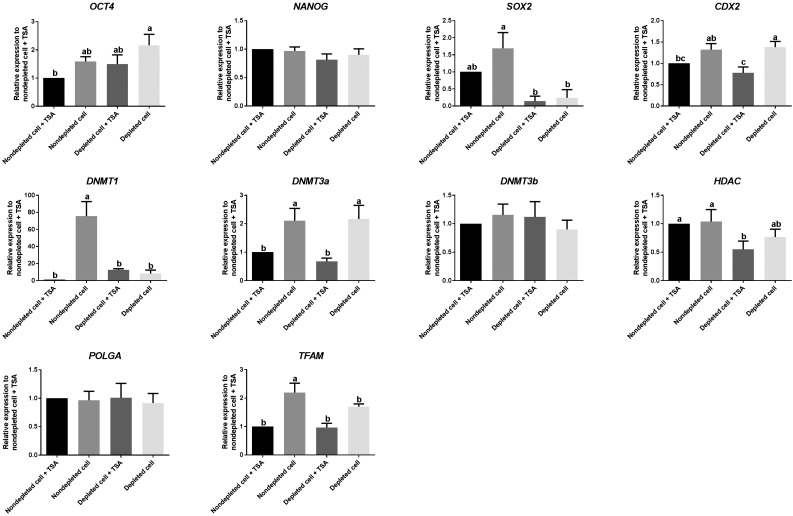
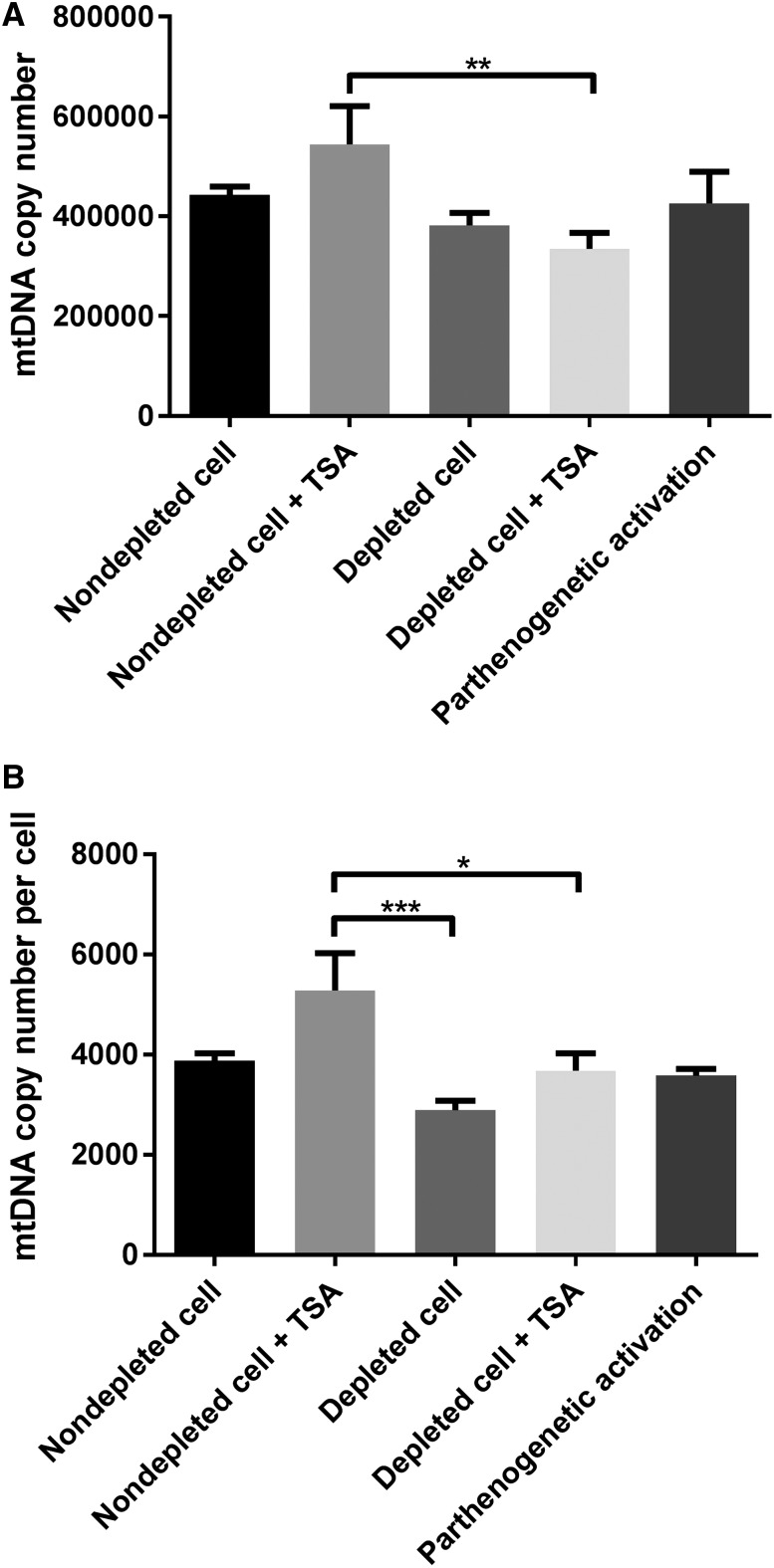
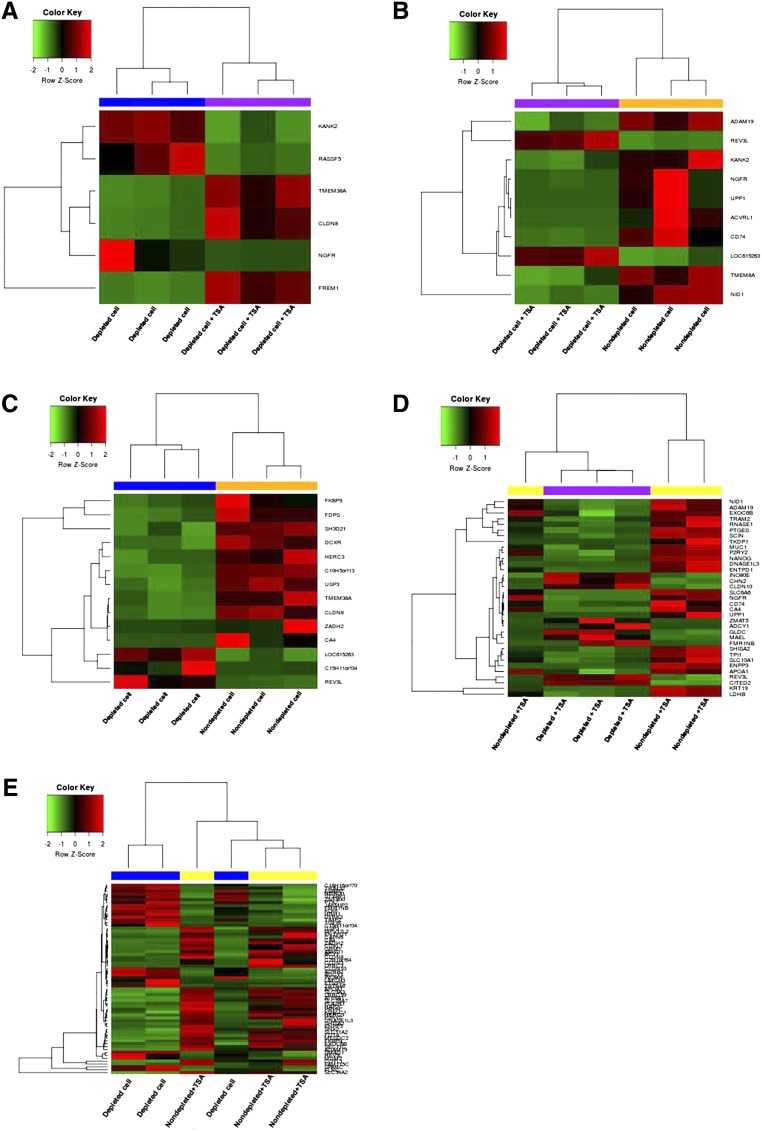
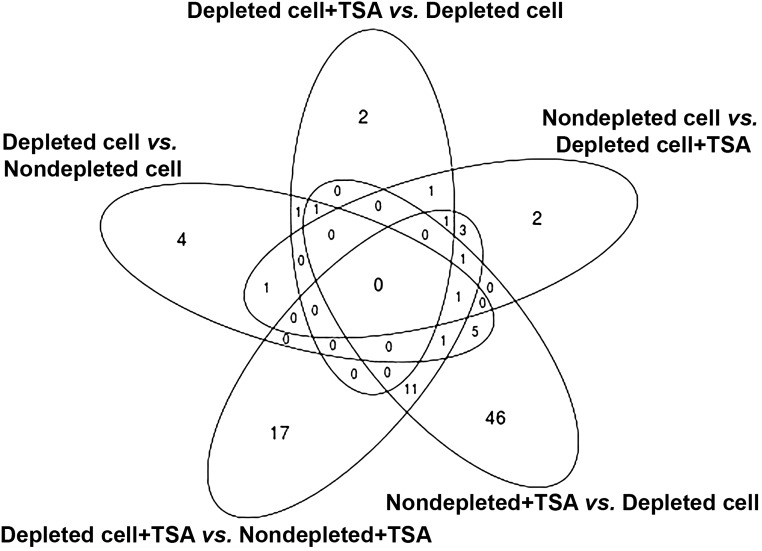
The mixing of mitochondrial DNA (mtDNA) from the donor cell and the recipient oocyte in embryos and offspring derived from somatic cell nuclear transfer (SCNT) compromises genetic integrity and affects embryo development. We set out to generate SCNT embryos that inherited their mtDNA from the recipient oocyte only, as is the case following natural conception. While SCNT blastocysts produced from Holstein () fibroblasts depleted of their mtDNA, and oocytes derived from Angus () cattle possessed oocyte mtDNA only, the coexistence of donor cell and oocyte mtDNA resulted in blastocysts derived from nondepleted cells. Moreover, the use of the reprogramming agent, Trichostatin A (TSA), further improved the development of embryos derived from depleted cells. RNA-seq analysis highlighted 35 differentially expressed genes from the comparison between blastocysts generated from nondepleted cells and blastocysts from depleted cells, both in the presence of TSA. The only differences between these two sets of embryos were the presence of donor cell mtDNA, and a significantly higher mtDNA copy number for embryos derived from nondepleted cells. Furthermore, the use of TSA on embryos derived from depleted cells positively modulated the expression of , , and , which affect embryonic development. In conclusion, SCNT embryos produced by mtDNA depleted donor cells have the same potential to develop to the blastocyst stage without the presumed damaging effect resulting from the mixture of donor and recipient mtDNA.
来自供体细胞和受体卵母细胞的线粒体 DNA(mtDNA)在体细胞核移植(SCNT)胚胎和后代中的混合会损害遗传完整性并影响胚胎发育。我们着手生成仅从受体卵母细胞遗传 mtDNA 的 SCNT 胚胎,这与自然受孕的情况相同。虽然来自荷斯坦(Holstein)纤维母细胞耗尽 mtDNA 的 SCNT 囊胚和来自安格斯(Angus)牛的卵母细胞仅具有卵母细胞 mtDNA,但供体细胞和卵母细胞 mtDNA 的共存导致来自未耗尽细胞的囊胚。此外,使用重编程剂 Trichostatin A(TSA)进一步改善了来自耗尽细胞的胚胎的发育。RNA-seq 分析突出显示了来自未耗尽细胞和耗尽细胞衍生的囊胚之间比较的 35 个差异表达基因,这两种情况均存在 TSA。这两组胚胎之间的唯一区别是存在供体细胞 mtDNA,以及来自未耗尽细胞的胚胎的 mtDNA 拷贝数显著更高。此外,TSA 在耗尽细胞衍生的胚胎上的使用正向调节了 、 和 的表达,这些基因影响胚胎发育。总之,来自耗尽 mtDNA 的供体细胞的 SCNT 胚胎具有相同的潜力发育到囊胚阶段,而不会产生供体和受体 mtDNA 混合所带来的假定有害影响。