Henssen Anton G, Koche Richard, Zhuang Jiali, Jiang Eileen, Reed Casie, Eisenberg Amy, Still Eric, MacArthur Ian C, Rodríguez-Fos Elias, Gonzalez Santiago, Puiggròs Montserrat, Blackford Andrew N, Mason Christopher E, de Stanchina Elisa, Gönen Mithat, Emde Anne-Katrin, Shah Minita, Arora Kanika, Reeves Catherine, Socci Nicholas D, Perlman Elizabeth, Antonescu Cristina R, Roberts Charles W M, Steen Hanno, Mullen Elizabeth, Jackson Stephen P, Torrents David, Weng Zhiping, Armstrong Scott A, Kentsis Alex
Molecular Pharmacology Program, Sloan Kettering Institute, Memorial Sloan Kettering Cancer Center, New York, New York, USA.
Cancer Biology &Genetics Program, Sloan Kettering Institute, Memorial Sloan Kettering Cancer Center, New York, New York, USA.
Nat Genet. 2017 Jul;49(7):1005-1014. doi: 10.1038/ng.3866. Epub 2017 May 15.
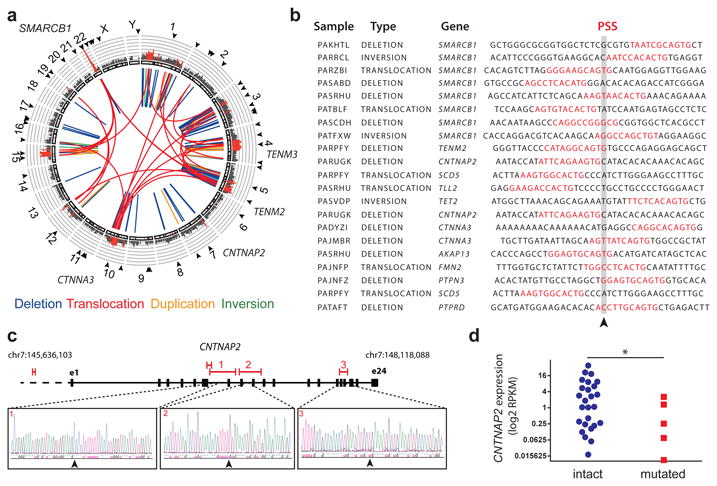
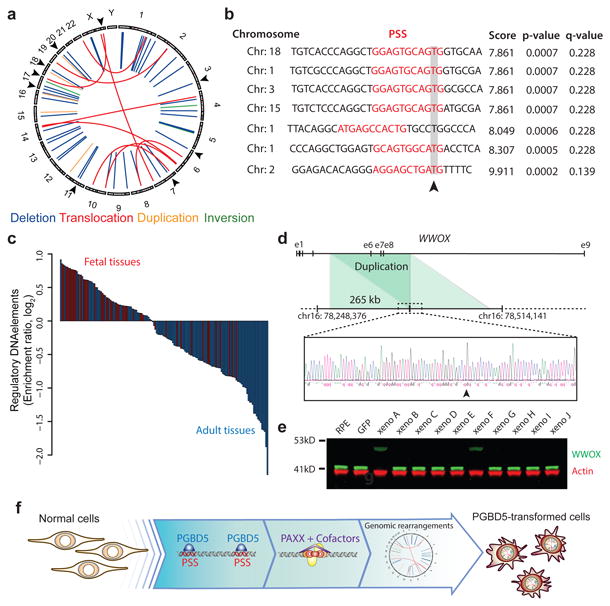
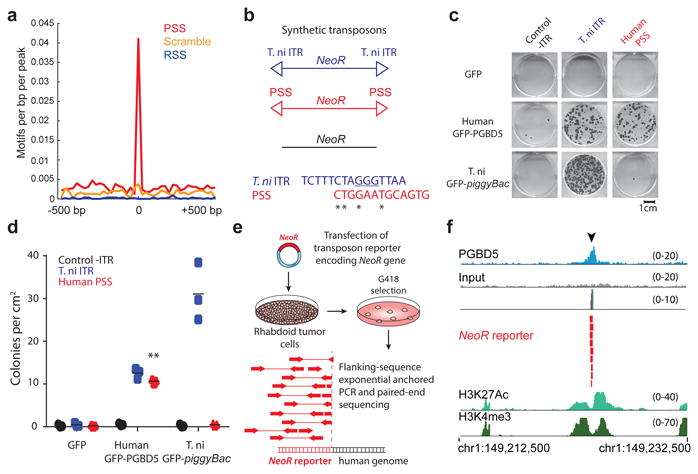
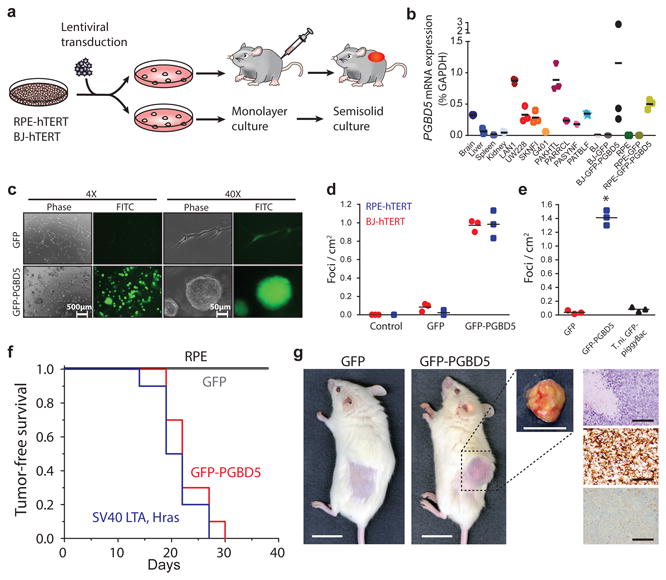
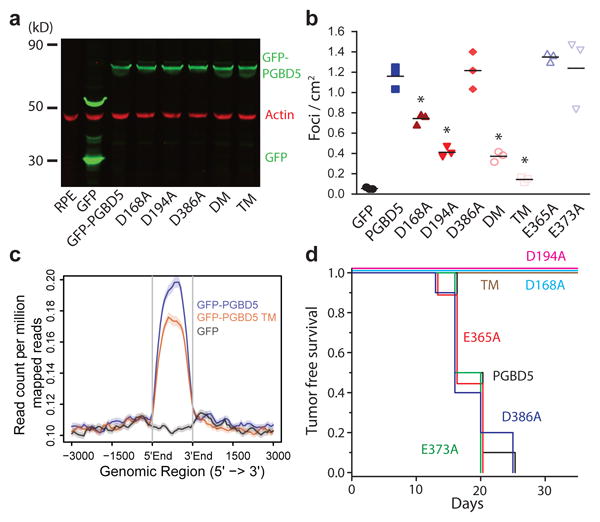
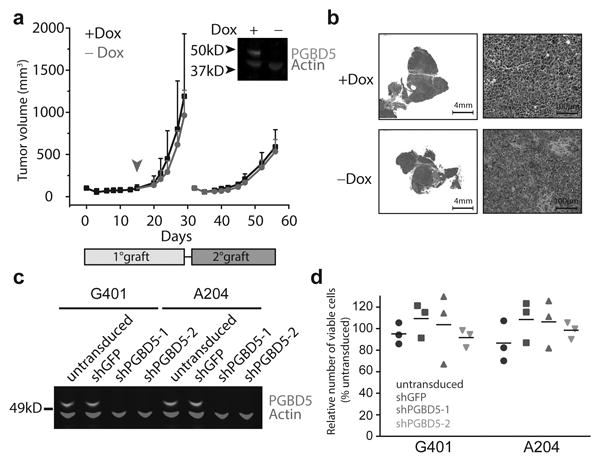
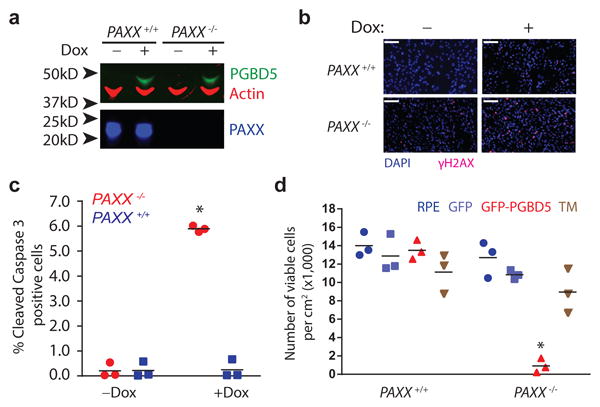
Genomic rearrangements are a hallmark of human cancers. Here, we identify the piggyBac transposable element derived 5 (PGBD5) gene as encoding an active DNA transposase expressed in the majority of childhood solid tumors, including lethal rhabdoid tumors. Using assembly-based whole-genome DNA sequencing, we found previously undefined genomic rearrangements in human rhabdoid tumors. These rearrangements involved PGBD5-specific signal (PSS) sequences at their breakpoints and recurrently inactivated tumor-suppressor genes. PGBD5 was physically associated with genomic PSS sequences that were also sufficient to mediate PGBD5-induced DNA rearrangements in rhabdoid tumor cells. Ectopic expression of PGBD5 in primary immortalized human cells was sufficient to promote cell transformation in vivo. This activity required specific catalytic residues in the PGBD5 transposase domain as well as end-joining DNA repair and induced structural rearrangements with PSS breakpoints. These results define PGBD5 as an oncogenic mutator and provide a plausible mechanism for site-specific DNA rearrangements in childhood and adult solid tumors.
基因组重排是人类癌症的一个标志。在此,我们鉴定出源自猪尾巴转座元件5(PGBD5)的基因编码一种活性DNA转座酶,该酶在大多数儿童实体瘤中表达,包括致死性横纹肌样瘤。利用基于组装的全基因组DNA测序,我们在人类横纹肌样瘤中发现了先前未定义的基因组重排。这些重排在其断点处涉及PGBD5特异性信号(PSS)序列,并反复使肿瘤抑制基因失活。PGBD5与基因组PSS序列在物理上相关联,这些序列也足以介导PGBD5诱导的横纹肌样瘤细胞中的DNA重排。PGBD5在原代永生化人类细胞中的异位表达足以在体内促进细胞转化。这种活性需要PGBD5转座酶结构域中的特定催化残基以及末端连接DNA修复,并诱导具有PSS断点的结构重排。这些结果将PGBD5定义为一种致癌突变因子,并为儿童和成人实体瘤中位点特异性DNA重排提供了一种合理的机制。