Charnaya Olga, Moudgil Asha
Division of Pediatric Nephrology, Children's National Health System, Washington, DC, USA.
Front Pediatr. 2017 May 1;5:86. doi: 10.3389/fped.2017.00086. eCollection 2017.
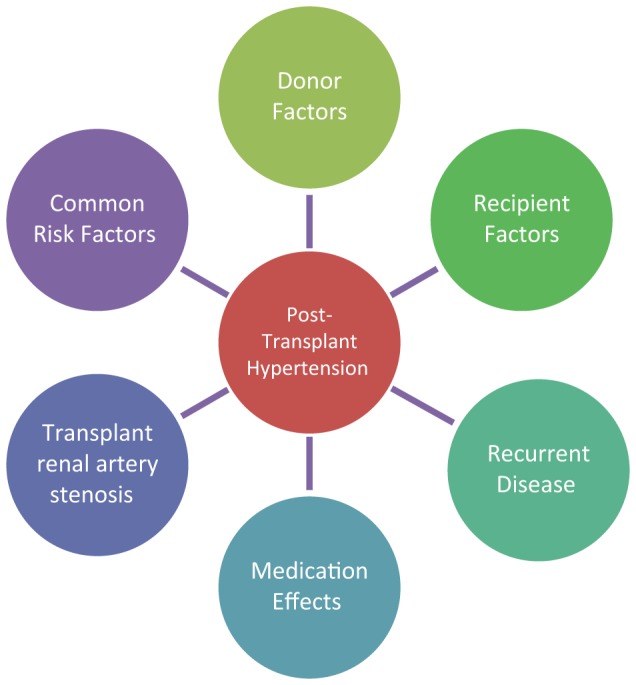
Hypertension after kidney transplant is a frequent occurrence in pediatric patients. It is a risk factor for graft loss and contributes to the significant burden of cardiovascular disease (CVD) in this population. The etiology of posttransplant hypertension is multifactorial including donor factors, recipient factors, medications, and lifestyle factors similar to those prevalent in the general population. Ambulatory blood pressure monitoring has emerged as the most reliable method for measuring hypertension in pediatric transplant recipients, and many consider it to be essential in the care of these patients. Recent technological advances including measurement of carotid intima-media thickness, pulse wave velocity, and myocardial strain using specked echocardiography and cardiac magnetic resonance imaging have improved our ability to assess CVD burden. Since hypertension remains underrecognized and inadequately treated, an early diagnosis and an appropriate control should be the focus of therapy to help improve patient and graft survival.
肾移植后高血压在儿科患者中很常见。它是移植肾丢失的危险因素,也是该人群心血管疾病(CVD)沉重负担的一个成因。移植后高血压的病因是多因素的,包括供体因素、受体因素、药物以及与普通人群中普遍存在的因素类似的生活方式因素。动态血压监测已成为测量儿科移植受者高血压最可靠的方法,许多人认为这对这些患者的护理至关重要。包括使用斑点超声心动图和心脏磁共振成像测量颈动脉内膜中层厚度、脉搏波速度和心肌应变在内的最新技术进展,提高了我们评估心血管疾病负担的能力。由于高血压仍然未得到充分认识和治疗,早期诊断和适当控制应成为治疗的重点,以帮助提高患者和移植肾的存活率。