Verasztó Csaba, Ueda Nobuo, Bezares-Calderón Luis A, Panzera Aurora, Williams Elizabeth A, Shahidi Réza, Jékely Gáspár
Max Planck Institute for Developmental Biology, Tübingen, Germany.
Elife. 2017 May 16;6:e26000. doi: 10.7554/eLife.26000.
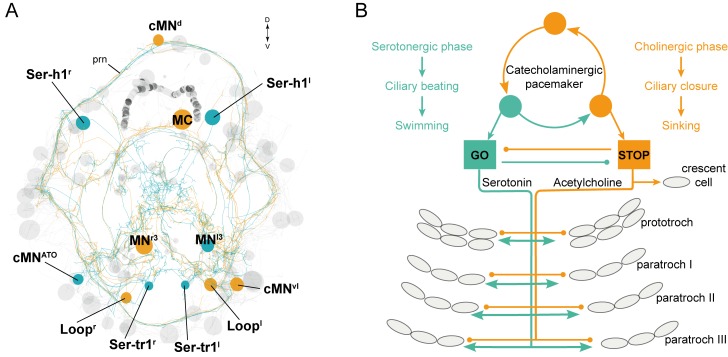
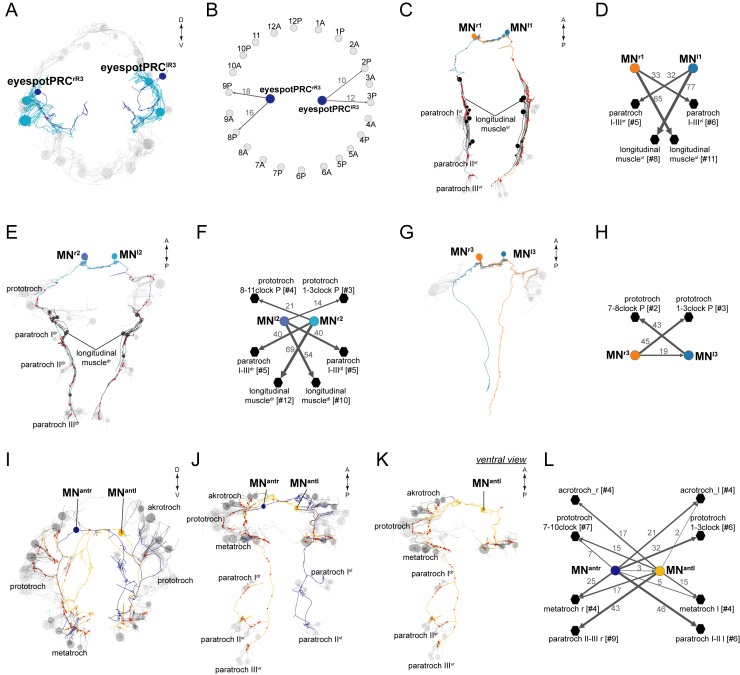
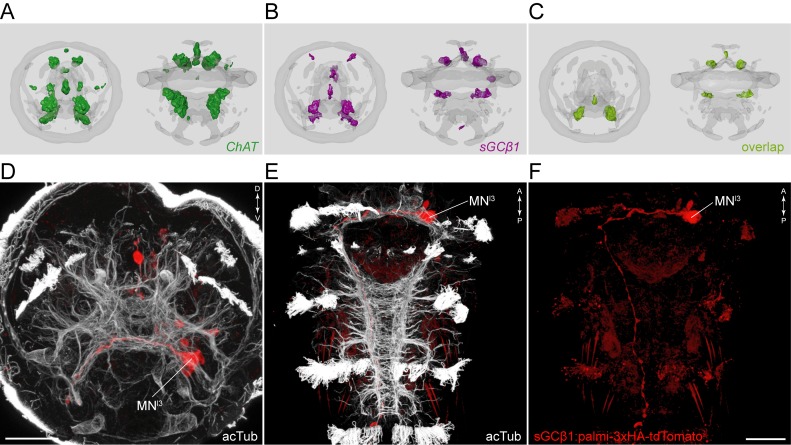
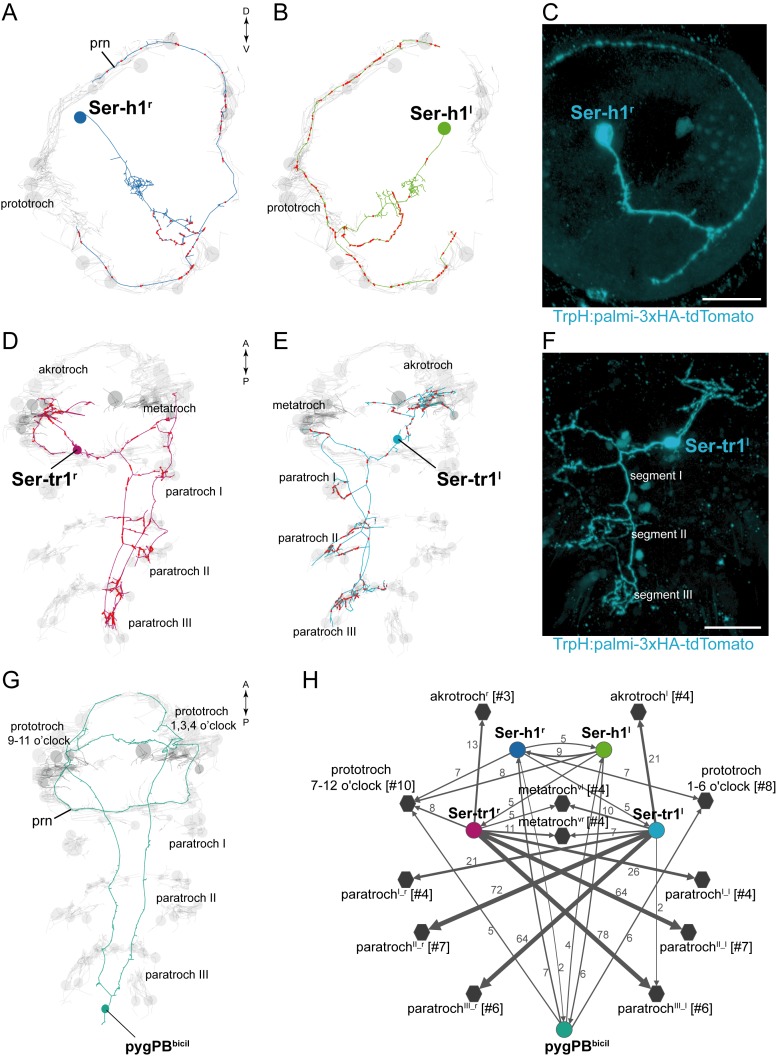
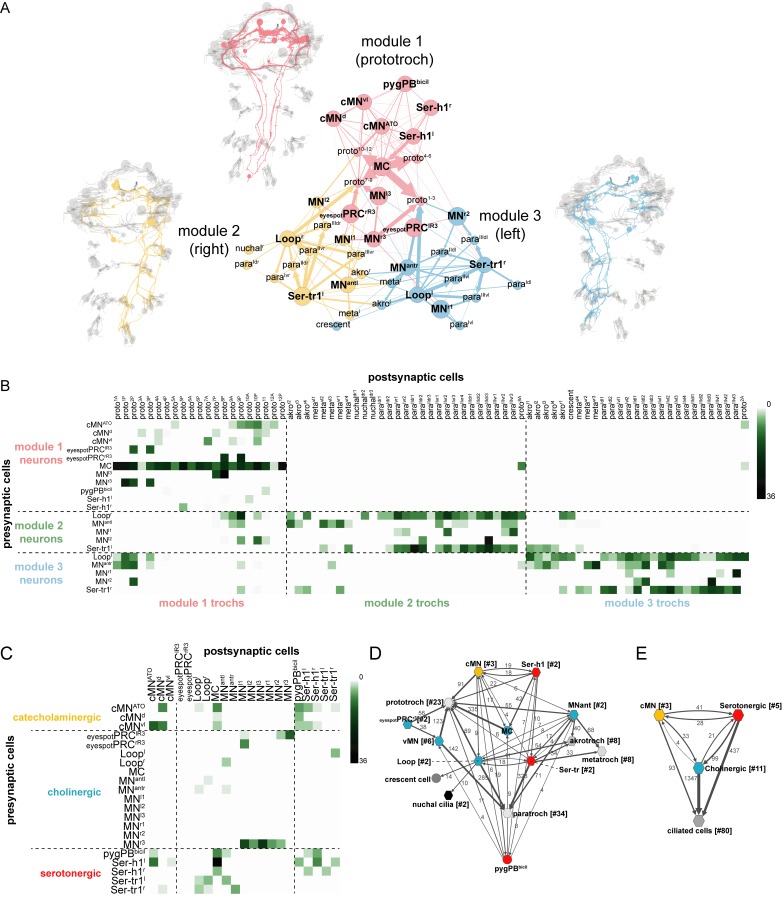
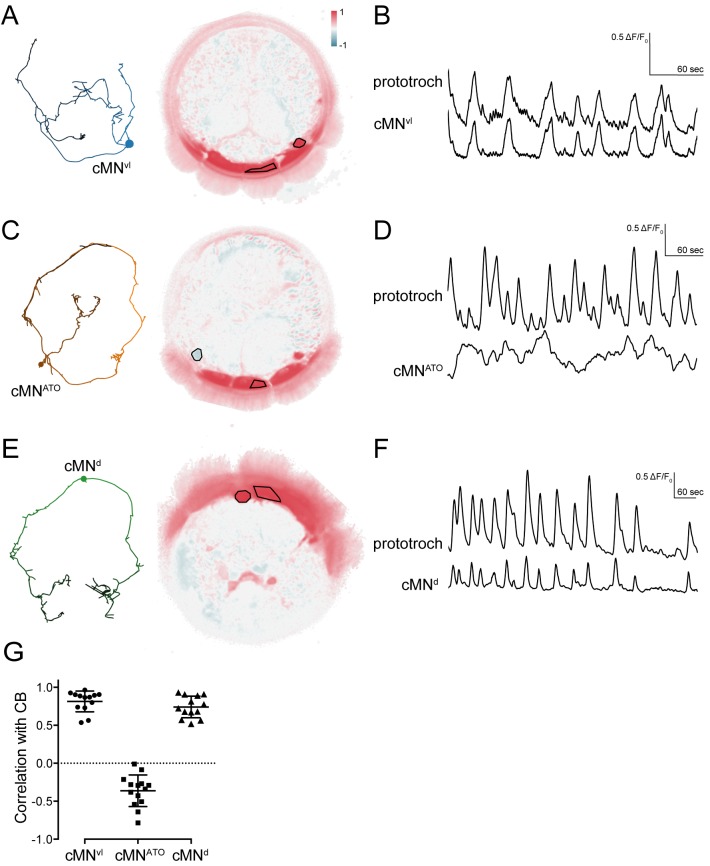
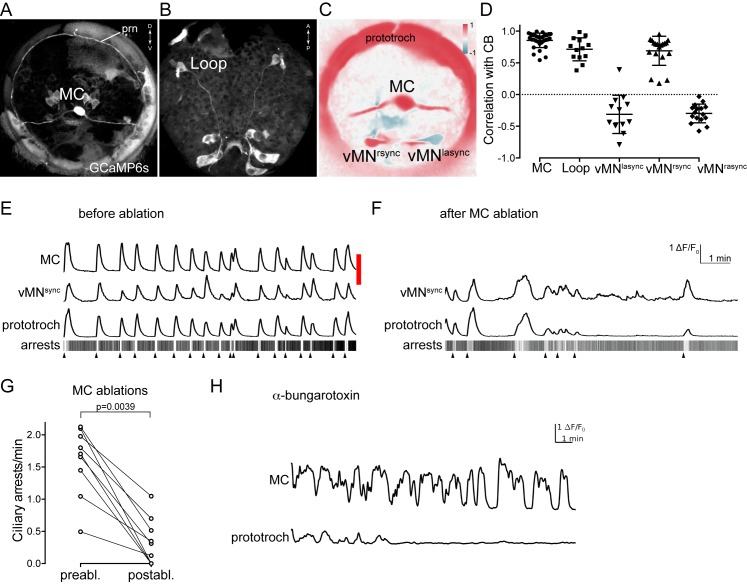
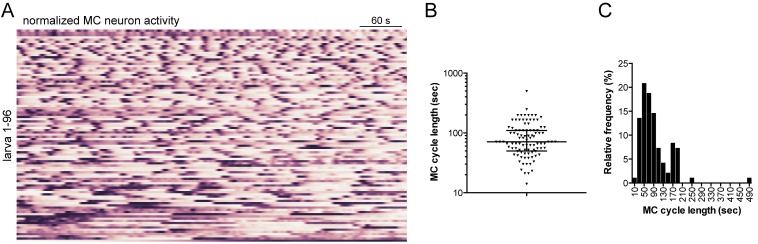
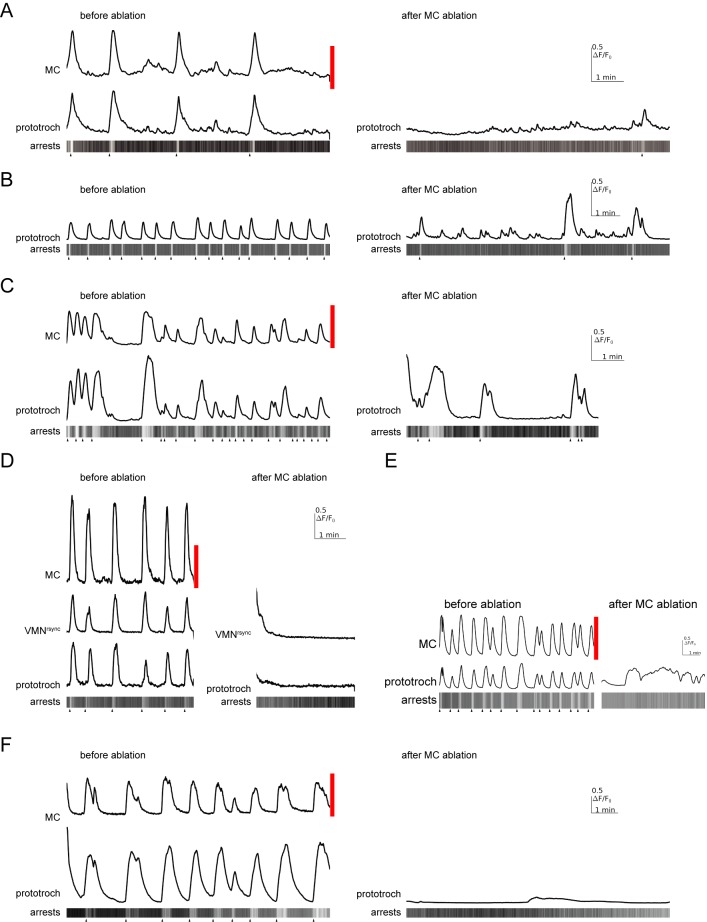
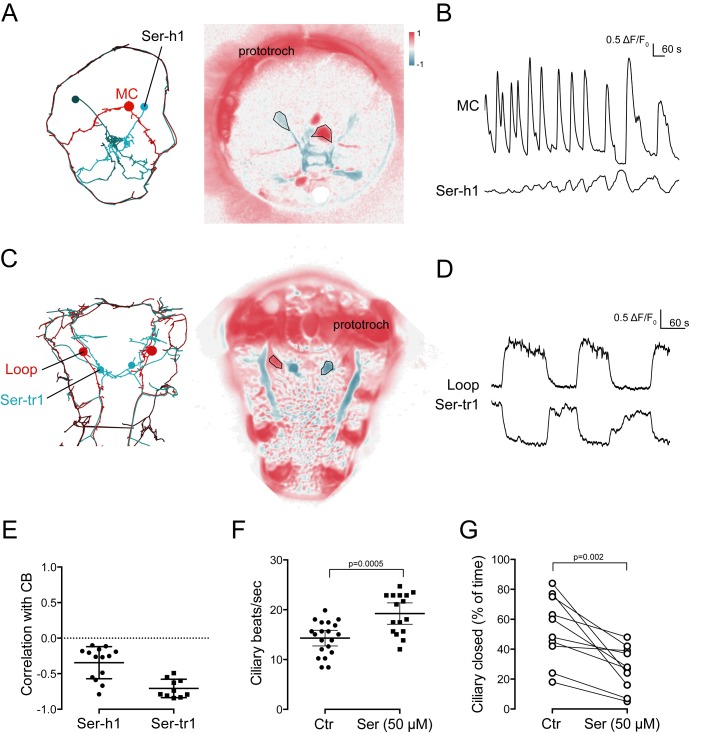
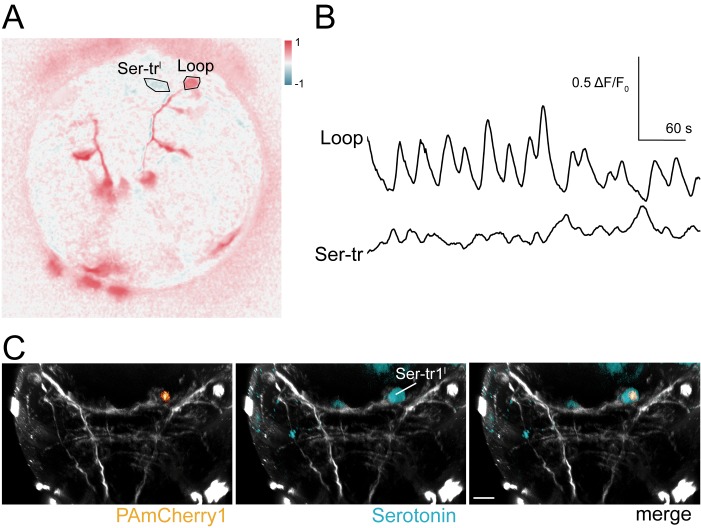
Ciliated surfaces harbouring synchronously beating cilia can generate fluid flow or drive locomotion. In ciliary swimmers, ciliary beating, arrests, and changes in beat frequency are often coordinated across extended or discontinuous surfaces. To understand how such coordination is achieved, we studied the ciliated larvae of , a marine annelid. larvae have segmental multiciliated cells that regularly display spontaneous coordinated ciliary arrests. We used whole-body connectomics, activity imaging, transgenesis, and neuron ablation to characterize the ciliomotor circuitry. We identified cholinergic, serotonergic, and catecholaminergic ciliomotor neurons. The synchronous rhythmic activation of cholinergic cells drives the coordinated arrests of all cilia. The serotonergic cells are active when cilia are beating. Serotonin inhibits the cholinergic rhythm, and increases ciliary beat frequency. Based on their connectivity and alternating activity, the catecholaminergic cells may generate the rhythm. The ciliomotor circuitry thus constitutes a stop-and-go pacemaker system for the whole-body coordination of ciliary locomotion.
拥有同步摆动纤毛的纤毛表面能够产生流体流动或驱动运动。在纤毛游动者中,纤毛摆动、停止以及摆动频率的变化通常在延伸的或不连续的表面上协同进行。为了了解这种协调是如何实现的,我们研究了一种海洋环节动物的纤毛幼虫。该幼虫具有分段的多纤毛细胞,这些细胞经常表现出自发的协调性纤毛停止运动。我们使用全身连接组学、活动成像、转基因技术和神经元消融来表征纤毛运动神经回路。我们鉴定出了胆碱能、血清素能和儿茶酚胺能纤毛运动神经元。胆碱能细胞的同步节律性激活驱动所有纤毛的协调性停止运动。当纤毛摆动时,血清素能细胞处于活跃状态。血清素抑制胆碱能节律,并增加纤毛摆动频率。基于它们的连接性和交替活动,儿茶酚胺能细胞可能产生这种节律。因此,纤毛运动神经回路构成了一个用于全身协调纤毛运动的启停起搏器系统。