Cai Yan-Fei, Li Shi-Feng, Li Shu-Fa, Xie Wei-Jia, Song Jie
Flower Research Institute of Yunnan Academy of Agricultural Sciences, Kunming, 650205, China.
Yunnan Flower Breeding Key Lab, Kunming, 650204, China.
Bot Stud. 2014 Dec;55(1):36. doi: 10.1186/1999-3110-55-36. Epub 2014 Mar 20.
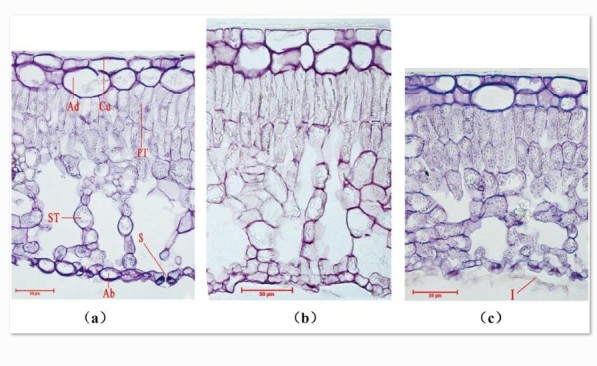
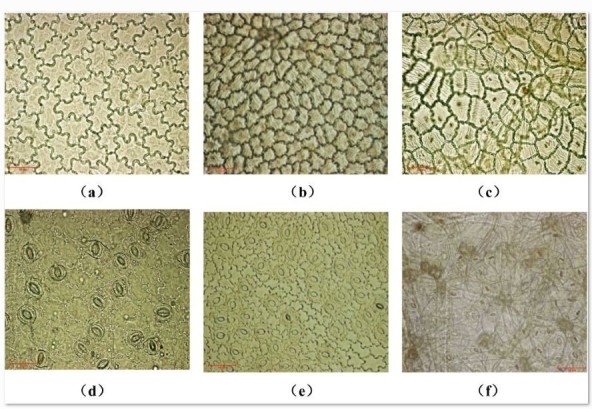
Rhododendron is one of the most well-known alpine flowers. In order to identify performances relating to Rhododendron's natural habitats we investigated the leaf anatomical structures and photosynthetic characteristics of R. yunnanense, R. irroratum and R. delavayi, which showed different responses after being transplanted into a common environment.
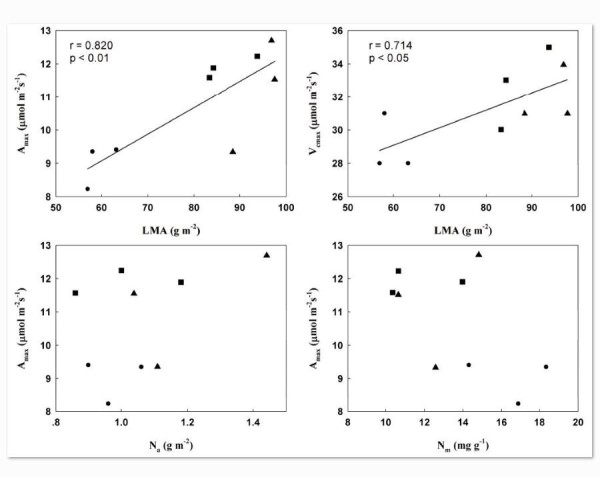
When compared with R. irroratum and R. delavayi, R. yunnanense had lower leaf dry mass per unit area (LMA) and larger stomata, but smaller stomatal density (SD) and total stomata apparatus area percent (At), lower stomatal conductance (Gs), transpiration rate (Tr), light compensation point (LCP), light saturation point (LSP), light-saturated photosynthetic rate (Amax) and leaf nitrogen content per unit area (Na). LMA was positively correlated with Amax and maximum rates of carboxylation (Vcmax). However, leaf N content was not significantly correlated with Amax. Thus, the variation in leaf photosynthesis among species was regulated largely by changes in LMA, rather than the concent of nitrogen in leaf tissue.
R. yunnanense plants are vulnerable to moisture and light stress, while R. irroratum and R. delavayi are better suited to dry and high radiation environments. The present results contribute to our understanding physiological trait divergence in Rhododendron, as well benefit introduction and domestication efforts for the three species of Rhododendron studied in this work.
杜鹃是最著名的高山花卉之一。为了确定与杜鹃自然栖息地相关的表现,我们研究了云南杜鹃、露珠杜鹃和马缨杜鹃的叶片解剖结构和光合特性,这三种杜鹃在移植到共同环境后表现出不同的反应。
与露珠杜鹃和马缨杜鹃相比,云南杜鹃单位面积叶片干质量(LMA)较低,气孔较大,但气孔密度(SD)和气孔器总面积百分比(At)较小,气孔导度(Gs)、蒸腾速率(Tr)、光补偿点(LCP)、光饱和点(LSP)、光饱和光合速率(Amax)和单位面积叶片氮含量(Na)较低。LMA与Amax和最大羧化速率(Vcmax)呈正相关。然而,叶片氮含量与Amax无显著相关性。因此,物种间叶片光合作用的差异很大程度上受LMA变化的调节,而非叶片组织中氮的含量。
云南杜鹃植株易受水分和光照胁迫,而露珠杜鹃和马缨杜鹃更适合干燥和高辐射环境。目前的研究结果有助于我们理解杜鹃的生理性状差异,也有利于本文所研究的三种杜鹃的引种驯化工作。