Food Safety Key Laboratory of Zhejiang Province, School of Food Science and Biotechnology, Zhejiang Gongshang University, Hangzhou, 310018, P.R. China.
Laboratory of Mucosal Immunology and Food Research, School of Food Science and Biotechnology, Zhejiang Gongshang University, Hangzhou, 310018, P.R. China.
Sci Rep. 2017 May 16;7(1):1987. doi: 10.1038/s41598-017-02260-8.
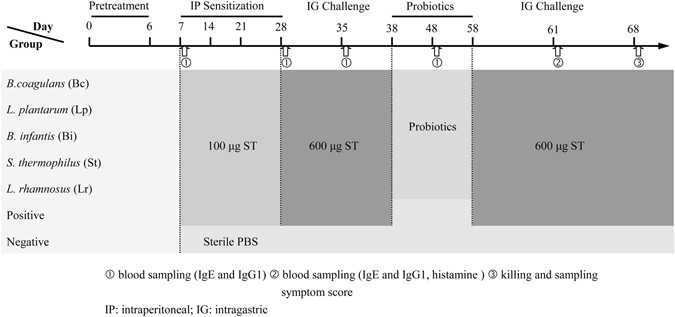
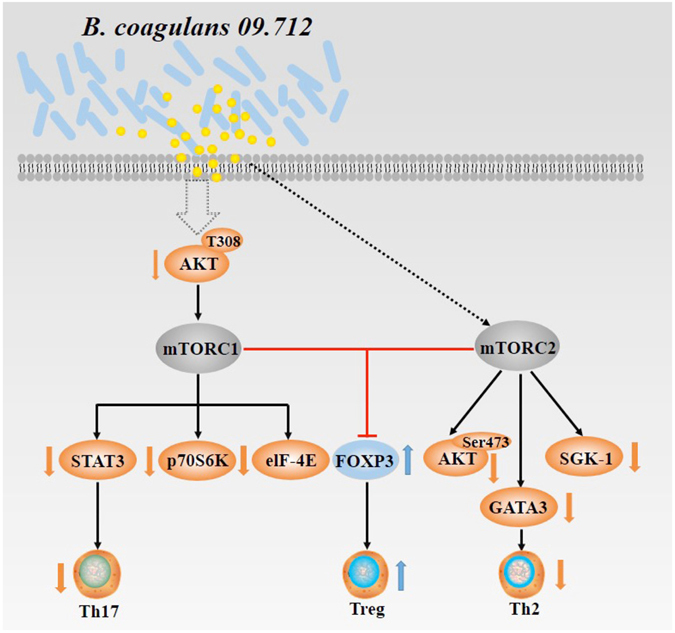
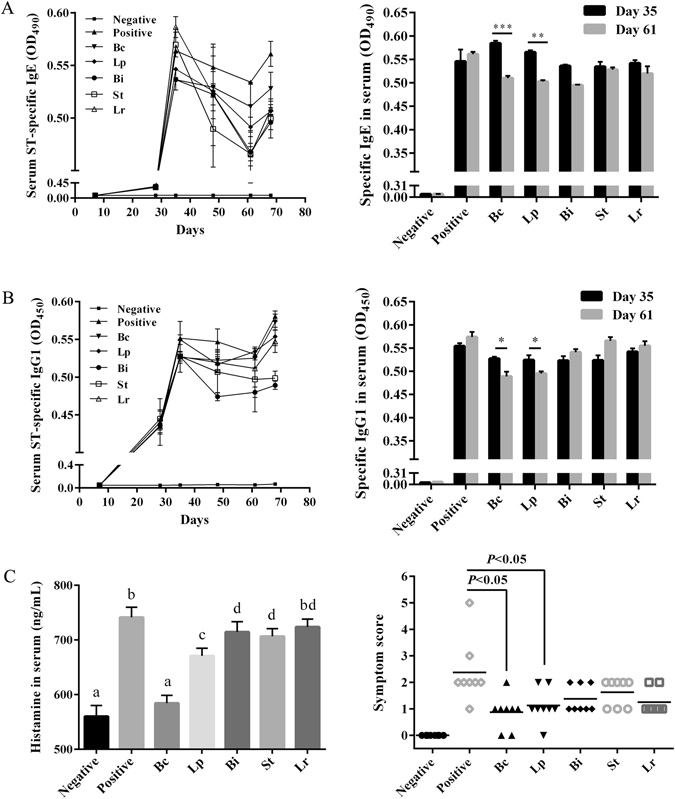
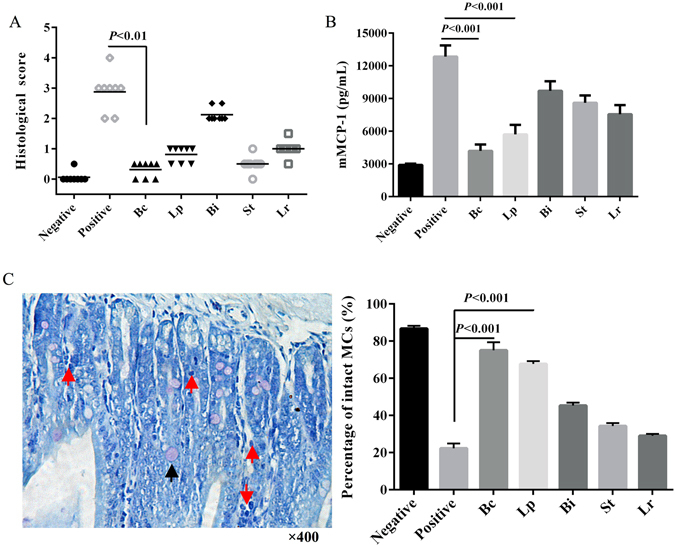
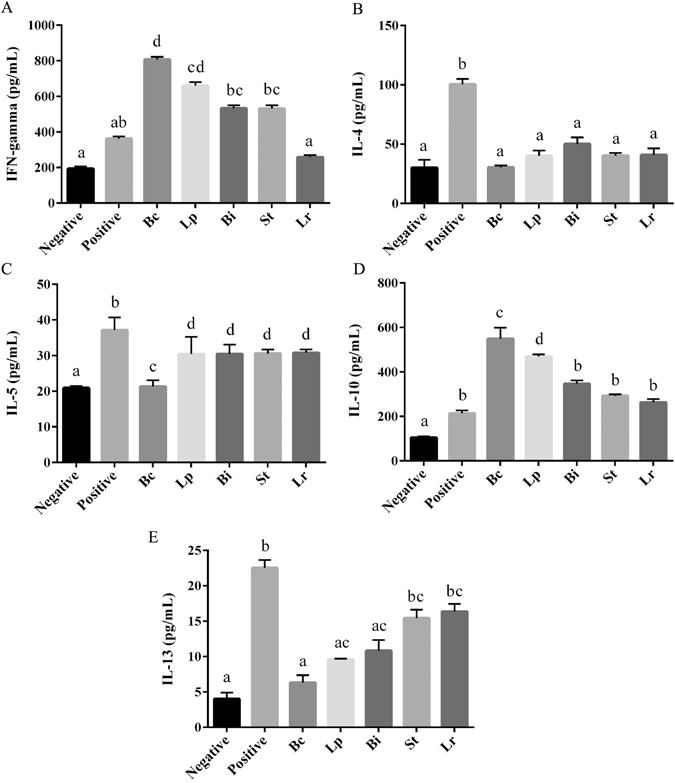
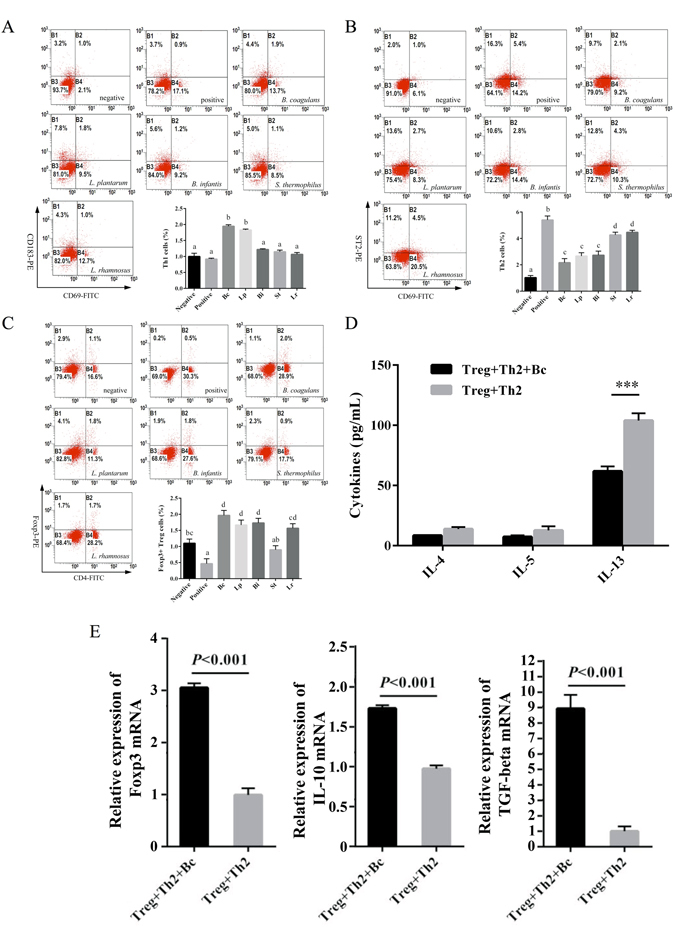
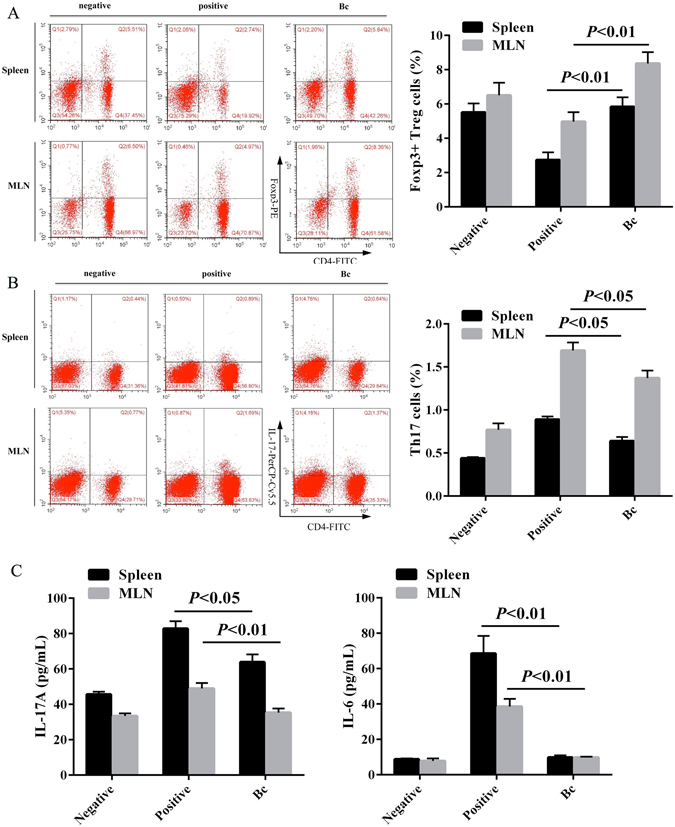
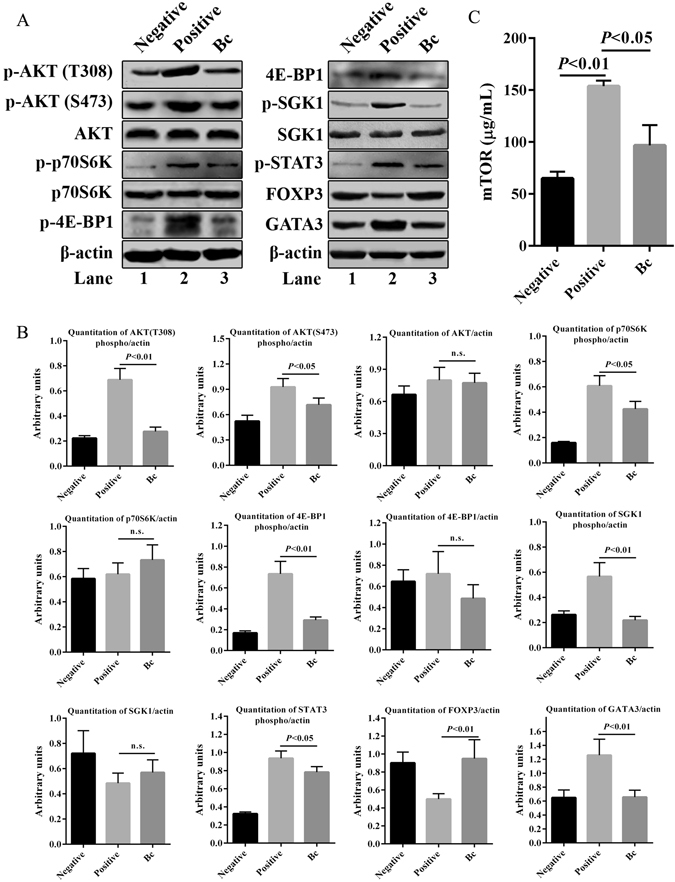
The beneficial effects of probiotics have been described in allergic sensitization and diseases; however, many questions remain unanswered, such as characteristics of the most effective strains in modulation of allergic responses and how orally administered probiotics affect the systemic immune system. In the present work, oral administration of five lactic acid bacteria strains showed variable effects on protection against the allergic reaction in a mouse model of food allergy to shrimp tropomyosin (ST). The most effective anti-allergic strain, Bacillus coagulans 09.712 (Bc), greatly improved epithelial barrier function and increased lymphocytes proliferation. Moreover, Bc suppresses ST sensitization by altering Th1/Th2/Treg balance as a result of strong induction of CD4Foxp3Tregs in combination with IL-10 producing. Bc-specific induction of CD4Foxp3 Tregs also suppresses Th17 pro-inflammatory response in this mouse model. Finally, the intake of Bc suppresses mTOR activation and thus the phosphorylation of downstream factors. Inhibition of mTOR signaling by Bc further results in FOXP3 up-regulation and GATA-3 down-regulation, which, in turn, facilitate to control Th2-predominant and Th17 pro-inflammatory responses caused by ST. Our work provides further characterization of the anti-allergic effects of probiotic LAB strains, and identifies new targets for preventive and curative treatment of food allergies.
益生菌对过敏致敏和疾病的有益作用已有描述;然而,仍有许多问题尚未得到解答,例如在调节过敏反应方面最有效的菌株的特征以及口服益生菌如何影响全身免疫系统。在本工作中,五种乳酸菌菌株的口服给药对虾肌球蛋白(ST)食物过敏小鼠模型中的过敏反应保护表现出不同的效果。最有效的抗过敏菌株凝结芽孢杆菌 09.712(Bc)极大地改善了上皮屏障功能并增加了淋巴细胞增殖。此外,Bc 通过改变 Th1/Th2/Treg 平衡来抑制 ST 致敏,这是由于强烈诱导 CD4Foxp3Tregs 与产生 IL-10 的结合。Bc 特异性诱导 CD4Foxp3 Tregs 也抑制了该小鼠模型中的 Th17 促炎反应。最后,Bc 的摄入抑制了 mTOR 的激活,从而抑制了下游因子的磷酸化。Bc 通过抑制 mTOR 信号传导进一步导致 FOXP3 的上调和 GATA-3 的下调,这反过来又有助于控制由 ST 引起的 Th2 占优势和 Th17 促炎反应。我们的工作进一步描述了益生菌 LAB 菌株的抗过敏作用,并确定了预防和治疗食物过敏的新靶点。