Dorazio Robert M, Karanth K Ullas
Wetland and Aquatic Research Center, U.S. Geological Survey, Gainesville, Florida, United States of America.
Wildlife Conservation Society, Bronx, New York, United States of America.
PLoS One. 2017 May 17;12(5):e0176966. doi: 10.1371/journal.pone.0176966. eCollection 2017.
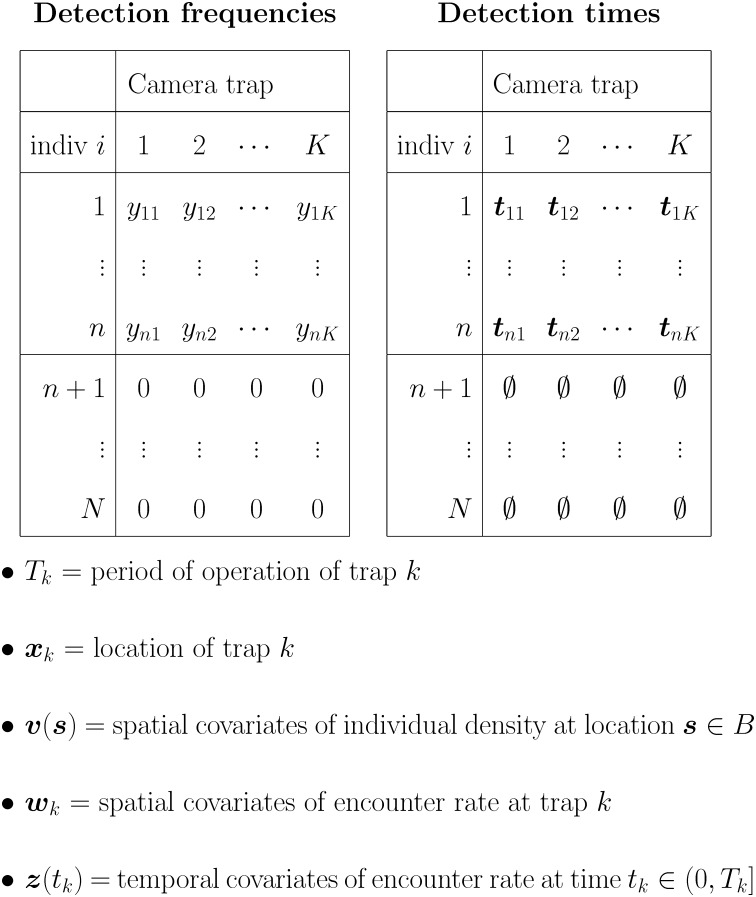
Several spatial capture-recapture (SCR) models have been developed to estimate animal abundance by analyzing the detections of individuals in a spatial array of traps. Most of these models do not use the actual dates and times of detection, even though this information is readily available when using continuous-time recorders, such as microphones or motion-activated cameras. Instead most SCR models either partition the period of trap operation into a set of subjectively chosen discrete intervals and ignore multiple detections of the same individual within each interval, or they simply use the frequency of detections during the period of trap operation and ignore the observed times of detection. Both practices make inefficient use of potentially important information in the data.
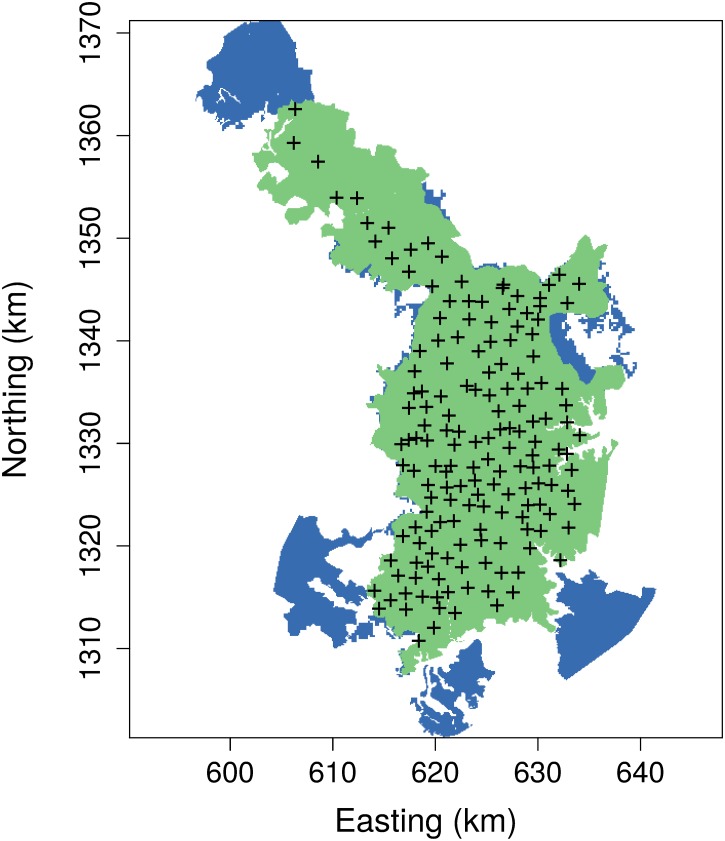
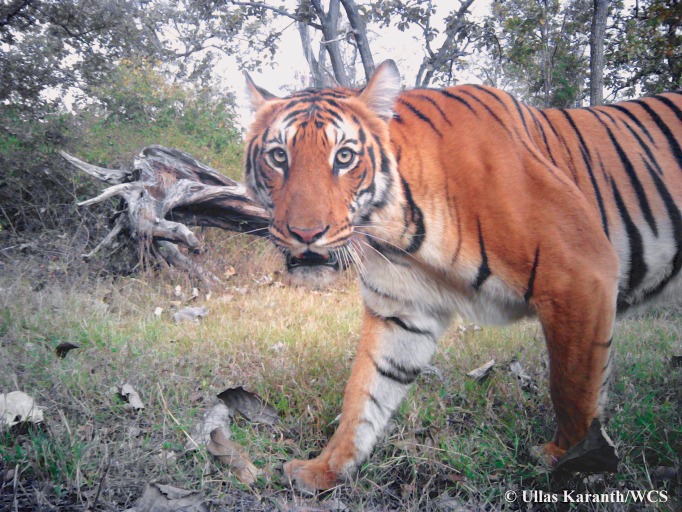
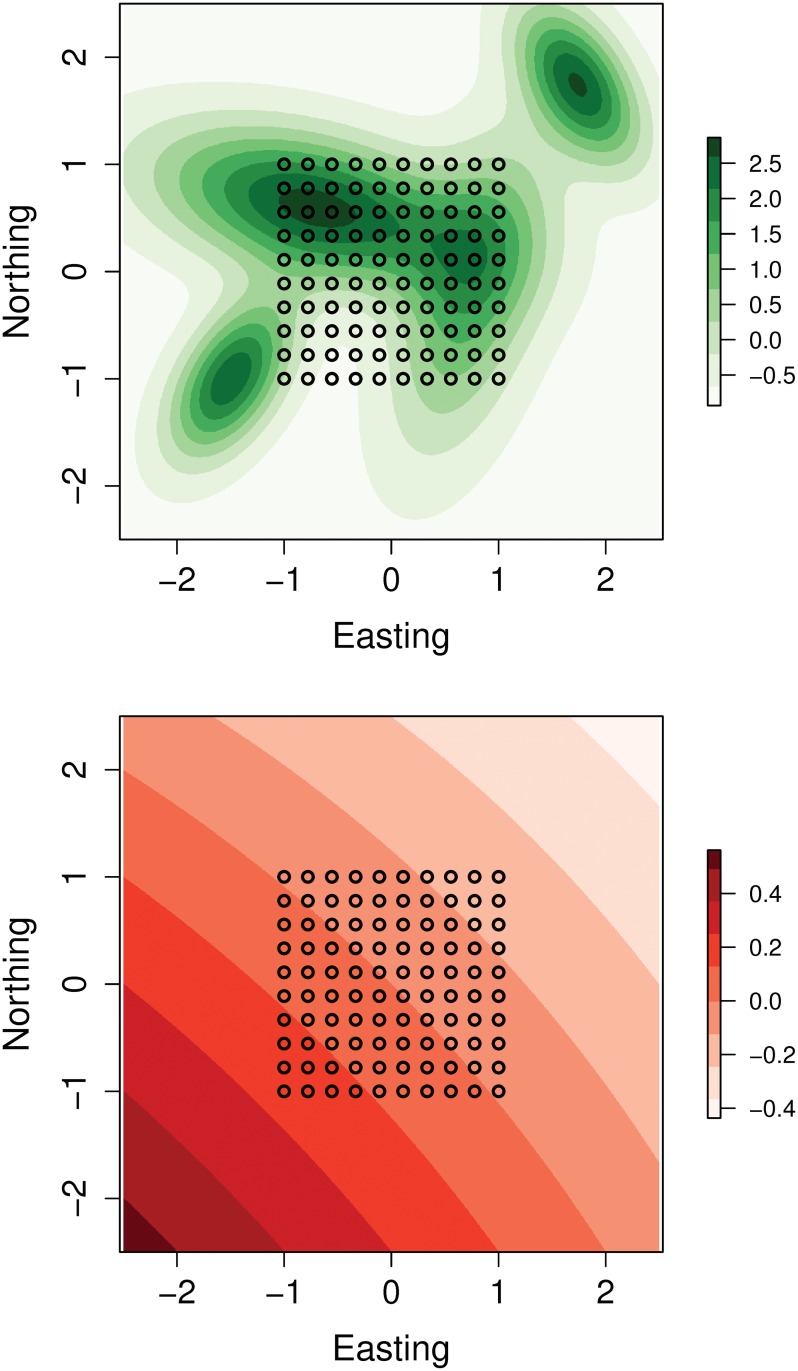
We developed a hierarchical SCR model to estimate the spatial distribution and abundance of animals detected with continuous-time recorders. Our model includes two kinds of point processes: a spatial process to specify the distribution of latent activity centers of individuals within the region of sampling and a temporal process to specify temporal patterns in the detections of individuals. We illustrated this SCR model by analyzing spatial and temporal patterns evident in the camera-trap detections of tigers living in and around the Nagarahole Tiger Reserve in India. We also conducted a simulation study to examine the performance of our model when analyzing data sets of greater complexity than the tiger data.
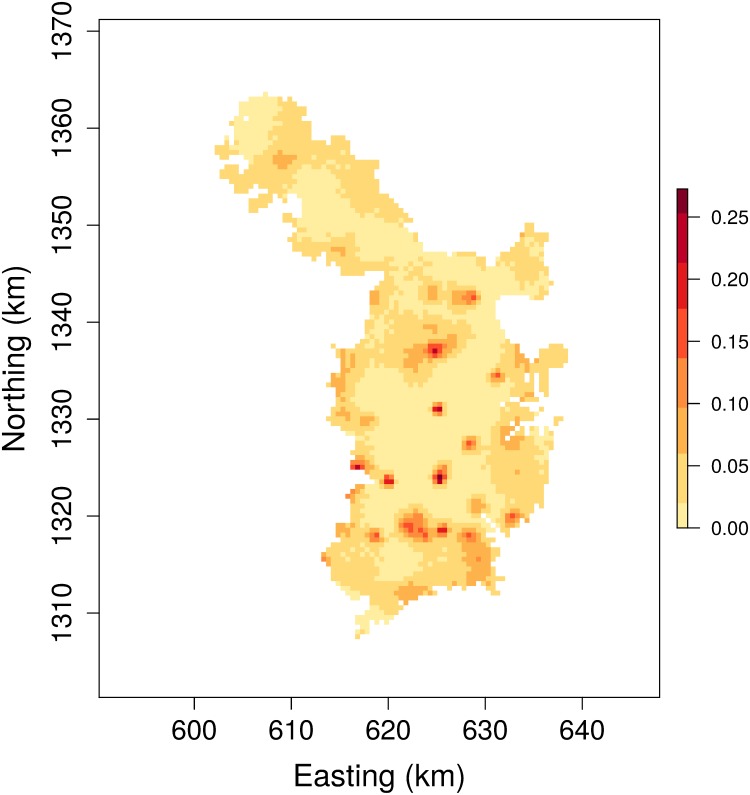
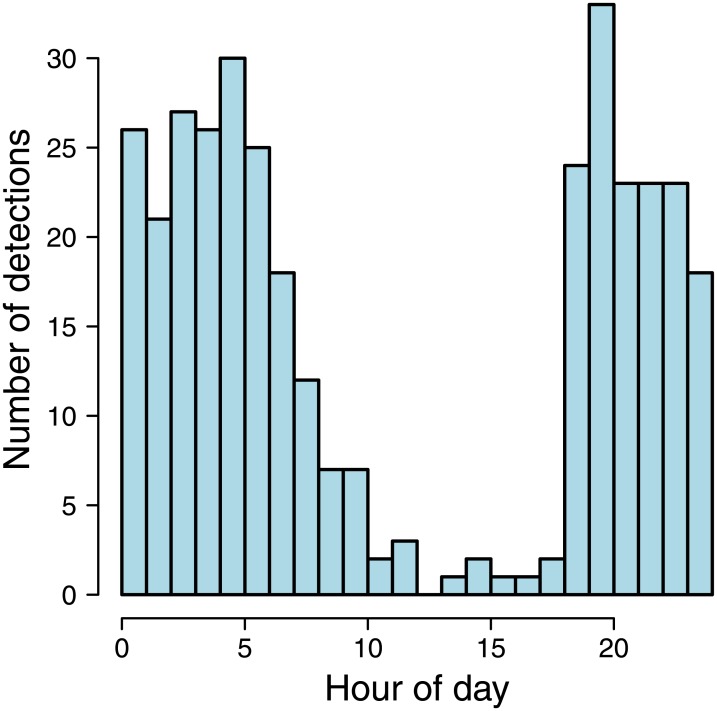
Our approach provides three important benefits: First, it exploits all of the information in SCR data obtained using continuous-time recorders. Second, it is sufficiently versatile to allow the effects of both space use and behavior of animals to be specified as functions of covariates that vary over space and time. Third, it allows both the spatial distribution and abundance of individuals to be estimated, effectively providing a species distribution model, even in cases where spatial covariates of abundance are unknown or unavailable. We illustrated these benefits in the analysis of our data, which allowed us to quantify differences between nocturnal and diurnal activities of tigers and to estimate their spatial distribution and abundance across the study area. Our continuous-time SCR model allows an analyst to specify many of the ecological processes thought to be involved in the distribution, movement, and behavior of animals detected in a spatial trapping array of continuous-time recorders. We plan to extend this model to estimate the population dynamics of animals detected during multiple years of SCR surveys.
已经开发了几种空间捕获 - 重捕(SCR)模型,通过分析陷阱空间阵列中个体的检测情况来估计动物数量。这些模型中的大多数都不使用实际的检测日期和时间,尽管在使用连续时间记录器(如麦克风或运动激活相机)时,这些信息很容易获得。相反,大多数SCR模型要么将陷阱操作周期划分为一组主观选择的离散间隔,并忽略每个间隔内同一个体的多次检测,要么只是使用陷阱操作期间的检测频率,而忽略观察到的检测时间。这两种做法都没有有效利用数据中潜在的重要信息。
我们开发了一种分层SCR模型,用于估计通过连续时间记录器检测到的动物的空间分布和数量。我们的模型包括两种点过程:一种空间过程,用于指定采样区域内个体潜在活动中心的分布;一种时间过程,用于指定个体检测中的时间模式。我们通过分析印度纳加尔霍雷老虎保护区及其周边地区老虎的相机陷阱检测中明显的空间和时间模式,来说明这种SCR模型。我们还进行了一项模拟研究,以检验我们的模型在分析比老虎数据更复杂的数据集时的性能。
我们的方法提供了三个重要优点:第一,它利用了使用连续时间记录器获得的SCR数据中的所有信息。第二,它具有足够的通用性,允许将动物的空间利用和行为的影响指定为随空间和时间变化的协变量的函数。第三,它允许估计个体的空间分布和数量,即使在数量的空间协变量未知或不可用时,也能有效地提供物种分布模型。我们在数据分析中展示了这些优点,这使我们能够量化老虎夜间和白天活动之间的差异,并估计它们在整个研究区域的空间分布和数量。我们的连续时间SCR模型允许分析师指定许多被认为与在连续时间记录器的空间诱捕阵列中检测到的动物的分布、移动和行为有关的生态过程。我们计划扩展这个模型,以估计在多年的SCR调查中检测到的动物的种群动态。