Bettinsoli P, Ferrari-Toninelli G, Bonini S A, Prandelli C, Memo M
Department of Molecular and Translational Medicine, University of Brescia Medical School, Viale Europa, 11, Brescia, Italy.
BMC Cancer. 2017 May 19;17(1):352. doi: 10.1186/s12885-017-3340-3.
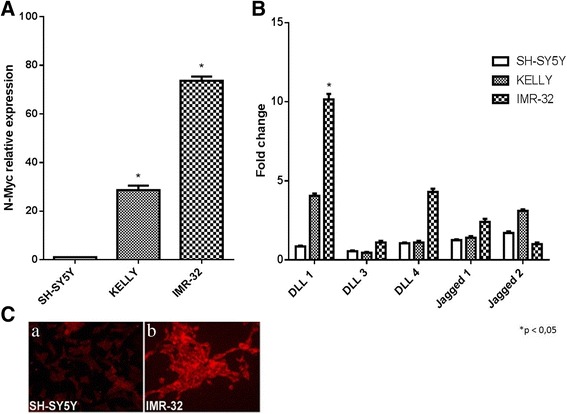
Neuroblastoma is the most common extracranial solid malignancy in childhood, responsible for 15% of all pediatric cancer deaths. It is an heterogeneous disease that does not always respond to classical therapy; so the identification of new and specific molecular targets to improve existing therapy is needed. We have previously demonstrated the involvement of the Notch pathway in the onset and progression of neuroblastoma. In this study we further investigated the role of Notch signaling and identified Delta-like 1 (DLL1) as a novel molecular target in neuroblastoma cells with a high degree of MYCN amplification, which is a major oncogenic driver in neuroblastoma. The possibility to act on DLL1 expression levels by using microRNAs (miRNAs) was assessed.
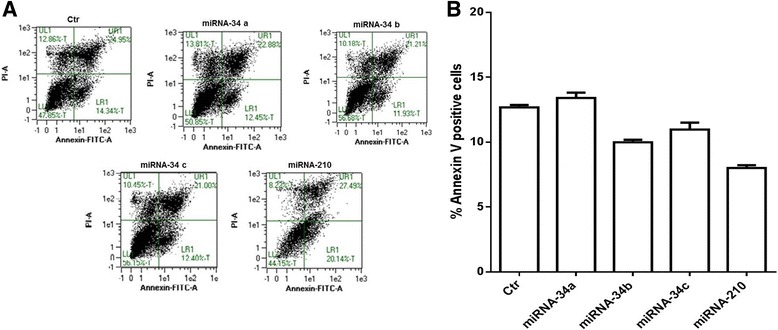
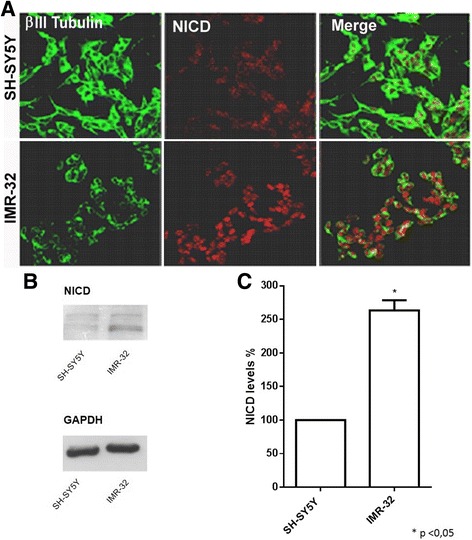
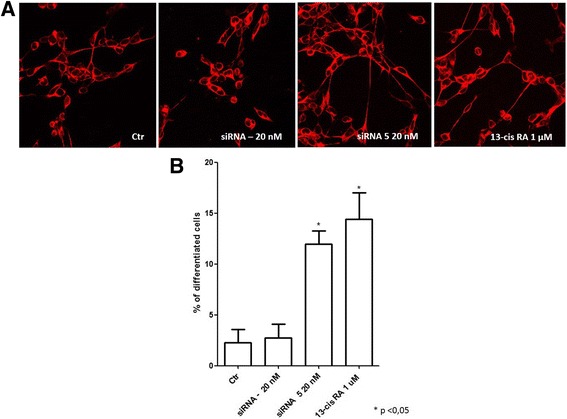
DLL1 mRNA and protein expression levels were measured in three different neuroblastoma cell lines using quantitative real-time PCR and Western Blot analysis, respectively. Activation of the Notch pathway as a result of increased levels of DLL1 was analyzed by Immunofluorescence and Western Blot methods. In silico tools revealed the possibility to act on DLL1 expression levels with miRNAs, in particular with the miRNA-34 family. Neuroblastoma cells were transfected with miRNA-34 family members, and the effect of miRNAs transfection on DLL1 mRNA expression levels, on cell differentiation, proliferation and apoptosis was measured.
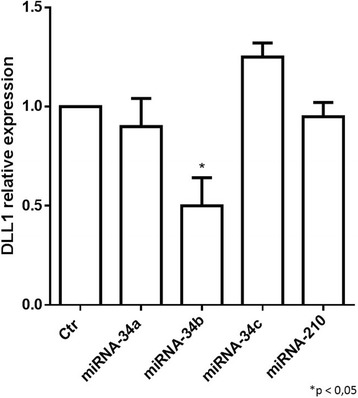
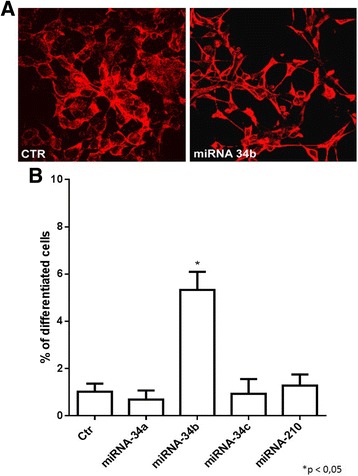
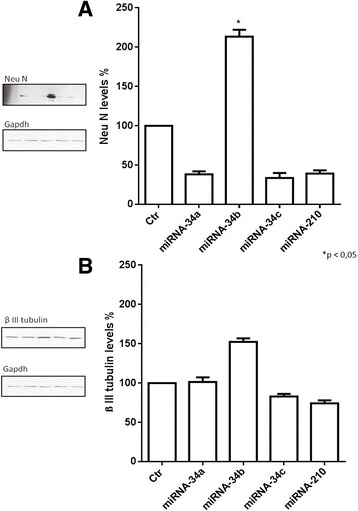
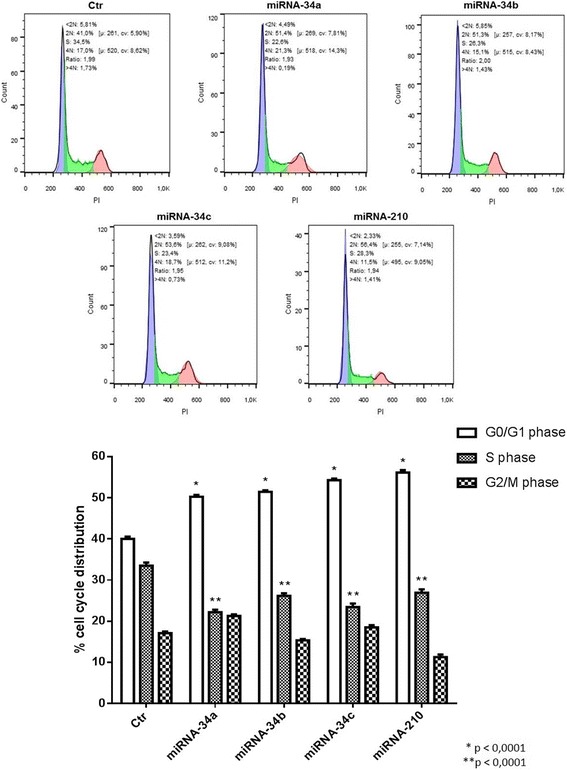
In this study, the DLL1 ligand was identified as the Notch pathway component highly expressed in neuroblastoma cells with MYCN amplification. In silico analysis demonstrated that DLL1 is one of the targets of miRNA-34 family members that maps on chromosome regions that are frequently deregulated or deleted in neuroblastoma. We studied the possibility to use miRNAs to target DLL1. Among all miRNA-34 family members, miRNA-34b is able to significantly downregulate DLL1 mRNA expression levels, to arrest cell proliferation and to induce neuronal differentiation in malignant neuroblastoma cells.
Targeted therapies have emerged as new strategies for cancer treatment. This study identified the Notch ligand DLL1 as a novel and attractive molecular target in childhood neuroblastoma and its results could help to devise a targeted therapy using miRNAs.
神经母细胞瘤是儿童期最常见的颅外实体恶性肿瘤,占所有儿童癌症死亡病例的15%。它是一种异质性疾病,对传统治疗并不总是有反应;因此,需要识别新的特异性分子靶点以改进现有治疗方法。我们之前已证明Notch通路参与神经母细胞瘤的发生和发展。在本研究中,我们进一步研究了Notch信号的作用,并确定Delta样1(DLL1)是具有高度MYCN扩增的神经母细胞瘤细胞中的一个新分子靶点,MYCN扩增是神经母细胞瘤的一个主要致癌驱动因素。评估了使用微小RNA(miRNA)作用于DLL1表达水平的可能性。
分别使用定量实时PCR和蛋白质免疫印迹分析在三种不同的神经母细胞瘤细胞系中测量DLL1 mRNA和蛋白质表达水平。通过免疫荧光和蛋白质免疫印迹方法分析由于DLL1水平升高导致的Notch通路激活情况。计算机工具揭示了用miRNA作用于DLL1表达水平的可能性,特别是miRNA - 34家族。用miRNA - 34家族成员转染神经母细胞瘤细胞,并测量miRNA转染对DLL1 mRNA表达水平、细胞分化、增殖和凋亡的影响。
在本研究中,DLL1配体被确定为在具有MYCN扩增的神经母细胞瘤细胞中高表达的Notch通路成分。计算机分析表明,DLL1是miRNA - 34家族成员的靶点之一,这些靶点位于神经母细胞瘤中经常失调或缺失的染色体区域。我们研究了使用miRNA靶向DLL1的可能性。在所有miRNA - 34家族成员中,miRNA - 34b能够显著下调DLL1 mRNA表达水平,阻止细胞增殖并诱导恶性神经母细胞瘤细胞的神经元分化。
靶向治疗已成为癌症治疗的新策略。本研究确定Notch配体DLL1是儿童神经母细胞瘤中一个新的且有吸引力的分子靶点,其结果可能有助于设计使用miRNA的靶向治疗方法。