Centro di Ingegneria Genetica e Biotecnologia Avanzate, CEINGE, Naples, Italy.
PLoS One. 2011;6(9):e24584. doi: 10.1371/journal.pone.0024584. Epub 2011 Sep 12.
Through negative regulation of gene expression, microRNAs (miRNAs) can function as oncosuppressors in cancers, and can themselves show altered expression in various tumor types. Here, we have investigated medulloblastoma tumors (MBs), which arise from an early impairment of developmental processes in the cerebellum, where Notch signaling is involved in many of the cell-fate-determining stages. Notch regulates a subset of MB cells that have stem-cell-like properties and can promote tumor growth. On the basis of this evidence, we hypothesized that miRNAs targeting the Notch pathway can regulate these phenomena, and can be used in anti-cancer therapies.
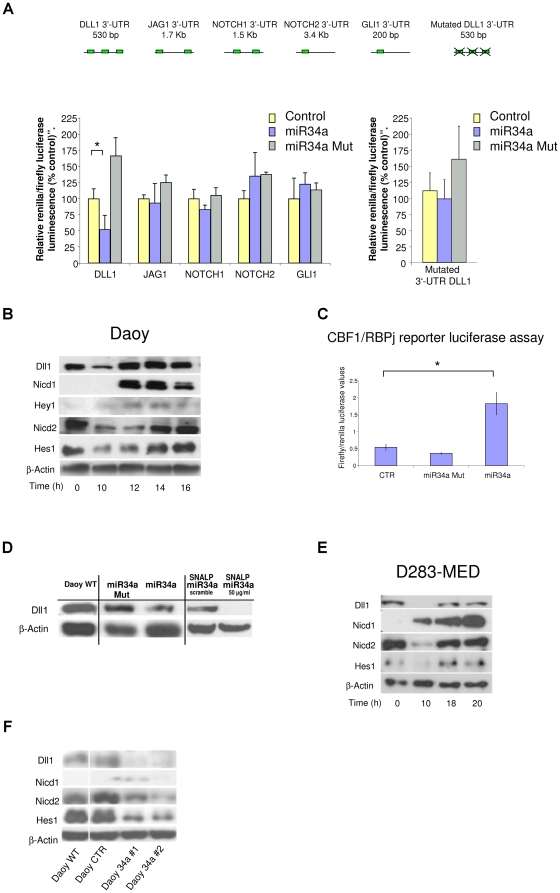
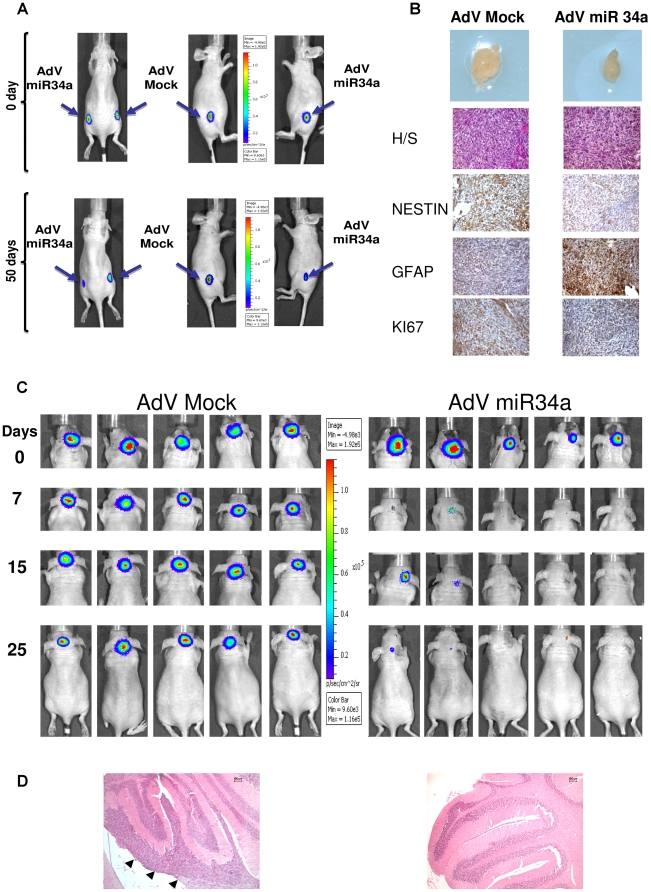
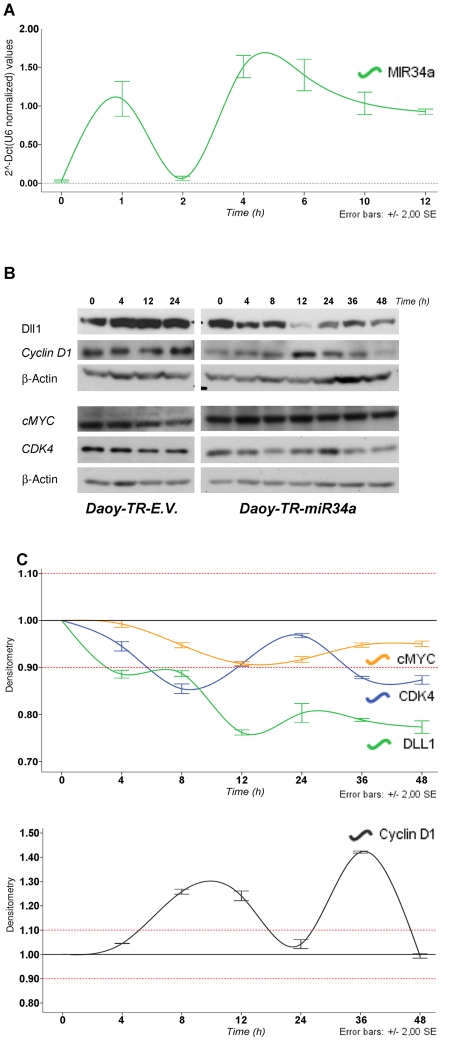
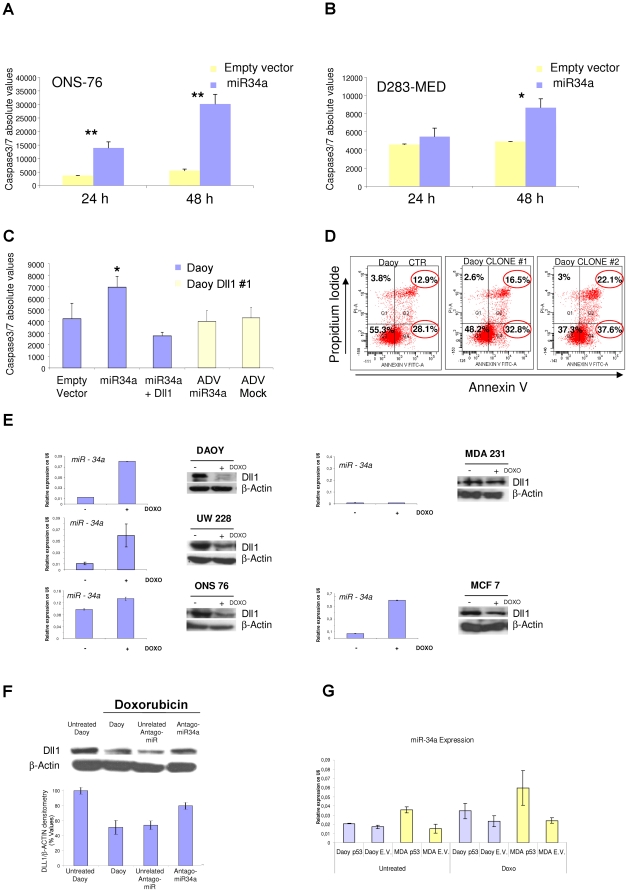
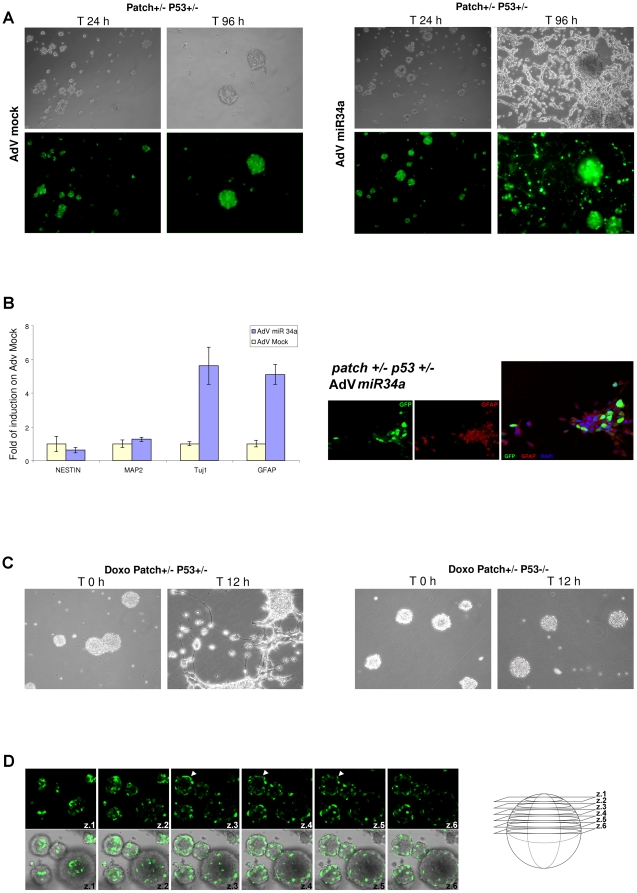
METHODOLOGY/PRINCIPAL FINDINGS: In a screening of potential targets within Notch signaling, miR-34a was seen to be a regulator of the Notch pathway through its targeting of Notch ligand Delta-like 1 (Dll1). Down-regulation of Dll1 expression by miR-34a negatively regulates cell proliferation, and induces apoptosis and neural differentiation in MB cells. Using an inducible tetracycline on-off model of miR-34a expression, we show that in Daoy MB cells, Dll1 is the first target that is regulated in MB, as compared to the other targets analyzed here: Cyclin D1, cMyc and CDK4. MiR-34a expression negatively affects CD133(+)/CD15(+) tumor-propagating cells, then we assay through reverse-phase proteomic arrays, Akt and Stat3 signaling hypo-phosphorylation. Adenoviruses carrying the precursor miR-34a induce neurogenesis of tumor spheres derived from a genetic animal model of MB (Patch1(+/-) p53(-/-)), thus providing further evidence that the miR-34a/Dll1 axis controls both autonomous and non autonomous signaling of Notch. In vivo, miR-34a overexpression carried by adenoviruses reduces tumor burden in cerebellum xenografts of athymic mice, thus demonstrating an anti-tumorigenic role of miR-34a in vivo.
CONCLUSIONS/SIGNIFICANCE: Despite advances in our understanding of the pathogenesis of MB, one-third of patients with MB remain incurable. Here, we show that stable nucleic-acid-lipid particles carrying mature miR-34a can target Dll1 in vitro and show equal effects to those of adenovirus miR-34a cell infection. Thus, this technology forms the basis for their therapeutic use for the delivery of miR-34a in brain-tumor treatment, with no signs of toxicity described to date in non-human primate trials.
通过对基因表达的负调控,microRNAs(miRNAs)可以作为癌症中的肿瘤抑制因子发挥作用,并且在各种肿瘤类型中自身的表达也会发生改变。在这里,我们研究了髓母细胞瘤(MB),它起源于小脑早期发育过程的损伤,而 Notch 信号通路参与了许多细胞命运决定阶段。Notch 调节具有干细胞样特性的一组 MB 细胞,这些细胞可以促进肿瘤生长。基于这一证据,我们假设针对 Notch 通路的 miRNA 可以调节这些现象,并可用于癌症治疗。
方法/主要发现:在 Notch 信号通路的潜在靶点筛选中,miR-34a 通过靶向 Notch 配体 Delta-like 1(Dll1)被视为 Notch 通路的调节剂。miR-34a 下调 Dll1 表达可负调控细胞增殖,并诱导 MB 细胞凋亡和神经分化。通过诱导型四环素开-关 miR-34a 表达模型,我们表明在 Daoy MB 细胞中,与本文分析的其他靶标相比,Dll1 是第一个在 MB 中被调节的靶标:细胞周期蛋白 D1、cMyc 和 CDK4。miR-34a 表达可负调控 CD133(+)/CD15(+)肿瘤增殖细胞,然后我们通过反相蛋白组学阵列检测 Akt 和 Stat3 信号的低磷酸化。携带前体 miR-34a 的腺病毒诱导源自 MB 遗传动物模型(Patch1(+/-) p53(-/-))的肿瘤球体的神经发生,这进一步证明了 miR-34a/Dll1 轴控制 Notch 的自主和非自主信号。在体内,携带腺病毒的 miR-34a 过表达可减少裸鼠小脑异种移植中的肿瘤负担,从而证明了 miR-34a 在体内的抗肿瘤作用。
结论/意义:尽管我们对 MB 发病机制的理解取得了进展,但仍有三分之一的 MB 患者无法治愈。在这里,我们表明,携带成熟 miR-34a 的稳定核酸脂质颗粒可在体外靶向 Dll1,并表现出与腺病毒 miR-34a 细胞感染相同的效果。因此,这项技术为其在脑肿瘤治疗中递送 miR-34a 的治疗用途奠定了基础,迄今为止在非人类灵长类动物试验中没有出现毒性迹象。