Faculty of Biology, Medicine and Health, University of Manchester, Manchester M13 9PT, UK.
Department of Mathematics, University of Michigan, 2074 East Hall, 530 Church Street, Ann Arbor, MI 48109-1043, USA.
Curr Biol. 2017 Jun 5;27(11):1633-1640.e3. doi: 10.1016/j.cub.2017.04.039. Epub 2017 May 18.
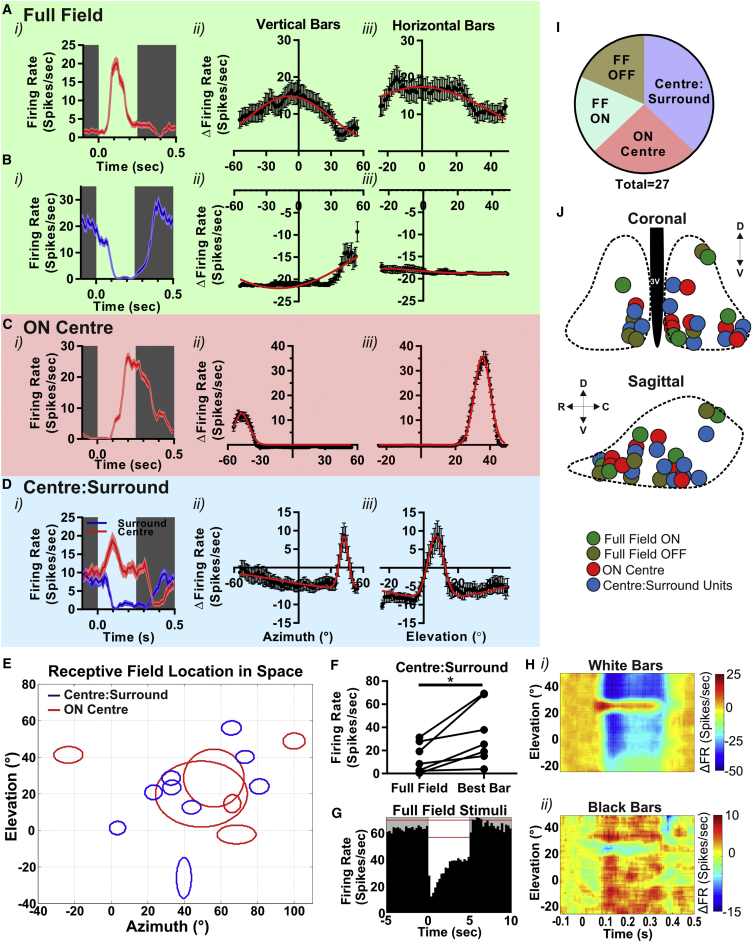
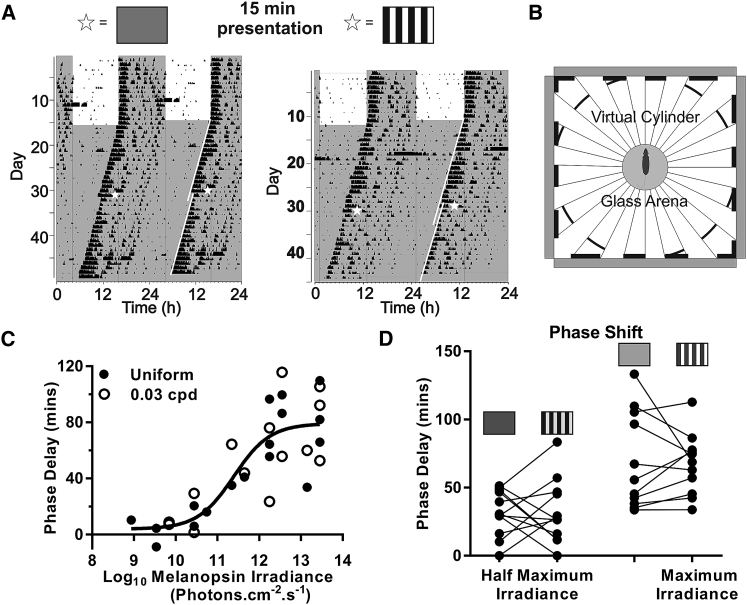
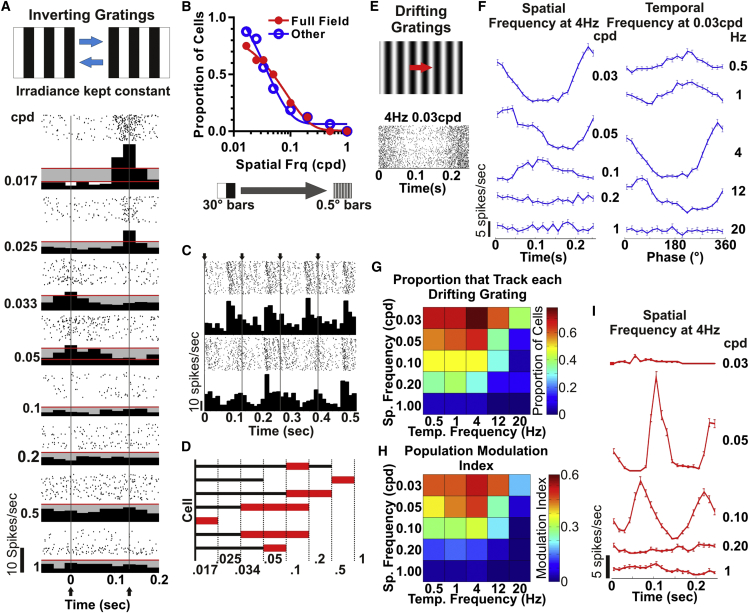
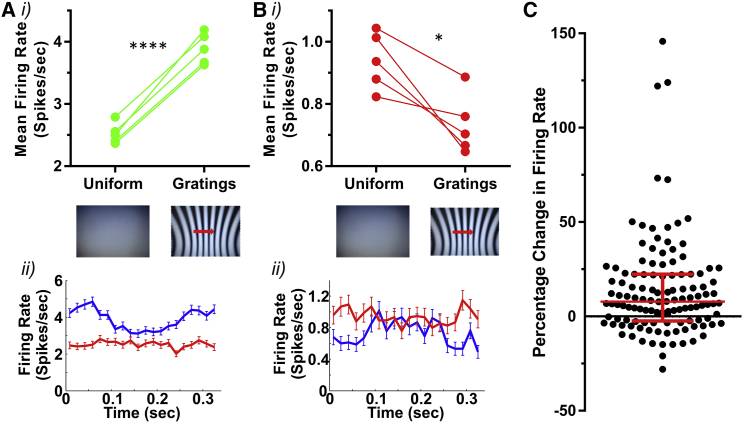
A direct retinal projection targets the suprachiasmatic nucleus (SCN) (an important hypothalamic control center). The accepted function of this projection is to convey information about ambient light (irradiance) to synchronize the SCN's endogenous circadian clock with local time and drive the diurnal variations in physiology and behavior [1-4]. Here, we report that it also renders the SCN responsive to visual images. We map spatial receptive fields (RFs) for SCN neurons and find that only a minority are excited (or inhibited) by light from across the scene as expected for irradiance detectors. The most commonly encountered units have RFs with small excitatory centers, combined with very extensive inhibitory surrounds that reduce their sensitivity to global changes in light in favor of responses to spatial patterns. Other units have larger excitatory RF centers, but these always cover a coherent region of visual space, implying visuotopic order at the single-unit level. Approximately 75% of light-responsive SCN units modulate their firing according to simple spatial patterns (drifting or inverting gratings) without changes in irradiance. The time-averaged firing rate of the SCN is modestly increased under these conditions, but including spatial contrast did not significantly alter the circadian phase resetting efficiency of light. Our data indicate that the SCN contains information about irradiance and spatial patterns. This newly appreciated sensory capacity provides a mechanism by which behavioral and physiological systems downstream of the SCN could respond to visual images [5].
直接视网膜投射靶向视交叉上核 (SCN)(下丘脑的一个重要控制中心)。该投射的公认功能是将环境光(辐照度)的信息传递到 SCN 的内源性昼夜节律时钟,以使其与当地时间同步,并驱动生理和行为的昼夜变化[1-4]。在这里,我们报告它还使 SCN 对视觉图像产生反应。我们绘制了 SCN 神经元的空间感受野 (RF),并发现只有少数神经元对整个场景的光(如预期的辐照度探测器)产生兴奋(或抑制)。最常见的遇到的单位具有具有小兴奋中心的 RF,结合非常广泛的抑制环绕,降低了它们对光的全局变化的敏感性,有利于对空间模式的反应。其他单位具有更大的兴奋 RF 中心,但这些中心总是覆盖视觉空间的连贯区域,暗示在单细胞水平上存在视空间顺序。大约 75%的对光反应的 SCN 单位根据简单的空间模式(漂移或反转光栅)进行调制,而辐照度不变。在这些条件下,SCN 的平均放电率适度增加,但包括空间对比度并没有显著改变光的昼夜节律相位重置效率。我们的数据表明,SCN 包含有关辐照度和空间模式的信息。这种新发现的感觉能力为 SCN 下游的行为和生理系统对视觉图像做出反应提供了一种机制[5]。