Gambara Guido, Salanova Michele, Ciciliot Stefano, Furlan Sandra, Gutsmann Martina, Schiffl Gudrun, Ungethuem Ute, Volpe Pompeo, Gunga Hanns-Christian, Blottner Dieter
Center of Space Medicine Berlin, Charité Universitätsmedizin BerlinBerlin, Germany.
Institute of Anatomy, Charité Universitätsmedizin BerlinBerlin, Germany.
Front Physiol. 2017 May 5;8:279. doi: 10.3389/fphys.2017.00279. eCollection 2017.
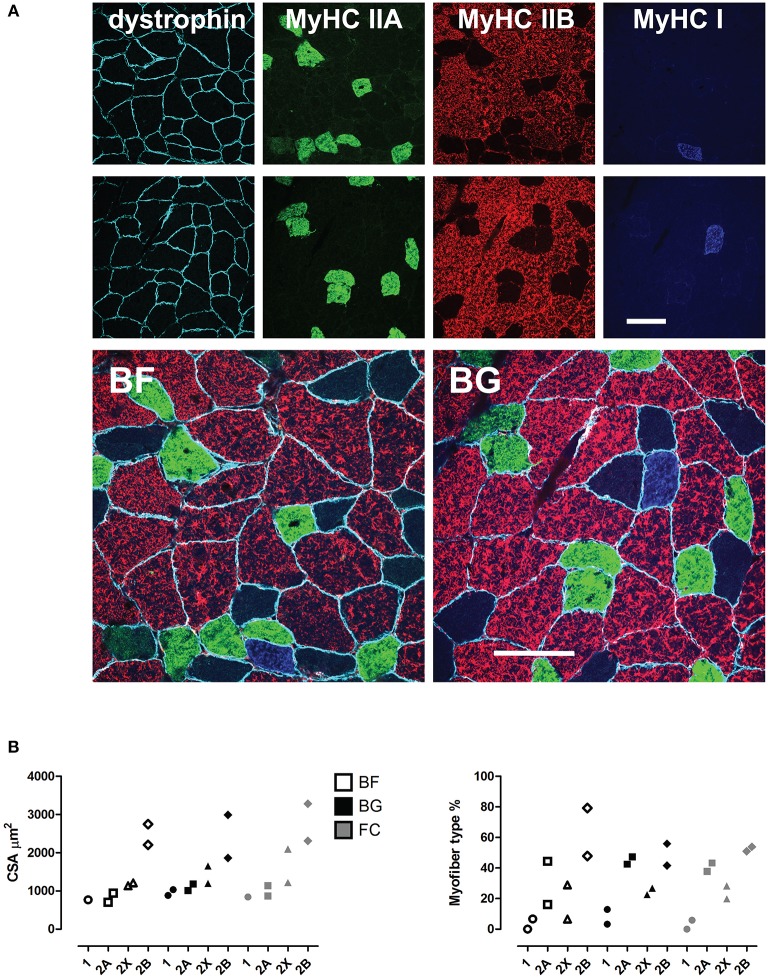
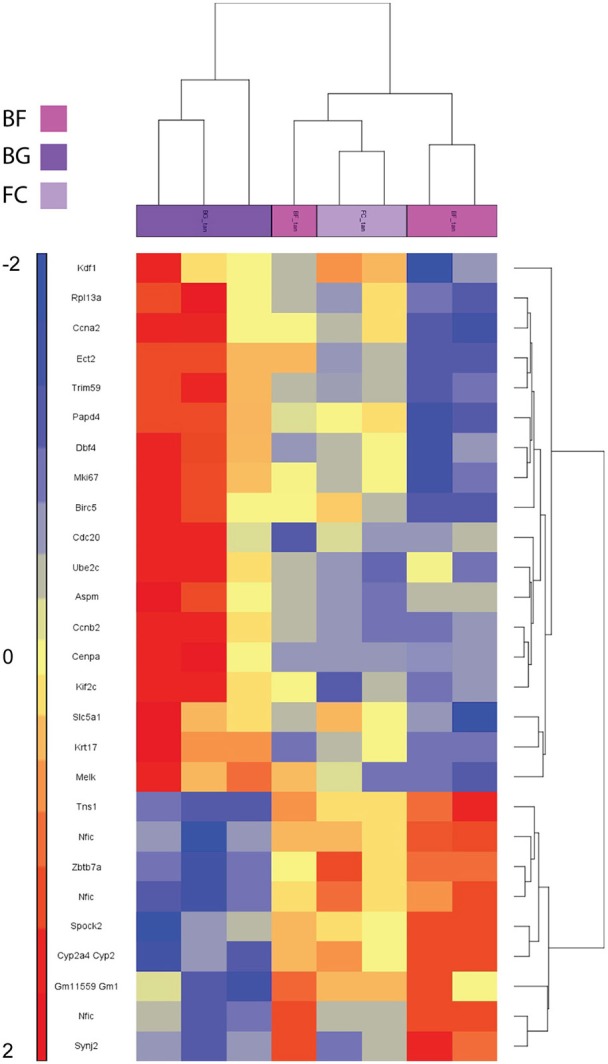
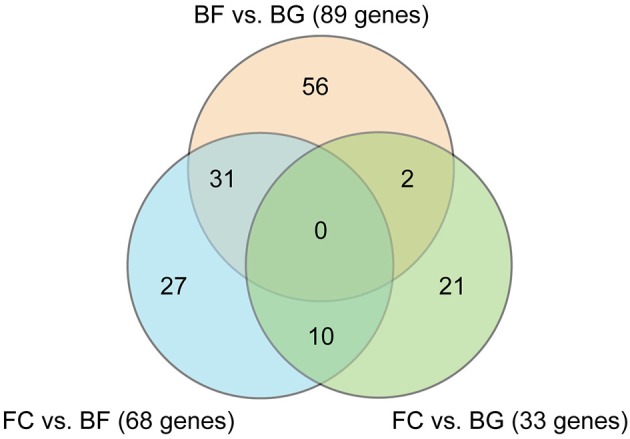
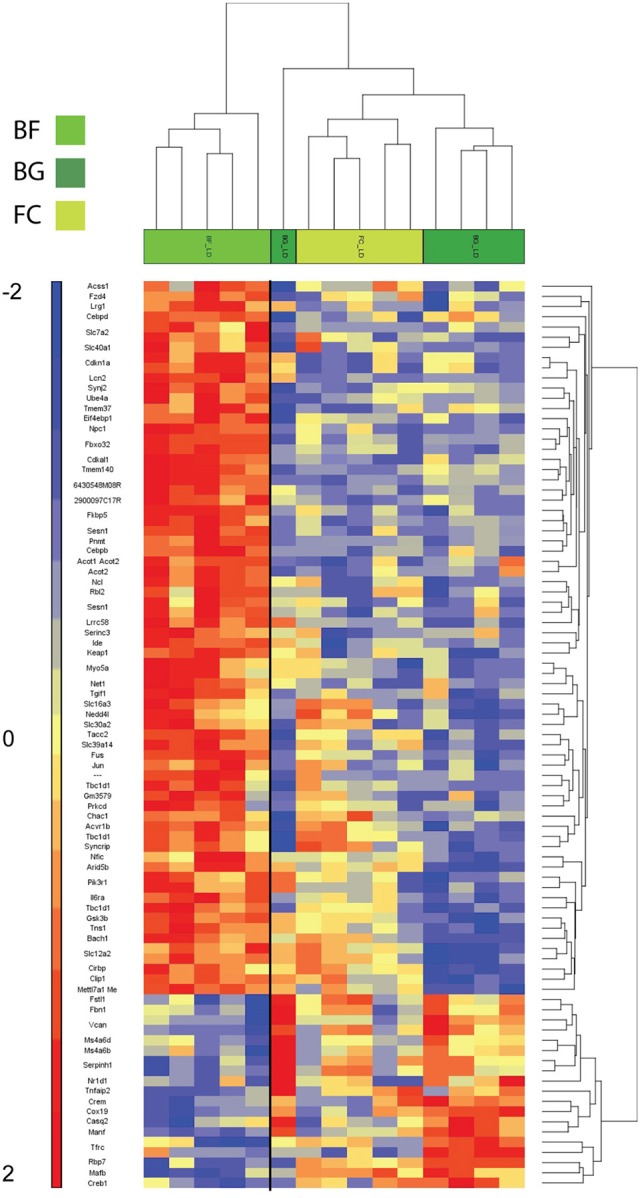
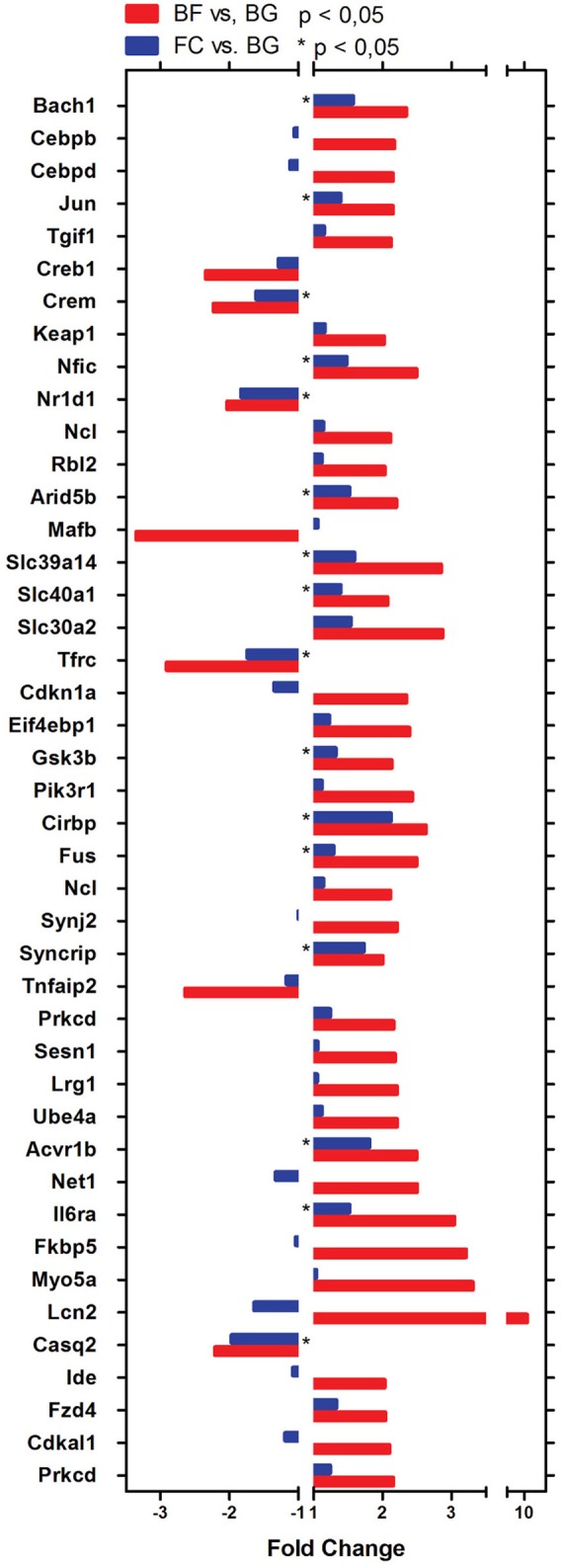
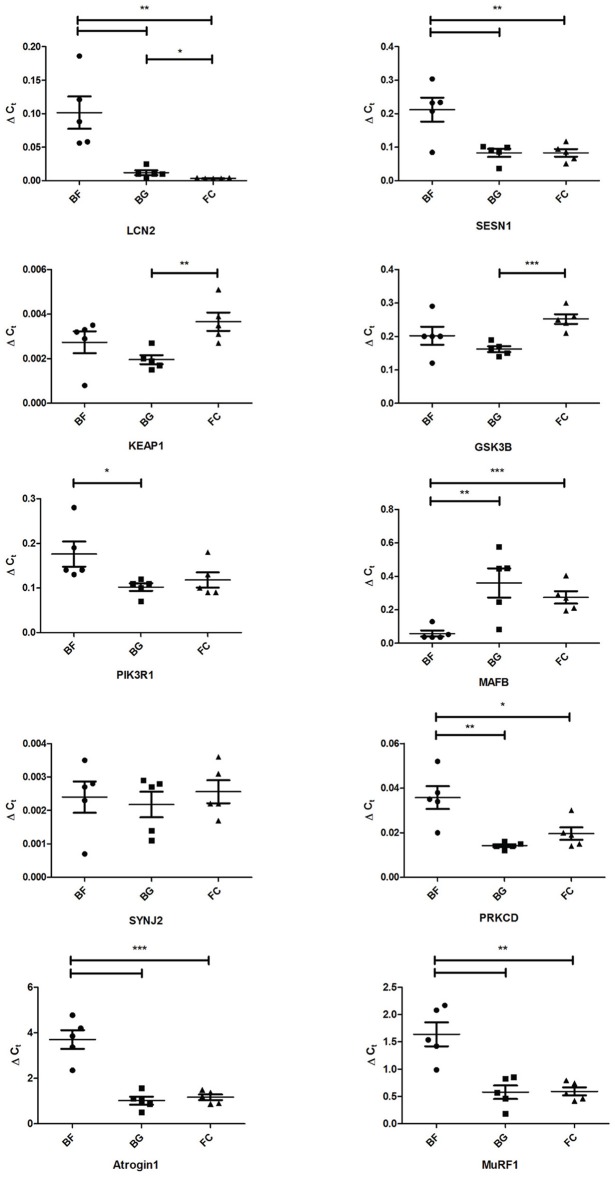
Microgravity as well as chronic muscle disuse are two causes of low back pain originated at least in part from paraspinal muscle deconditioning. At present no study investigated the complexity of the molecular changes in human or mouse paraspinal muscles exposed to microgravity. The aim of this study was to evaluate adaptation to microgravity at both morphological and global gene expression level. C57BL/N6 male mice were flown aboard the BION-M1 biosatellite for 30 days (BF) or housed in a replicate flight habitat on ground (BG). Myofiber cross sectional area and myosin heavy chain subtype patterns were respectively not or slightly altered in of BF mice. Global gene expression analysis identified 89 transcripts differentially regulated in of BF vs. BG mice. Microgravity-induced gene expression changes of lipocalin 2 (Lcn2), sestrin 1(Sesn1), phosphatidylinositol 3-kinase, regulatory subunit polypeptide 1 (p85 alpha) (Pik3r1), v-maf musculoaponeurotic fibrosarcoma oncogene family protein B (Mafb), protein kinase C delta (Prkcd), Muscle Atrophy F-box (MAFbx/Atrogin-1/Fbxo32), and Muscle RING Finger 1 (MuRF-1) were further validated by real time qPCR analysis. In conclusion, our study highlighted the regulation of transcripts mainly linked to insulin sensitivity and metabolism in following 30 days of microgravity exposure. The apparent absence of robust signs of back muscle atrophy in space-flown mice, despite the overexpression of Atrogin-1 and MuRF-1, opens new questions on the possible role of microgravity-sensitive genes in the regulation of peripheral insulin resistance following unloading and its consequences on paraspinal skeletal muscle physiology.
微重力以及长期肌肉废用是导致腰痛的两个原因,至少部分源于椎旁肌功能失调。目前尚无研究调查暴露于微重力环境下的人类或小鼠椎旁肌分子变化的复杂性。本研究的目的是在形态学和整体基因表达水平上评估对微重力的适应性。C57BL/N6雄性小鼠搭载BION-M1生物卫星飞行30天(BF组),或饲养在地面上的模拟飞行环境中(BG组)。BF组小鼠的肌纤维横截面积和肌球蛋白重链亚型模式分别未改变或略有改变。整体基因表达分析确定了89个转录本在BF组与BG组小鼠中差异表达。通过实时定量PCR分析进一步验证了微重力诱导的脂钙蛋白2(Lcn2)、 sestrin 1(Sesn1)、磷脂酰肌醇3激酶调节亚基多肽1(p85α)(Pik3r1)、v-maf肌腱膜纤维肉瘤癌基因家族蛋白B(Mafb)、蛋白激酶Cδ(Prkcd)、肌肉萎缩F盒(MAFbx/Atrogin-1/Fbxo32)和肌肉环形指蛋白1(MuRF-1)的基因表达变化。总之,我们的研究强调了在暴露于微重力30天后,转录本主要与胰岛素敏感性和代谢相关的调节。尽管Atrogin- 和MuRF-1过表达,但太空飞行小鼠中明显没有明显的背部肌肉萎缩迹象,这为微重力敏感基因在卸载后外周胰岛素抵抗调节中的可能作用及其对椎旁骨骼肌生理学的影响提出了新的问题。