Kim Tae-Eun, Ha Na, Kim Yunjeong, Kim Hyunsook, Lee Jae Wook, Jeon Ji-Young, Kim Min-Gul
Department of Clinical Pharmacology, Konkuk University Medical Center, Seoul.
Center for Clinical Pharmacology, Biomedical Research Institute, Chonbuk National University Hospital, Jeonju, Jeonbuk.
Drug Des Devel Ther. 2017 May 9;11:1409-1416. doi: 10.2147/DDDT.S130050. eCollection 2017.
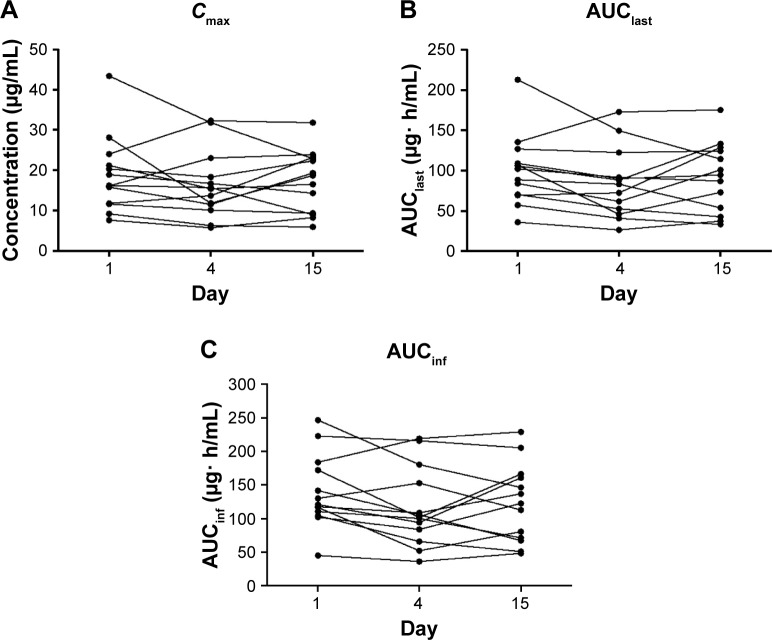
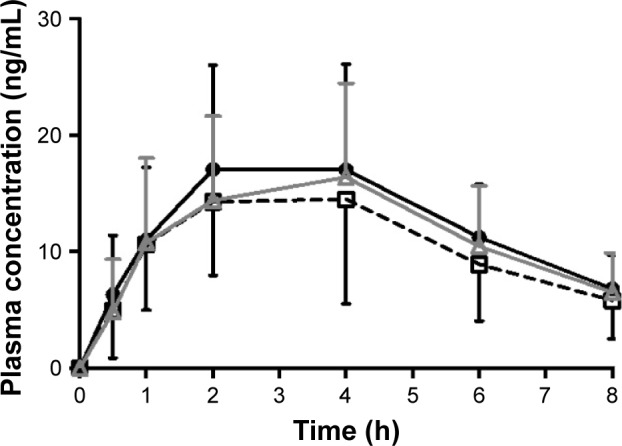
Previous in vitro studies have demonstrated the inhibitory effect of green tea on drug transporters. Because rosuvastatin, a lipid-lowering drug widely used for the prevention of cardiovascular events, is a substrate for many drug transporters, there is a possibility that there is interaction between green tea and rosuvastatin. The aim of this study was to investigate the effect of green tea on the pharmacokinetics of rosuvastatin in healthy volunteers. An open-label, three-treatment, fixed-sequence study was conducted. On Day 1, 20 mg of rosuvastatin was given to all subjects. After a 3-day washout period, the subjects received 20 mg of rosuvastatin plus 300 mg of epigallocatechin-3-gallate (EGCG), a major ingredient of green tea (Day 4). After a 10-day pretreatment of EGCG up to Day 14, they received rosuvastatin (20 mg) plus EGCG (300 mg) once again (Day 15). Blood samples for the pharmacokinetic assessments were collected up to 8 hours after each dose of rosuvastatin. A total of 13 healthy volunteers were enrolled. Compared with the administration of rosuvastatin alone, the concomitant use at Day 4 significantly reduced the area under the concentration-time curve from time 0 to the last measurable time (AUC) by 19% (geometric mean ratio 0.81, 90% confidence interval [CI] 0.67-0.97) and the peak plasma concentration () by 15% (geometric mean ratio 0.85, 90% CI 0.70-1.04). AUC or of rosuvastatin on Day 15 was not significantly different from that on Day 1. This study demonstrated that co-administration of EGCG reduces the systemic exposure of rosuvastatin by 19%, and pretreatment of EGCG can eliminate that effect of co-administration of EGCG.
先前的体外研究已证实绿茶对药物转运体具有抑制作用。由于广泛用于预防心血管事件的降脂药物瑞舒伐他汀是多种药物转运体的底物,因此绿茶与瑞舒伐他汀之间有可能存在相互作用。本研究的目的是调查绿茶对健康志愿者体内瑞舒伐他汀药代动力学的影响。开展了一项开放标签、三治疗组、固定顺序的研究。在第1天,给所有受试者服用20毫克瑞舒伐他汀。经过3天的洗脱期后,受试者在第4天接受20毫克瑞舒伐他汀加300毫克表没食子儿茶素-3-没食子酸酯(EGCG,绿茶的主要成分)。在第14天之前对EGCG进行为期10天的预处理后,他们在第15天再次接受瑞舒伐他汀(20毫克)加EGCG(300毫克)。在每次服用瑞舒伐他汀后长达8小时采集用于药代动力学评估的血样。总共招募了13名健康志愿者。与单独服用瑞舒伐他汀相比,第4天联合使用时,从时间0至最后可测量时间的浓度-时间曲线下面积(AUC)显著降低了19%(几何平均比值0.81,90%置信区间[CI] 0.67 - 0.97),血浆峰浓度()降低了15%(几何平均比值0.85,90% CI 0.