Gallego-Yerga Laura, Posadas Inmaculada, de la Torre Cristina, Ruiz-Almansa Jesús, Sansone Francesco, Ortiz Mellet Carmen, Casnati Alessandro, García Fernández José M, Ceña Valentín
Departamento de Química Orgánica, Facultad de Química, Universidad de SevillaSevilla, Spain.
CIBERNED, Instituto de Salud Carlos IIIMadrid, Spain.
Front Pharmacol. 2017 May 8;8:249. doi: 10.3389/fphar.2017.00249. eCollection 2017.
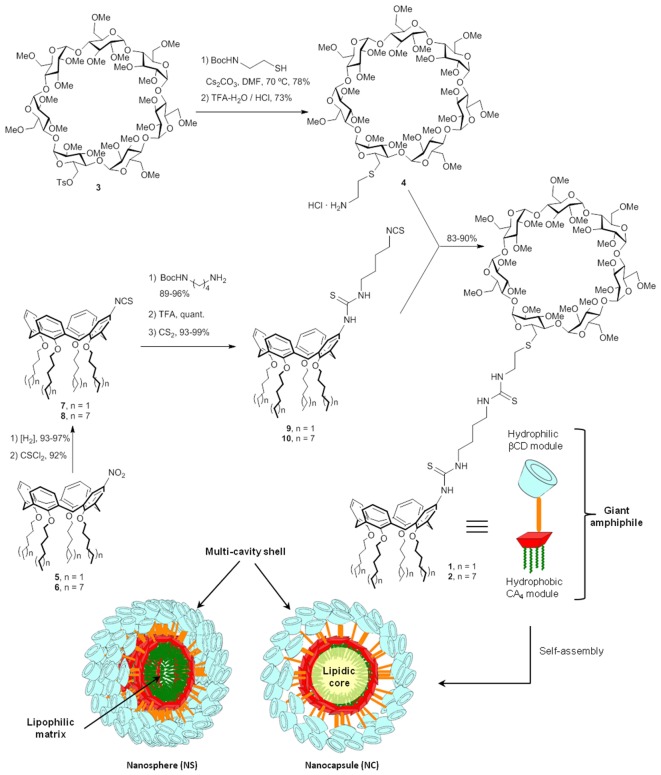
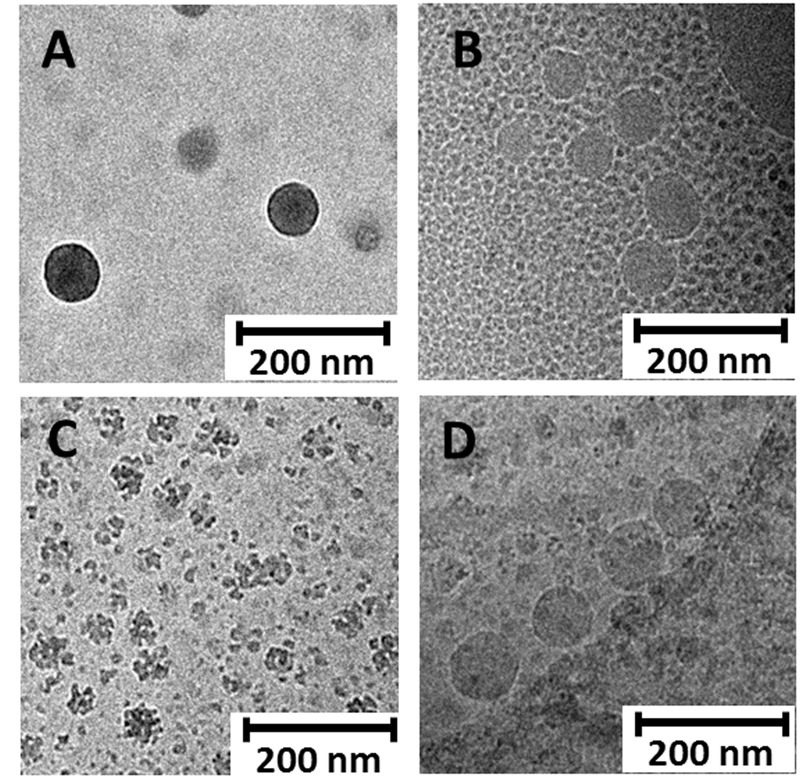
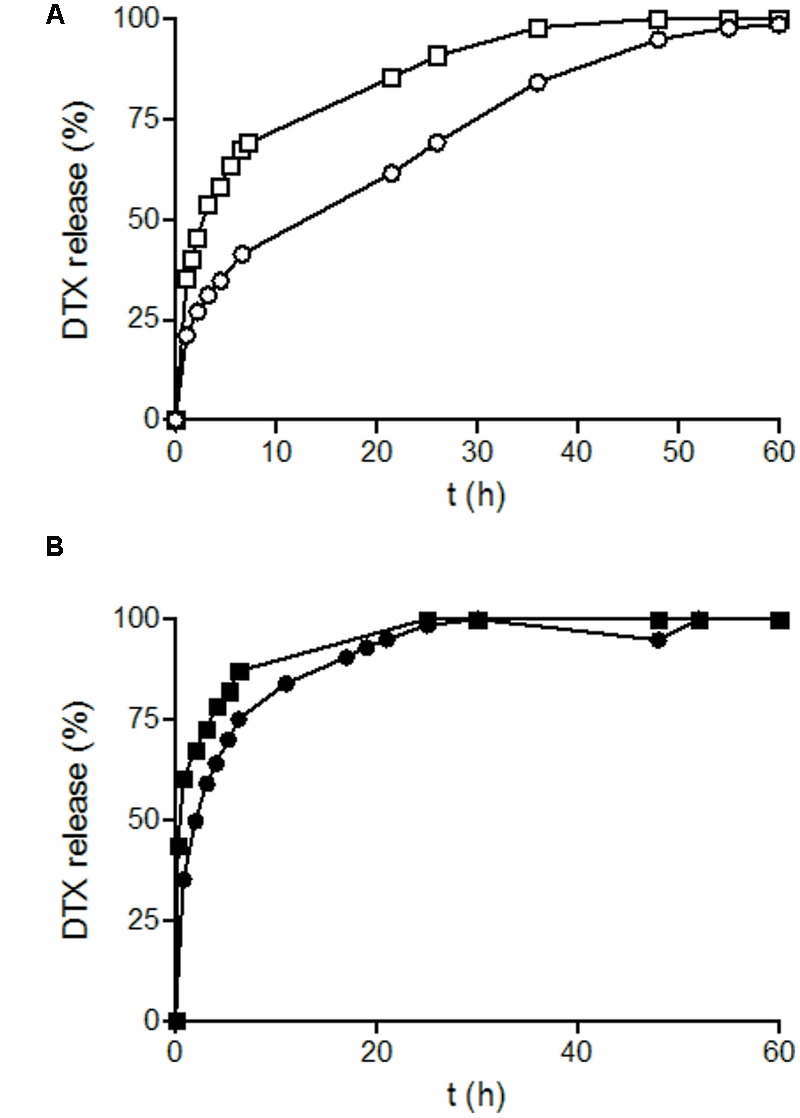
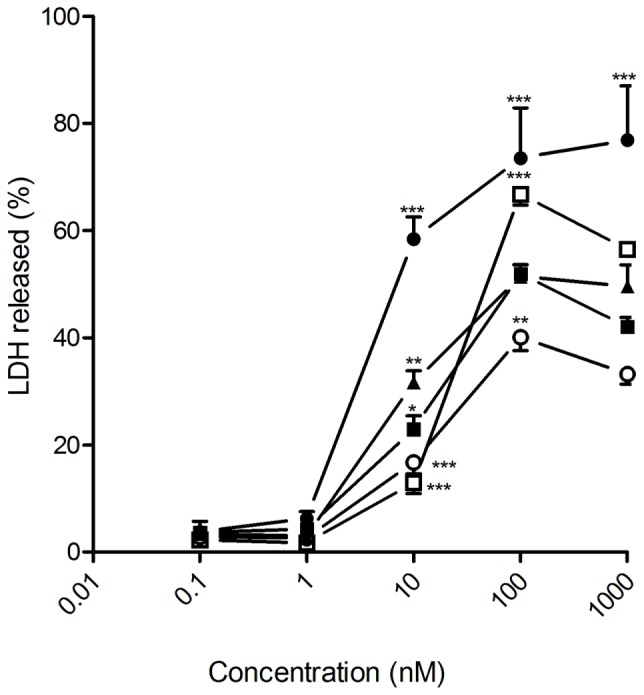
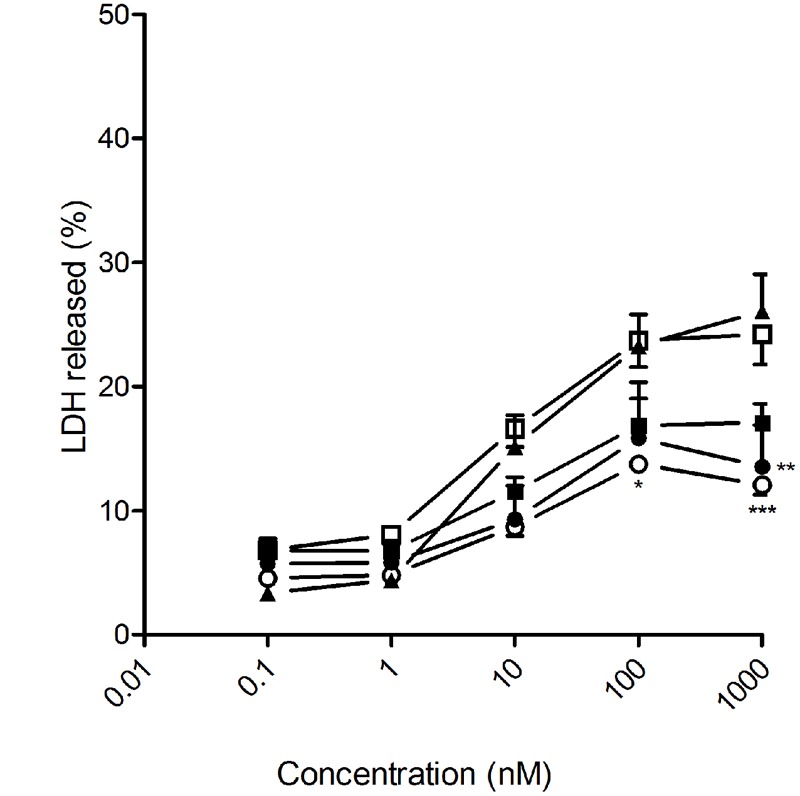
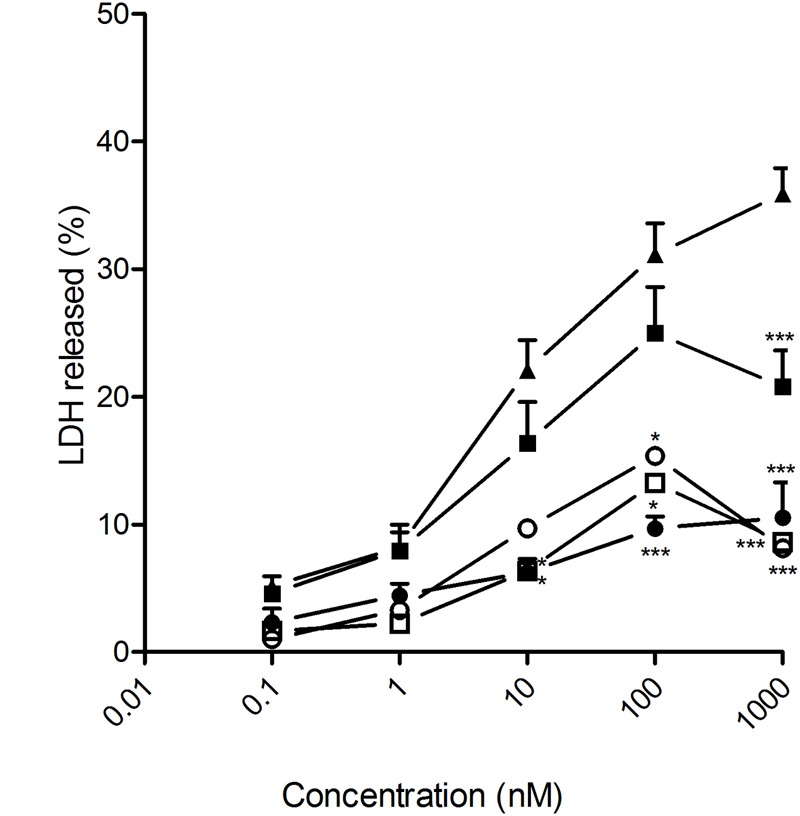
Giant amphiphiles encompassing a hydrophilic β-cyclodextrin (βCD) component and a hydrophobic calix[4]arene (CA) module undergo self-assembly in aqueous media to afford core-shell nanospheres or nanocapsules, depending on the nanoprecipitation protocol, with high docetaxel (DTX) loading capacity. The blank and loaded nanoparticles have been fully characterized by dynamic light scattering (DLS), ζ-potential measurements and cryo-transmission electron microscopy (cryo-TEM). The data are compatible with the distribution of the drug between the nanoparticle core and the shell, where it is probably anchored by inclusion of the DTX aromatic moieties in βCD cavities. Indeed, the release kinetics profiles evidenced an initial fast release of the drug, which likely accounts for the fraction hosted on the surface, followed by a slow and sustained release rate, corresponding to diffusion of DTX in the core, which can be finely tuned by modification of the giant amphiphile chemical structure. The ability of the docetaxel-loaded nanoparticles to induce cellular death in different prostate (human LnCap and PC3) and glioblastoma (human U87 and rat C6) cells was also explored. Giant amphiphile-based DTX formulations surpassing or matching the antitumoral activity of the free DTX formulation were identified in all cases with no need to employ any organic co-solvent, thus overcoming the DTX water solubility problems. Moreover, the presence of the βCD shell at the surface of the assemblies is intended to impart stealth properties against serum proteins while permitting nanoparticle surface decoration by supramolecular approaches, paving the way for a new generation of molecularly well-defined antitumoral drug delivery systems with improved specificity and efficiency. Altogether, the results provide a proof of concept of the suitability of the approach based on βCD-CA giant amphiphiles to access DTX carriers with tunable properties.
包含亲水性β-环糊精(βCD)成分和疏水性杯[4]芳烃(CA)模块的巨型两亲分子在水性介质中进行自组装,根据纳米沉淀方案,可得到核壳纳米球或纳米胶囊,具有高多西他赛(DTX)负载能力。空白和负载纳米颗粒已通过动态光散射(DLS)、ζ电位测量和低温透射电子显微镜(cryo-TEM)进行了全面表征。数据与药物在纳米颗粒核心和外壳之间的分布情况相符,其中DTX的芳香部分可能通过包含在βCD腔中而锚定在那里。实际上,释放动力学曲线表明药物最初快速释放,这可能是表面上负载部分的原因,随后是缓慢且持续的释放速率,这对应于DTX在核心中的扩散,可通过修饰巨型两亲分子的化学结构进行精细调节。还研究了负载多西他赛的纳米颗粒在不同前列腺(人LnCap和PC3)和胶质母细胞瘤(人U87和大鼠C6)细胞中诱导细胞死亡的能力。在所有情况下都鉴定出基于巨型两亲分子的DTX制剂超过或匹配游离DTX制剂的抗肿瘤活性,无需使用任何有机共溶剂,从而克服了DTX的水溶性问题。此外,组装体表面βCD壳的存在旨在赋予对血清蛋白的隐身特性,同时允许通过超分子方法对纳米颗粒表面进行修饰,为新一代具有更高特异性和效率的分子明确的抗肿瘤药物递送系统铺平了道路。总之,结果提供了基于βCD-CA巨型两亲分子的方法适用于获得具有可调性质的DTX载体的概念验证。