Department of Applied Chemistry and Biological Engineering, College of Chemical Engineering, Northeast Electric Power University, Jilin, Jilin 132012, China.
Department of Biological Engineering, Utah State University, 4105 Old Main Hill, Logan, Utah 84322, USA.
Nat Commun. 2017 May 23;8:15349. doi: 10.1038/ncomms15349.
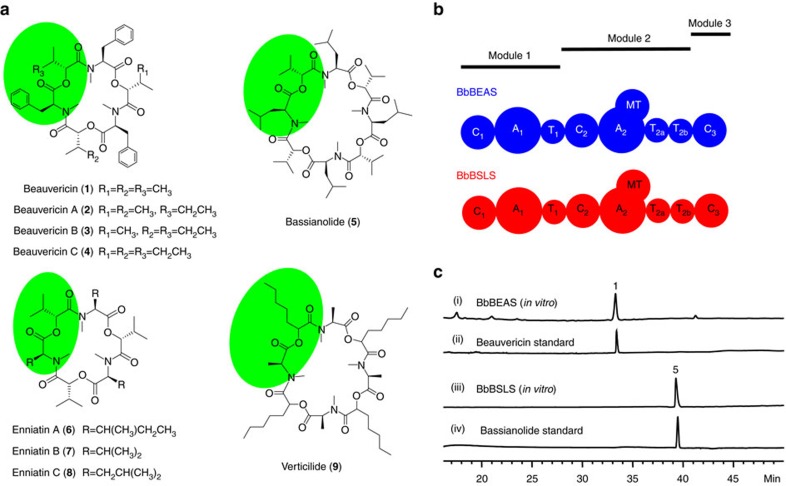
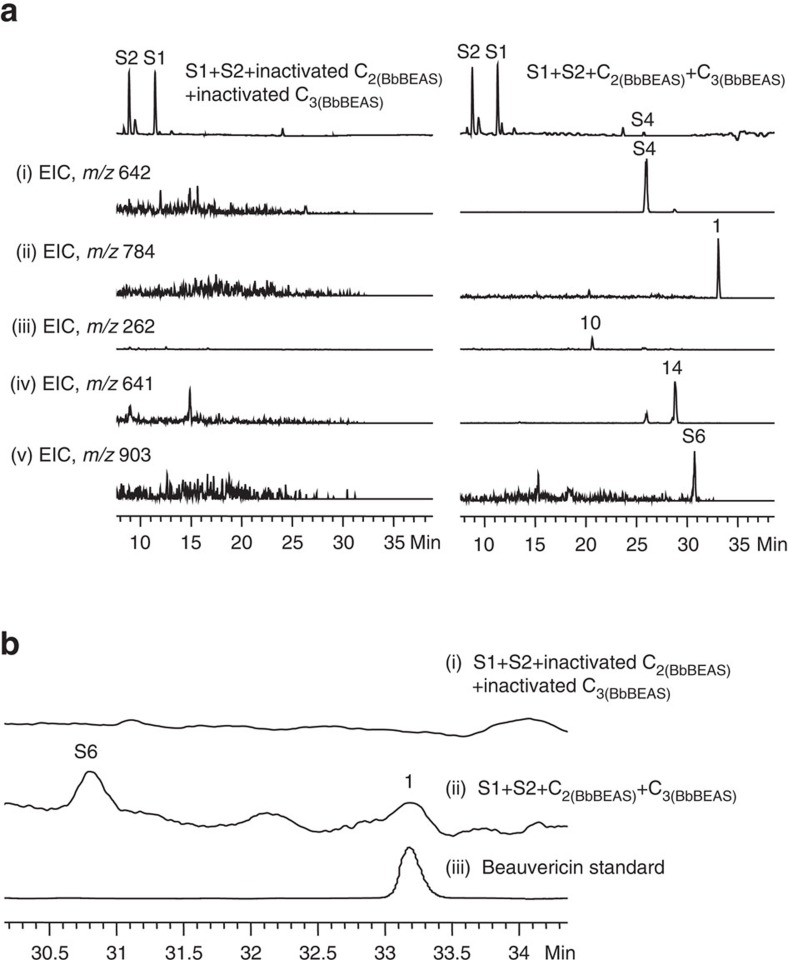
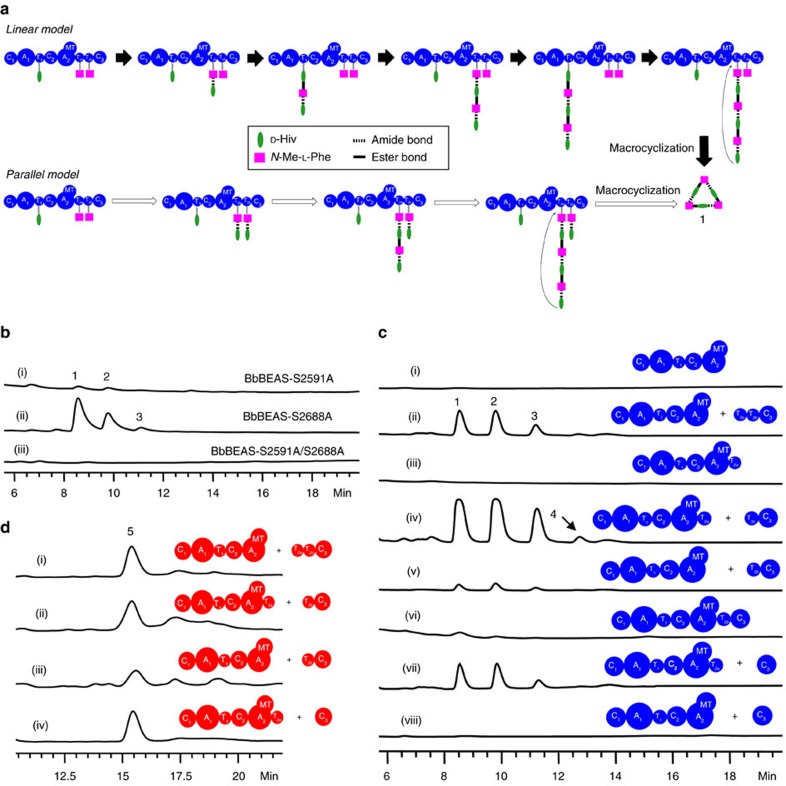
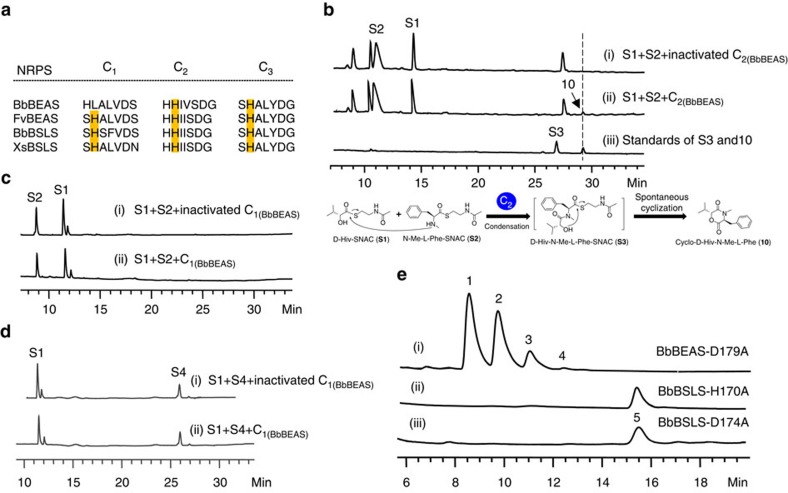
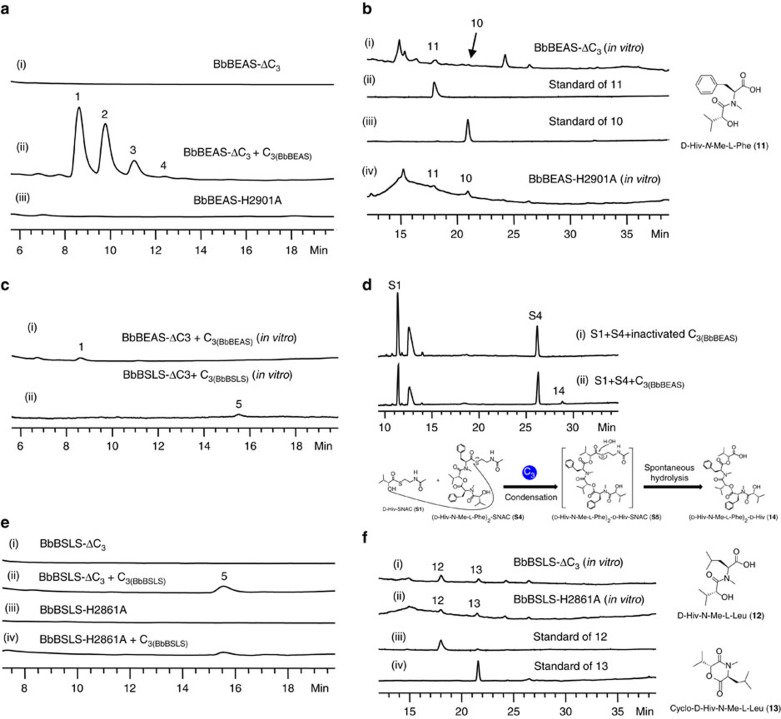
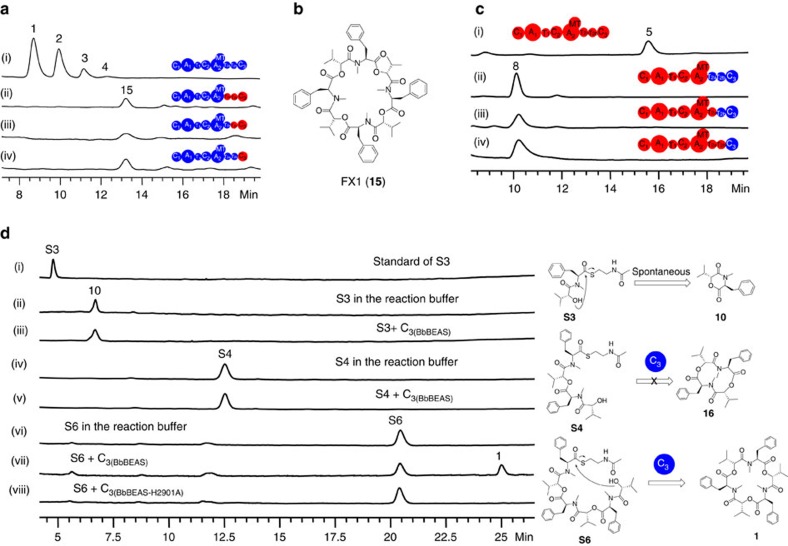
Nonribosomal peptide synthetases (NRPSs) assemble a large group of structurally and functionally diverse natural products. While the iterative catalytic mechanism of bacterial NRPSs is known, it remains unclear how fungal NRPSs create products of desired length. Here we show that fungal iterative NRPSs adopt an alternate incorporation strategy. Beauvericin and bassianolide synthetases have the same C-A-T-C-A-MT-T-T-C domain organization. During catalysis, C and C take turns to incorporate the two biosynthetic precursors into the growing depsipeptide chain that swings between T and T/T with C cyclizing the chain when it reaches the full length. We reconstruct the total biosynthesis of beauvericin in vitro by reacting C and C with two SNAC-linked precursors and present a domain swapping approach to reprogramming these enzymes for peptides with altered lengths. These findings highlight the difference between bacterial and fungal NRPS mechanisms and provide a framework for the enzymatic synthesis of non-natural nonribosomal peptides.
非核糖体肽合成酶(NRPSs)组装了一大类结构和功能多样的天然产物。虽然细菌 NRPS 的迭代催化机制是已知的,但真菌 NRPS 如何产生所需长度的产物仍不清楚。在这里,我们表明真菌迭代 NRPS 采用了替代的掺入策略。除虫菌素和贝沙罗汀合成酶具有相同的 C-A-T-C-A-MT-T-T-C 结构域组织。在催化过程中,C 和 C 轮流将两种生物合成前体掺入到不断摆动的延伸肽链中,当链达到全长时,C 会使链环化。我们通过用两个 SNAC 连接的前体与 C 和 C 反应,在体外重建了除虫菌素的总生物合成,并提出了一种结构域交换方法,用于对这些酶进行编程,以产生具有不同长度的肽。这些发现突出了细菌和真菌 NRPS 机制之间的差异,并为非天然非核糖体肽的酶促合成提供了框架。