Hai Yang, Jenner Matthew, Tang Yi
Department of Chemical and Biomolecular Engineering, University of California Los Angeles California 90095 USA
Department of Chemistry, Warwick Integrative Synthetic Biology Center, University of Warwick Coventry UK
Chem Sci. 2020 Sep 28;11(42):11525-11530. doi: 10.1039/d0sc03627g.
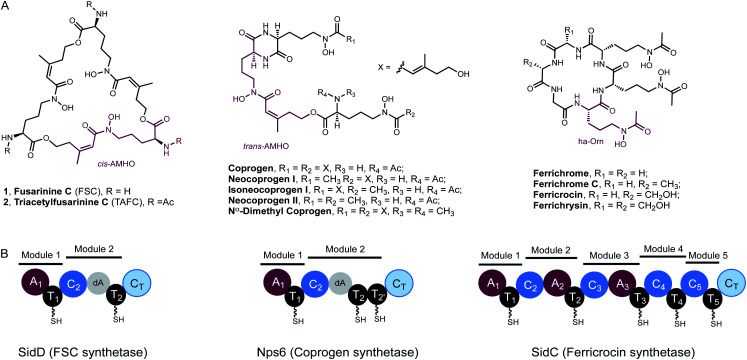
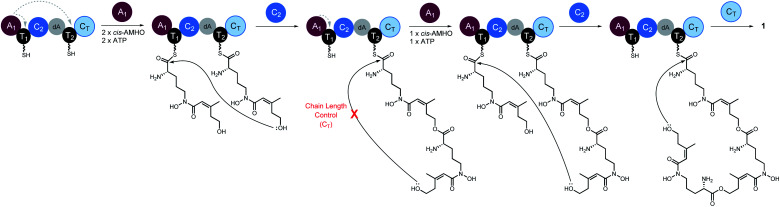
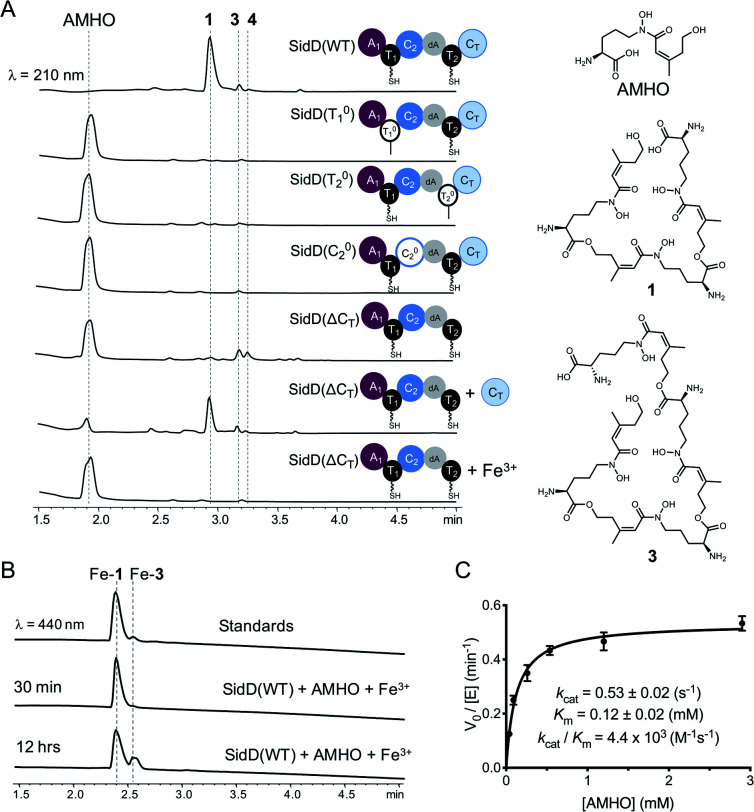
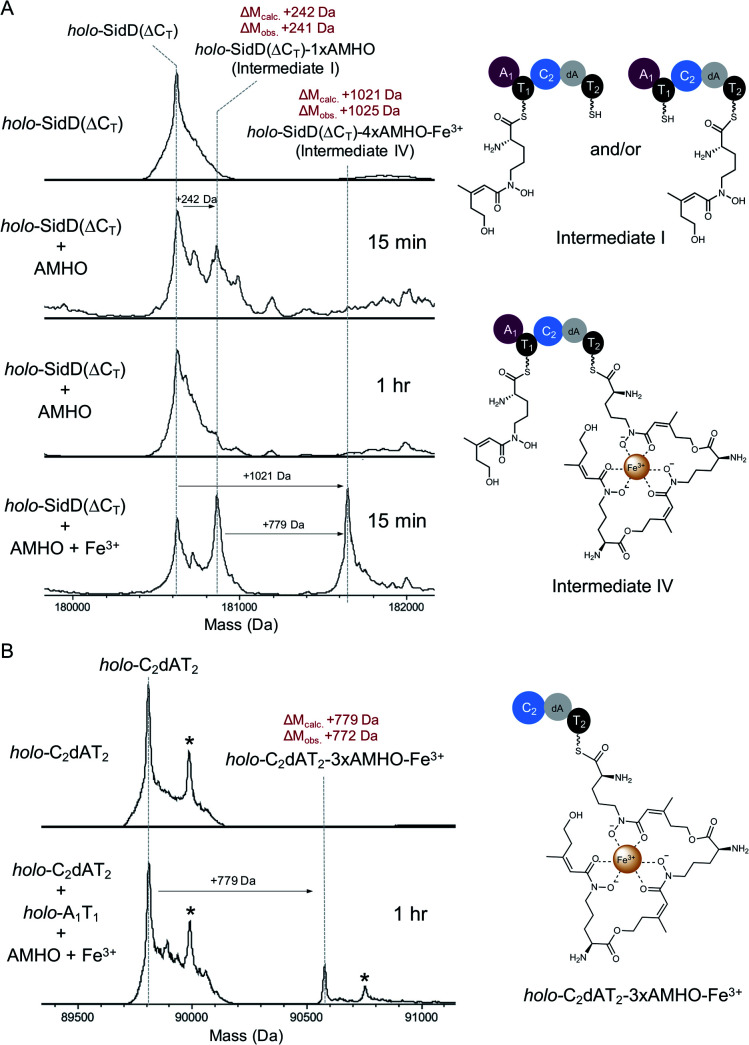
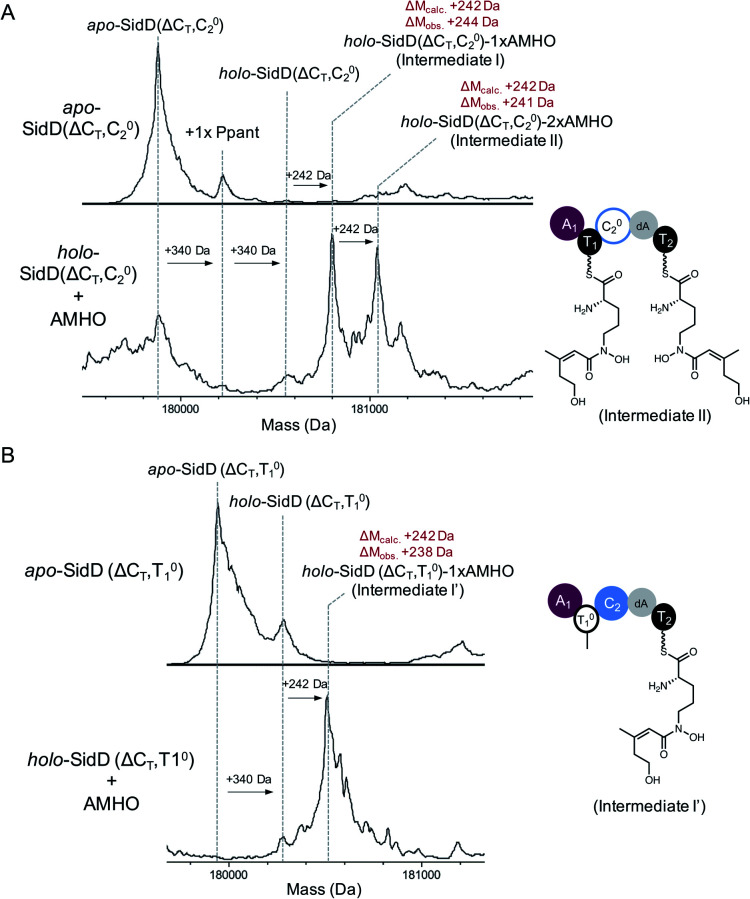
Siderophores play a vital role in the viability of fungi and are essential for the virulence of many pathogenic fungal species. Despite their importance in fungal physiology and pathogenesis, the programming rule of siderophore assembly by fungal nonribosomal peptide synthetases (NRPSs) remains unresolved. Here, we report the characterization of the bimodular fungal NRPS, SidD, responsible for construction of the extracellular siderophore fusarinine C. The use of intact protein mass spectrometry, together with biochemical assays of native and dissected enzymes, provided snapshots of individual biosynthetic steps during NPRS catalysis. The adenylation and condensation domain of SidD can iteratively load and condense the amino acid building block -AMHO, respectively, to synthesize fusarinine C. Our study showcases the iterative programming features of fungal siderophore-producing NRPSs.
铁载体在真菌的生存能力中起着至关重要的作用,并且对于许多致病真菌物种的毒力至关重要。尽管它们在真菌生理学和发病机制中很重要,但真菌非核糖体肽合成酶(NRPSs)组装铁载体的编程规则仍未得到解决。在这里,我们报告了双模块真菌NRPS SidD的特性,它负责细胞外铁载体镰刀菌素C的构建。完整蛋白质质谱分析以及天然和拆分酶的生化分析,提供了NPRS催化过程中各个生物合成步骤的快照。SidD的腺苷化和缩合结构域可以分别迭代加载和缩合氨基酸构建块-AMHO,以合成镰刀菌素C。我们的研究展示了产生铁载体的真菌NRPSs的迭代编程特征。