Kosinski Christophe, Jornayvaz François R
Service of Endocrinology, Diabetes and Metabolism, Lausanne University Hospital (CHUV), Avenue de la Sallaz 8, 1011 Lausanne, Switzerland.
Service of Endocrinology, Diabetes, Hypertension and Nutrition, Geneva University Hospitals, Rue Gabrielle-Perret-Gentil 4, 1205 Geneva, Switzerland.
Nutrients. 2017 May 19;9(5):517. doi: 10.3390/nu9050517.
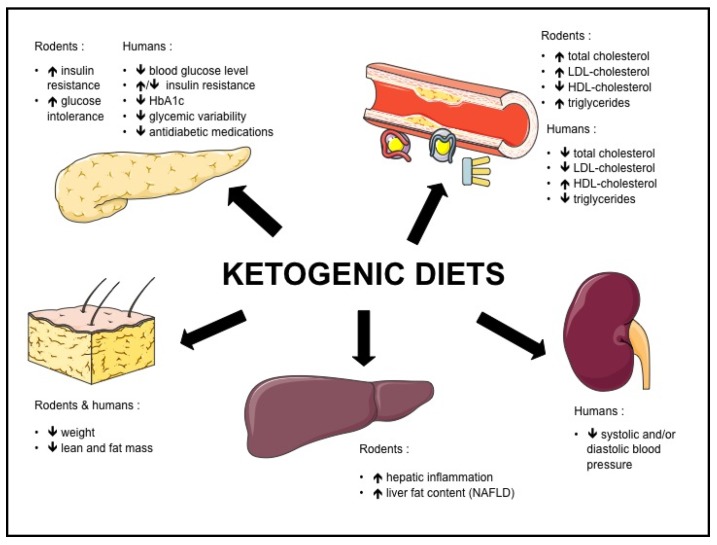
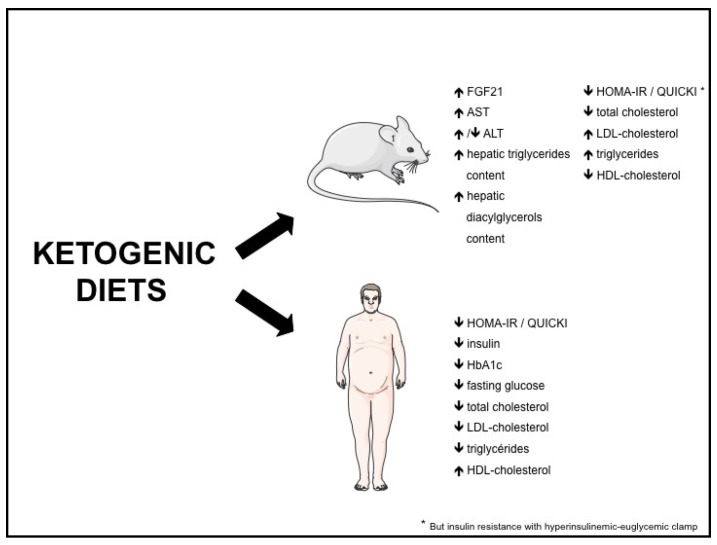
The treatment of obesity and cardiovascular diseases is one of the most difficult and important challenges nowadays. Weight loss is frequently offered as a therapy and is aimed at improving some of the components of the metabolic syndrome. Among various diets, ketogenic diets, which are very low in carbohydrates and usually high in fats and/or proteins, have gained in popularity. Results regarding the impact of such diets on cardiovascular risk factors are controversial, both in animals and humans, but some improvements notably in obesity and type 2 diabetes have been described. Unfortunately, these effects seem to be limited in time. Moreover, these diets are not totally safe and can be associated with some adverse events. Notably, in rodents, development of nonalcoholic fatty liver disease (NAFLD) and insulin resistance have been described. The aim of this review is to discuss the role of ketogenic diets on different cardiovascular risk factors in both animals and humans based on available evidence.
肥胖症和心血管疾病的治疗是当今最困难且重要的挑战之一。减肥常常被作为一种治疗方法,其目的是改善代谢综合征的某些组成部分。在各种饮食中,碳水化合物含量极低、脂肪和/或蛋白质含量通常较高的生酮饮食越来越受欢迎。关于此类饮食对心血管危险因素影响的结果,在动物和人类研究中都存在争议,但已有人描述了其在肥胖症和2型糖尿病方面有一些显著改善。不幸的是,这些效果似乎在时间上是有限的。此外,这些饮食并不完全安全,可能会伴有一些不良事件。值得注意的是,在啮齿动物中,已有人描述了非酒精性脂肪性肝病(NAFLD)和胰岛素抵抗的发展情况。本综述的目的是根据现有证据,探讨生酮饮食在动物和人类中对不同心血管危险因素的作用。