Graduate School, Hebei University of Chinese Medicine, Shijiazhuang 050090, Hebei, China.
Graduate School, Hebei Medical University, Shijiazhuang 050017, Hebei, China.
Biomed Res Int. 2019 Jun 16;2019:6595437. doi: 10.1155/2019/6595437. eCollection 2019.
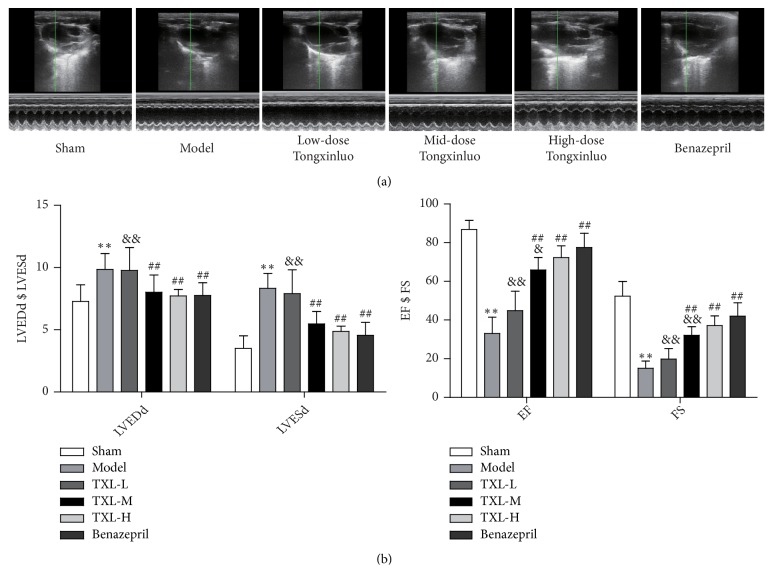
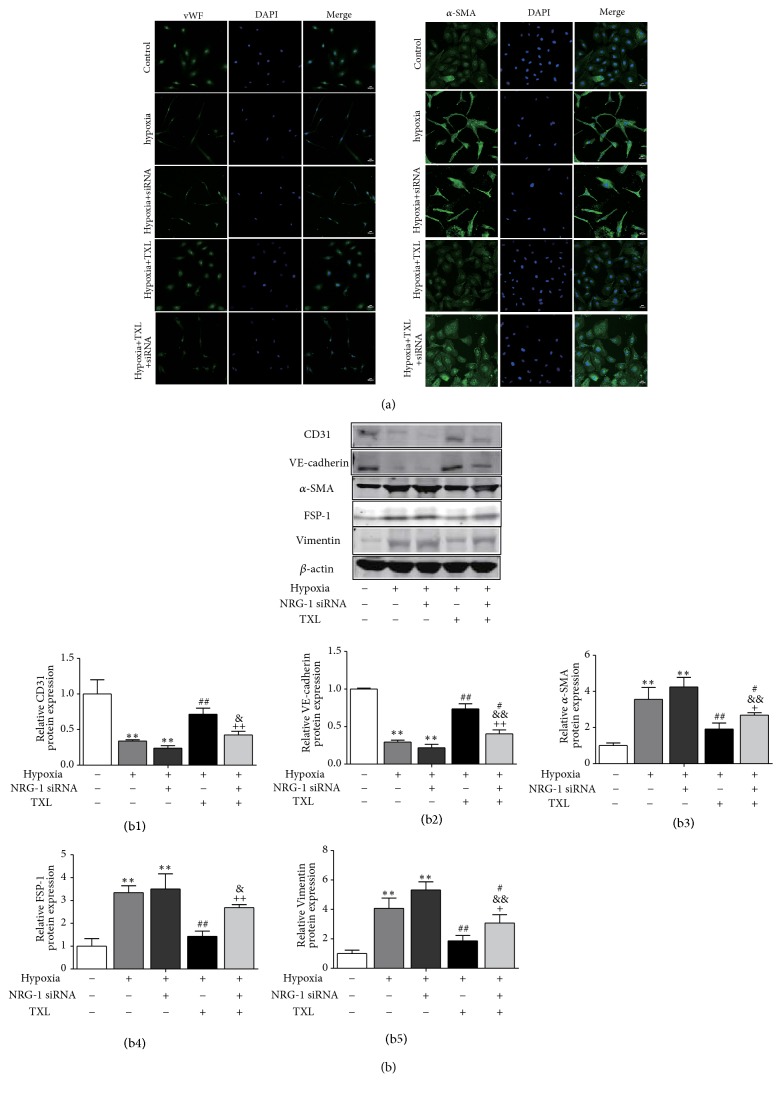
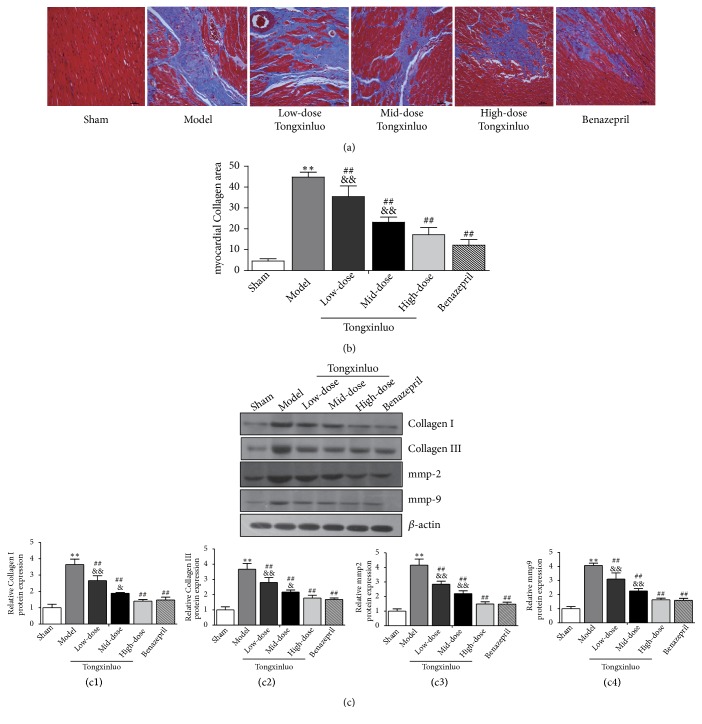
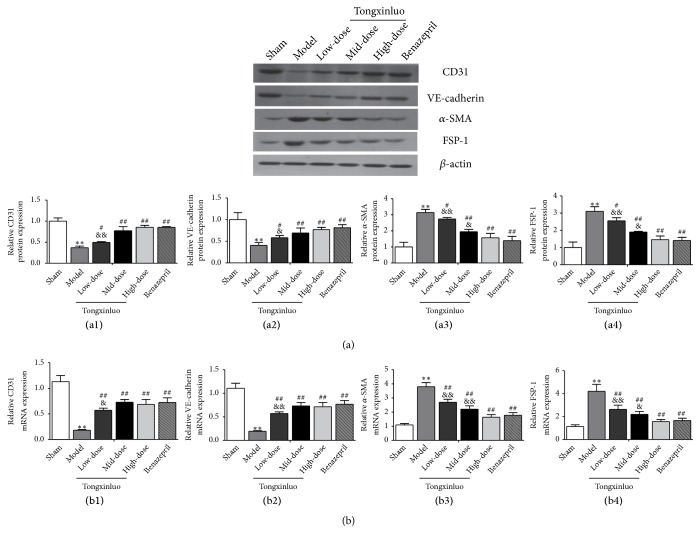
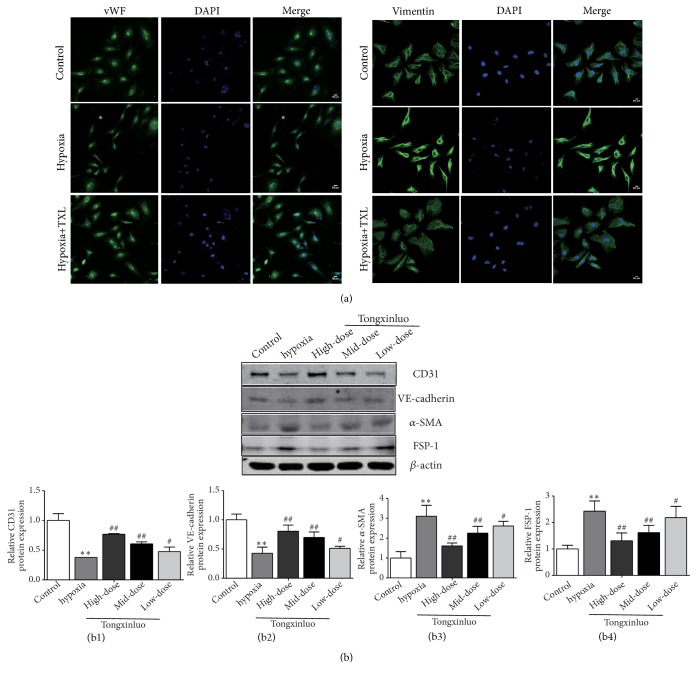
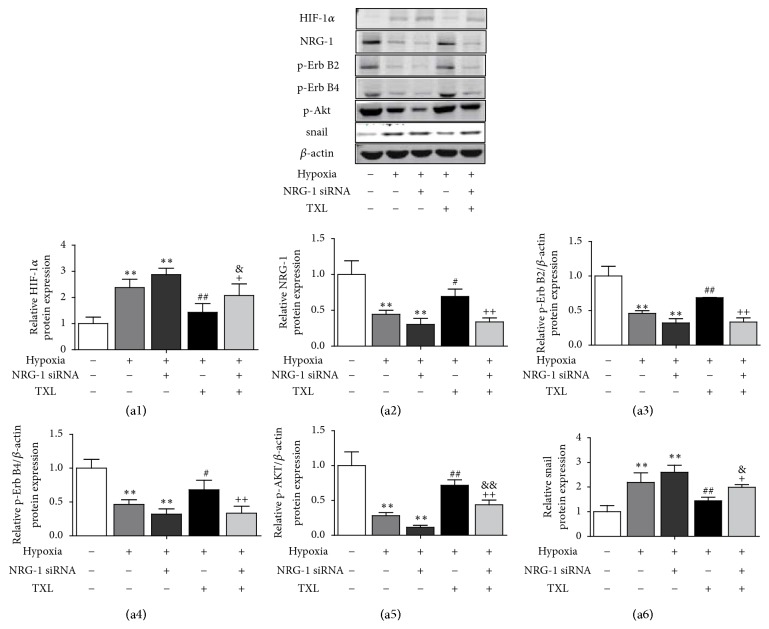
Endothelial-to-mesenchymal transition (EndMT) is an essential mechanism in myocardial fibrosis (MF). Tongxinluo (TXL) has been confirmed to protect the endothelium against reperfusion injury after acute myocardial infarction (AMI). However, whether TXL can inhibit MF after AMI via inhibiting EndMT remained unknown. This study aims to identify the role of EndMT in MF after AMI as well as the protective effects and underlying mechanisms of TXL on MF. The AMI model was established in rats by ligating left anterior descending coronary artery. Then, rats were administered with high- (0.8 g·kg·d), mid- (0.4 g·kg·d), and low- (0.2 g·kg·d) dose Tongxinluo and benazepril for 4 weeks, respectively. Cardiac function, infarct size, MF, and related indicators of EndMT were measured. In vitro, human cardiac microvascular endothelial cells (HCMECs) were pretreated with TXL for 4 h and then incubated in hypoxia conditions for 3 days to induce EndMT. Under this hypoxic condition, neuregulin-1 (NRG-1) siRNA were further applied to silence NRG-1 expression. Immunofluorescence microscopy was used to assess expression of endothelial marker of vWF and fibrotic marker of Vimentin. Related factors of EndMT were determined by Western blot analysis. TXL treatment significantly improved cardiac function, ameliorated MF, reduced collagen of fibrosis area (types I and III collagen) and limited excessive extracellular matrix deposition (mmp2 and mmp9). In addition, TXL inhibited EndMT in cardiac tissue and hypoxia-induced HCMECs. In hypoxia-induced HCMECs, TXL increased the expression of endothelial markers, whereas decreasing the expression of fibrotic markers, partially through enhanced expressions of NRG-1, phosphorylation of ErbB2, ErbB4, AKT, and downregulated expressions of hypoxia inducible factor-1a and transcription factor snail. After NRG-1 knockdown, the protective effect of TXL on HCMEC was partially abolished. In conclusion, TXL attenuates MF after AMI by inhibiting EndMT and through activating the NRG-1/ErbB- PI3K/AKT signalling cascade.
内皮-间质转化(EndMT)是心肌纤维化(MF)的一个重要机制。通心络(TXL)已被证实可在急性心肌梗死(AMI)后保护内皮免受再灌注损伤。然而,TXL 是否可以通过抑制 EndMT 来抑制 AMI 后的 MF 尚不清楚。本研究旨在确定 EndMT 在 AMI 后 MF 中的作用,以及 TXL 对 MF 的保护作用及其潜在机制。通过结扎左前降支冠状动脉建立大鼠 AMI 模型。然后,大鼠分别给予高(0.8 g·kg·d)、中(0.4 g·kg·d)和低(0.2 g·kg·d)剂量的通心络和贝那普利治疗 4 周。测量心功能、梗死面积、MF 及 EndMT 相关指标。在体外,用 TXL 预处理人心脏微血管内皮细胞(HCMECs)4 小时,然后在缺氧条件下孵育 3 天诱导 EndMT。在这种缺氧条件下,进一步应用神经调节素 1(NRG-1)siRNA 沉默 NRG-1 表达。免疫荧光显微镜用于评估血管内皮标志物 vWF 和纤维化标志物波形蛋白的表达。Western blot 分析用于检测 EndMT 相关因子。TXL 治疗显著改善心功能,改善 MF,减少纤维化面积的胶原(I 型和 III 型胶原)和限制细胞外基质过度沉积(基质金属蛋白酶 2 和 9)。此外,TXL 抑制心肌组织和缺氧诱导的 HCMECs 中的 EndMT。在缺氧诱导的 HCMECs 中,TXL 增加内皮标志物的表达,减少纤维化标志物的表达,部分通过增强 NRG-1、ErbB2、ErbB4 的磷酸化、AKT 的表达和下调缺氧诱导因子 1a 和转录因子 snail 的表达。NRG-1 敲低后,TXL 对 HCMEC 的保护作用部分被消除。综上所述,TXL 通过抑制 EndMT 并激活 NRG-1/ErbB-PI3K/AKT 信号通路来减轻 AMI 后的 MF。