Kim Do Rim, Kim Jinsung, Oh Ja Young, Kim Ha Young, Kim Young Joo, Chang Mun Seog
Department of Prescriptionology, College of Korean Medicine, Kyung Hee University, Seoul 130-701, Republic of Korea.
Department of Gastroenterology, College of Korean Medicine, Kyung Hee University, Seoul 130-701, Republic of Korea.
Int J Mol Med. 2017 Jul;40(1):39-46. doi: 10.3892/ijmm.2017.2999. Epub 2017 May 23.
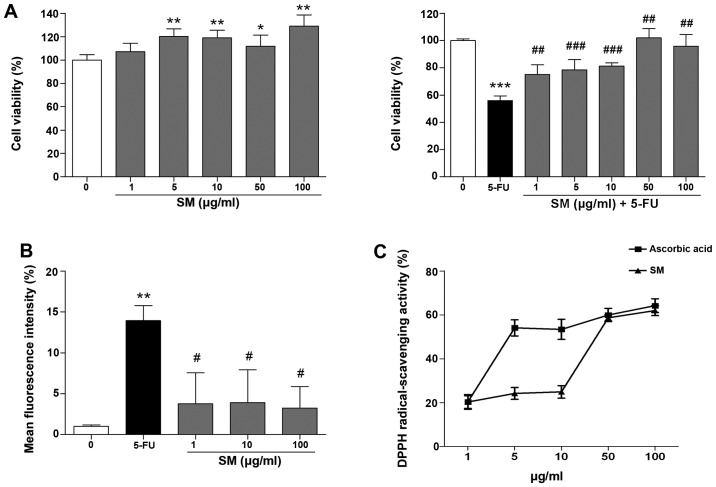
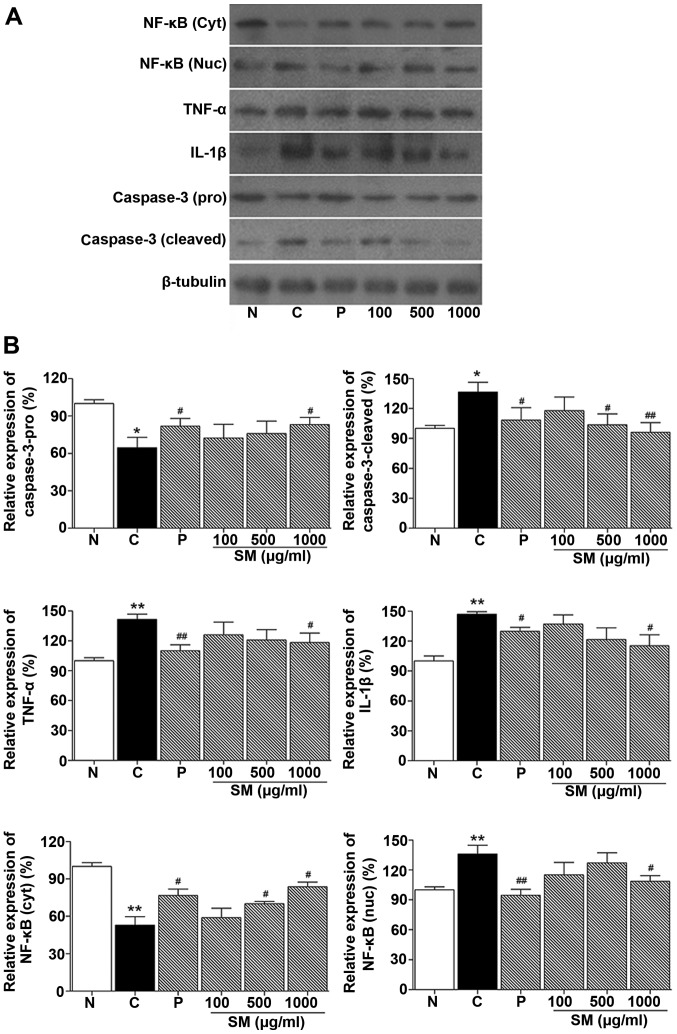
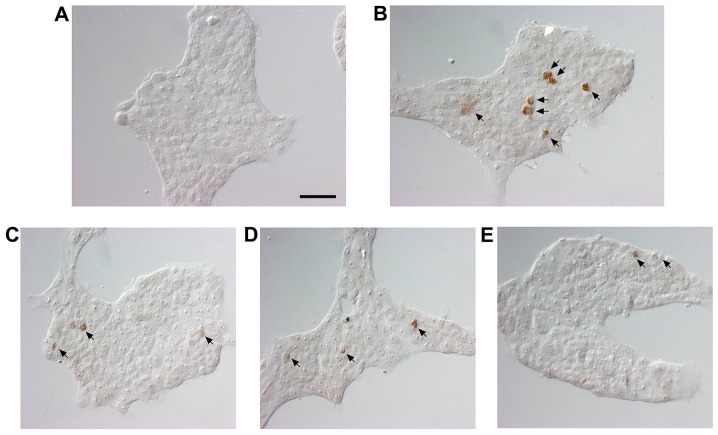
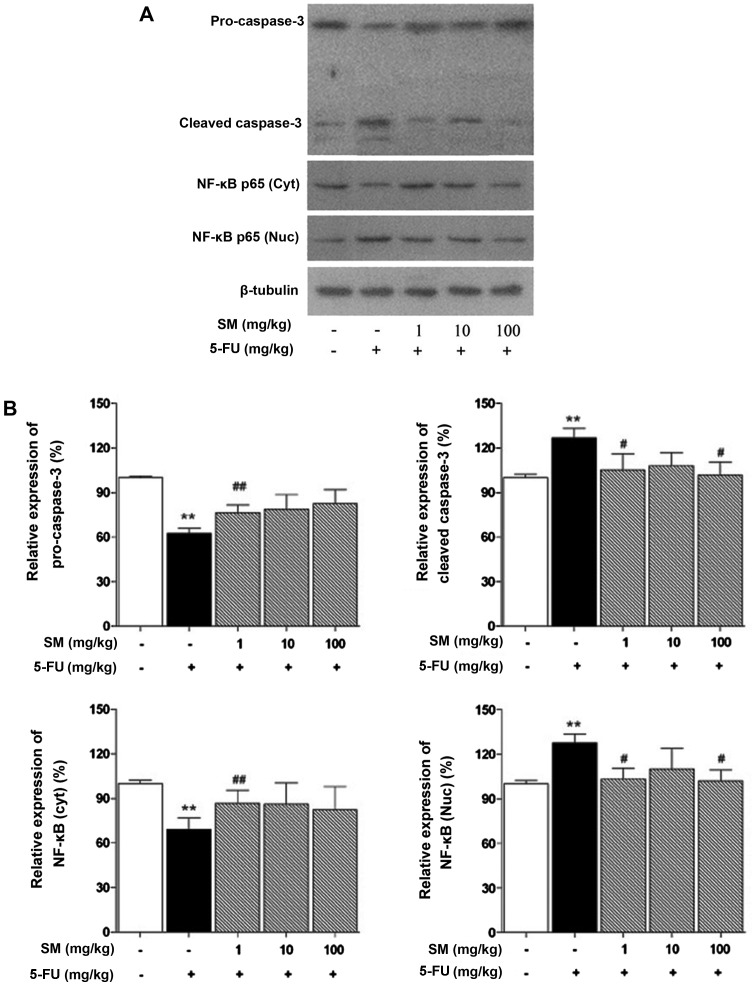
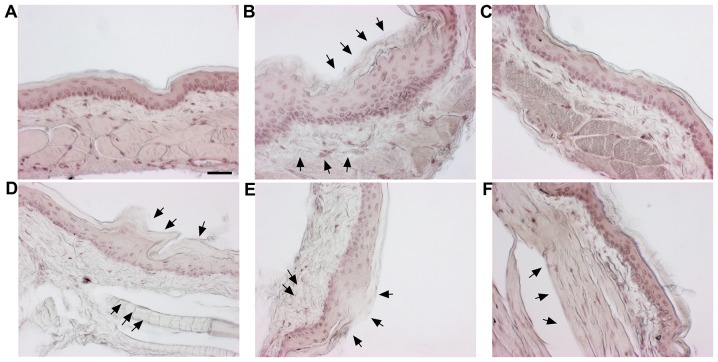
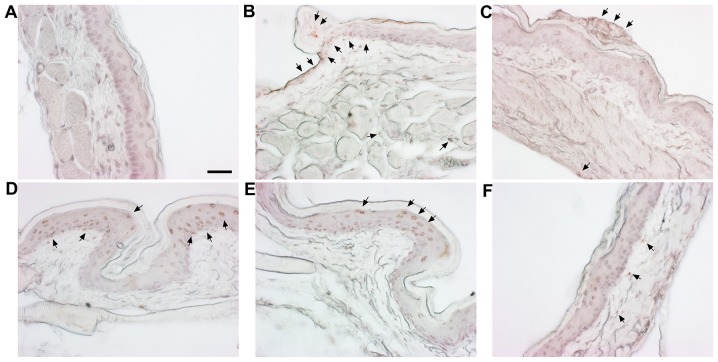
Oral mucositis is a common side-effect caused by chemotherapy or radiotherapy occurring in the majority of cancer patients and is characterized by inflammation and ulcers in the oral mucosa. In the present study, we examined the protective effects of Salvia miltiorrhiza Bunge (SM) on oral mucositis induced by 5-fluorouracil (5-FU) in human pharyngeal cells and golden Syrian hamsters. We investigated the proliferation and antioxidant abilities of SM using MTT, 2-diphenyl-1-picrylhydrazyl (DPPH) and reactive oxygen species (ROS) assays in vitro. Additionally, TUNEL assay was performed, and the expression levels of nuclear factor-κB (NF-κB), caspase-3 and proinflammatory cytokines were assessed by immunoblotting. The results showed that SM increased the cell proliferation rate in human pharyngeal cells up to 128.97±9.7% compared with this rate in the untreated cells and exerted protective effects on mucosal injury caused by 5-FU treatment. In addition, all concentrations of SM increased DPPH scavenging ability and blocked ROS generation in the treated cells. Taken together, following SM treatment, expression of NF-κB and cleaved caspase-3 were significantly decreased followed by inhibition of cell death. These data suggest that SM could be used for the prevention and treatment of oral mucositis caused by cancer therapies.
口腔黏膜炎是大多数癌症患者化疗或放疗引起的常见副作用,其特征为口腔黏膜炎症和溃疡。在本研究中,我们检测了丹参对5-氟尿嘧啶(5-FU)诱导的人咽细胞和金黄叙利亚仓鼠口腔黏膜炎的保护作用。我们在体外使用MTT、2,2-二苯基-1-苦基肼(DPPH)和活性氧(ROS)检测法研究了丹参的增殖和抗氧化能力。此外,进行了TUNEL检测,并通过免疫印迹评估了核因子κB(NF-κB)、半胱天冬酶-3和促炎细胞因子的表达水平。结果表明,与未处理细胞相比,丹参使人类咽细胞的细胞增殖率提高了128.97±9.7%,并对5-FU治疗引起的黏膜损伤发挥了保护作用。此外,所有浓度的丹参均提高了DPPH清除能力,并阻止了处理细胞中ROS的产生。综上所述,丹参处理后,NF-κB和裂解的半胱天冬酶-3的表达显著降低,随后细胞死亡受到抑制。这些数据表明,丹参可用于预防和治疗癌症治疗引起的口腔黏膜炎。