Thomas Marcus, Schwartz Russell
Computational Biology Department, Carnegie Mellon University, 4400 Fifth Avenue, Pittsburgh, PA 15213, United States of America. Joint Carnegie Mellon University/University of Pittsburgh Ph.D. Program in Computational Biology, 4400 Fifth Avenue, Pittsburgh, PA 15213, United States of America.
Phys Biol. 2017 May 23;14(3):035003. doi: 10.1088/1478-3975/aa6cdc.
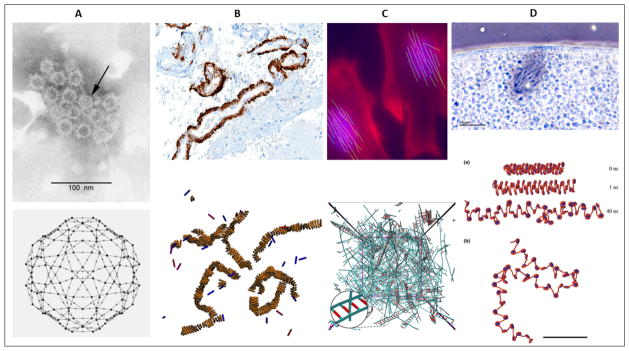
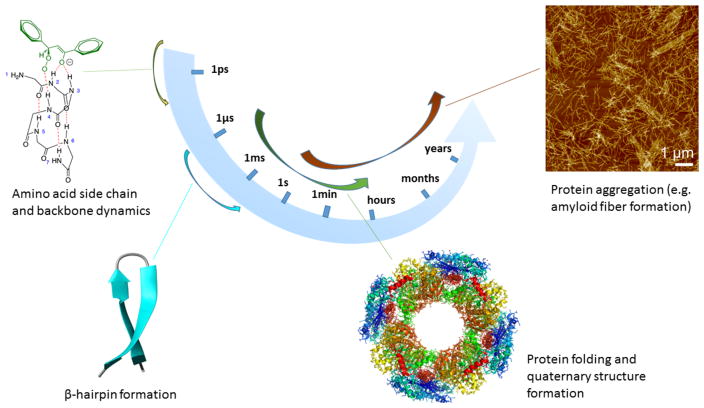
Molecular self-assembly is the dominant form of chemical reaction in living systems, yet efforts at systems biology modeling are only beginning to appreciate the need for and challenges to accurate quantitative modeling of self-assembly. Self-assembly reactions are essential to nearly every important process in cell and molecular biology and handling them is thus a necessary step in building comprehensive models of complex cellular systems. They present exceptional challenges, however, to standard methods for simulating complex systems. While the general systems biology world is just beginning to deal with these challenges, there is an extensive literature dealing with them for more specialized self-assembly modeling. This review will examine the challenges of self-assembly modeling, nascent efforts to deal with these challenges in the systems modeling community, and some of the solutions offered in prior work on self-assembly specifically. The review concludes with some consideration of the likely role of self-assembly in the future of complex biological system models more generally.
分子自组装是生命系统中化学反应的主要形式,然而系统生物学建模方面的努力才刚刚开始认识到对自组装进行准确量化建模的必要性和挑战。自组装反应对于细胞和分子生物学中的几乎每一个重要过程都至关重要,因此处理这些反应是构建复杂细胞系统综合模型的必要步骤。然而,它们给模拟复杂系统的标准方法带来了特殊挑战。虽然一般的系统生物学领域才刚刚开始应对这些挑战,但已有大量文献针对更专门的自组装建模来处理这些挑战。本综述将探讨自组装建模的挑战、系统建模界应对这些挑战的初步努力,以及先前自组装相关工作中提供的一些解决方案。综述最后更全面地思考了自组装在复杂生物系统模型未来发展中可能扮演的角色。