Ampofo Emmanuel, Schmitt Beate M, Menger Michael D, Laschke Matthias W
Institute for Clinical & Experimental Surgery, Saarland University, 66421 Homburg, Germany.
Cell Mol Biol Lett. 2017 Feb 28;22:4. doi: 10.1186/s11658-017-0035-3. eCollection 2017.
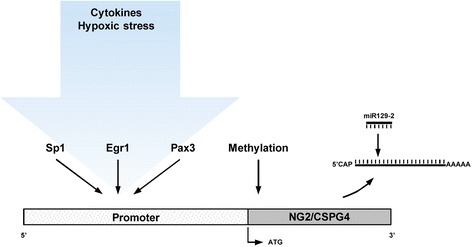
Neuron-glial antigen 2 (NG2), also known as chondroitin sulphate proteoglycan 4 (CSPG4), is a surface type I transmembrane core proteoglycan that is crucially involved in cell survival, migration and angiogenesis. NG2 is frequently used as a marker for the identification and characterization of certain cell types, but little is known about the mechanisms regulating its expression. In this review, we provide evidence that the regulation of NG2 expression underlies inflammation and hypoxia and is mediated by methyltransferases, transcription factors, including Sp1, paired box (Pax) 3 and Egr-1, and the microRNA miR129-2. These regulatory factors crucially determine NG2-mediated cellular processes such as glial scar formation in the central nervous system (CNS) or tumor growth and metastasis. Therefore, they are potential targets for the establishment of novel NG2-based therapeutic strategies in the treatment of CNS injuries, cancer and other conditions of these types.
神经胶质抗原2(NG2),也称为硫酸软骨素蛋白聚糖4(CSPG4),是一种表面I型跨膜核心蛋白聚糖,在细胞存活、迁移和血管生成中起关键作用。NG2经常被用作识别和表征某些细胞类型的标志物,但对其表达调控机制知之甚少。在本综述中,我们提供证据表明,NG2表达的调控是炎症和缺氧的基础,并且由甲基转移酶、转录因子(包括Sp1、配对盒(Pax)3和早期生长反应蛋白1(Egr-1))以及微小RNA miR129-2介导。这些调控因子至关重要地决定了NG2介导的细胞过程,如中枢神经系统(CNS)中的胶质瘢痕形成或肿瘤生长和转移。因此,它们是建立基于NG2的新型治疗策略以治疗CNS损伤、癌症和其他此类病症的潜在靶点。