Wang Miao, Yang Fan, Huang Dana, Huang Yalan, Zhang Xiaomin, Wang Chao, Zhang Shaohua, Zhang Renli
College of Life Science and Oceanography, Shenzhen UniversityShenzhen, China.
Shenzhen Center for Disease Control and PreventionShenzhen, China.
Front Cell Infect Microbiol. 2017 May 9;7:157. doi: 10.3389/fcimb.2017.00157. eCollection 2017.
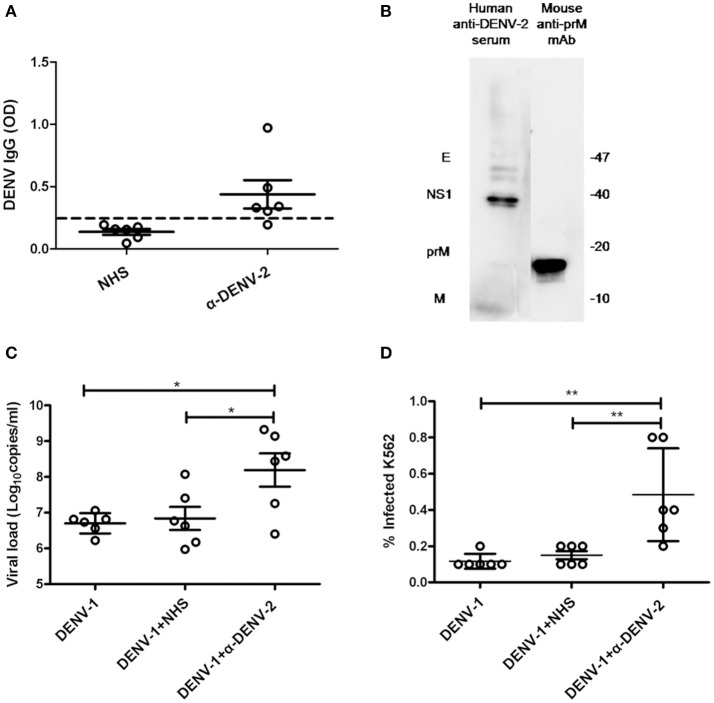
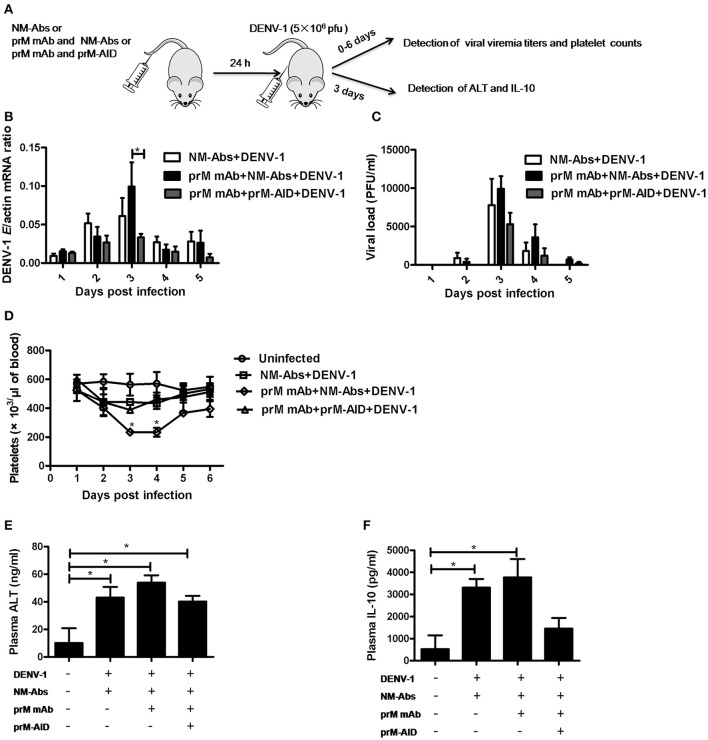
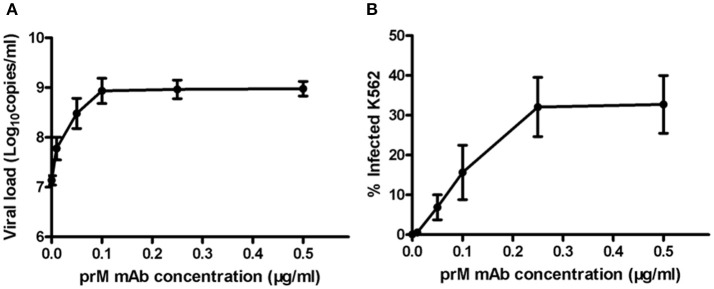
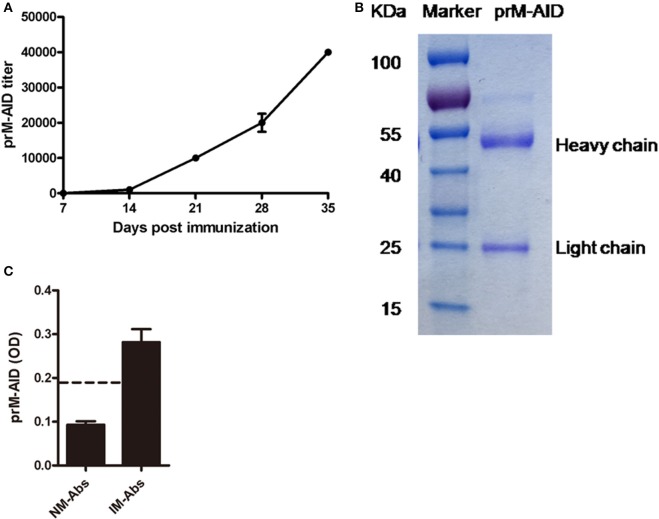
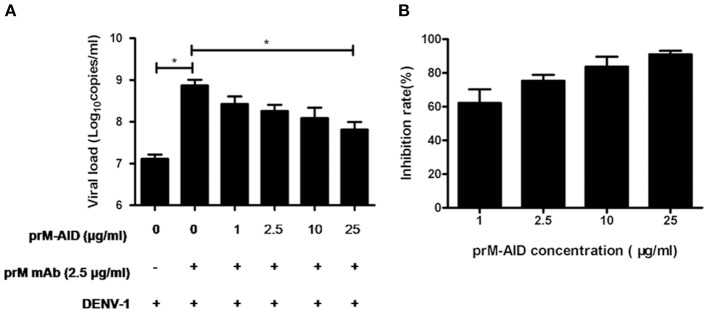
Dengue virus (DENV) co-circulates as four serotypes (DENV1-4). Primary infection only leads to self-limited dengue fever. But secondary infection with another serotype carries a higher risk of increased disease severity, causing life-threatening dengue hemorrhagic fever/dengue shock syndrome (DHF/DSS). Serotype cross-reactive antibodies facilitate DENV infection in Fc-receptor-bearing cells by promoting virus entry via Fcγ receptors (FcγR), a process known as antibody dependent enhancement (ADE). Most studies suggested that enhancing antibodies were mainly specific to the structural premembrane protein (prM) of DENV. However, there is still no effective drugs or vaccines to prevent ADE. In this study, we firstly confirmed that both DENV-2 infected human sera (anti-DENV-2) and DENV-2 prM monoclonal antibody (prM mAb) could significantly enhance DENV-1 infection in K562 cells. Then we developed anti-idiotypic antibodies (prM-AIDs) specific to prM mAb by immunizing of Balb/c mice. Results showed that these polyclonal antibodies can dramatically reduce ADE phenomenon of DENV-1 infection in K562 cells. To further confirm the anti-ADE effect of prM-AIDs , interferon-α and γ receptor-deficient mice (AG6) were used as the mouse model for DENV infection. We found that administration of DENV-2 prM mAb indeed caused a higher DENV-1 titer as well as interleukin-10 (IL-10) and alaninea minotransferase (ALT) in mice infected with DENV-1, similar to clinical ADE symptoms. But when we supplemented prM-AIDs to DENV-1 challenged AG6 mice, the viral titer, IL-10 and ALT were obviously decreased to the negative control level. Of note, the number of platelets in peripheral blood of prM-AIDs group were significantly increased at day 3 post infection with DENV-1 compared that of prM-mAb group. These results confirmed that our prM-AIDs could prevent ADE not only but also , suggested that anti-idiotypic antibodies might be a new choice to be considered to treat DENV infection.
登革病毒(DENV)以四种血清型(DENV1 - 4)共同传播。初次感染仅导致自限性登革热。但再次感染另一种血清型会使疾病严重程度增加的风险更高,引发危及生命的登革出血热/登革休克综合征(DHF/DSS)。血清型交叉反应抗体通过促进病毒经由Fcγ受体(FcγR)进入而在表达Fc受体的细胞中促进DENV感染,这一过程称为抗体依赖性增强(ADE)。大多数研究表明,增强性抗体主要针对DENV的结构前膜蛋白(prM)。然而,目前仍没有预防ADE的有效药物或疫苗。在本研究中,我们首先证实DENV - 2感染的人血清(抗DENV - 2)和DENV - prM单克隆抗体(prM mAb)均可显著增强K562细胞中DENV - 1的感染。然后通过免疫Balb/c小鼠,我们开发了针对prM mAb的抗独特型抗体(prM - AIDs)。结果表明,这些多克隆抗体可显著降低K562细胞中DENV - 1感染的ADE现象。为进一步证实prM - AIDs的抗ADE作用,将干扰素 - α和γ受体缺陷小鼠(AG6)用作DENV感染的小鼠模型。我们发现,给予DENV - 2 prM mAb确实会使感染DENV - 1的小鼠体内DENV - 1滴度以及白细胞介素 - 10(IL - 10)和丙氨酸转氨酶(ALT)升高,类似于临床ADE症状。但当我们向受DENV - 1攻击的AG6小鼠补充prM - AIDs时,病毒滴度、IL - 10和ALT明显降至阴性对照水平。值得注意的是,与prM - mAb组相比,prM - AIDs组外周血中血小板数量在感染DENV - 1后第3天显著增加。这些结果证实我们的prM - AIDs不仅可以预防ADE,还表明抗独特型抗体可能是治疗DENV感染可考虑的新选择。