Montenegro Camila de Albuquerque, Gonçalves Gregório Fernandes, Oliveira Filho Abrahão Alves de, Lira Andressa Brito, Cassiano Thays Thyara Mendes, Lima Natanael Teles Ramos de, Barbosa-Filho José Maria, Diniz Margareth de Fátima Formiga Melo, Pessôa Hilzeth Luna Freire
Postgraduate Program in Natural Products and Synthetic Bioactive, Federal University of Paraiba, João Pessoa 58033-455, Paraíba, Brazil.
Department of Pharmacy, Center Biological Sciences and Health, State University of Paraiba, Campina Grande 58429-600, Paraíba, Brazil.
Molecules. 2017 May 24;22(6):869. doi: 10.3390/molecules22060869.
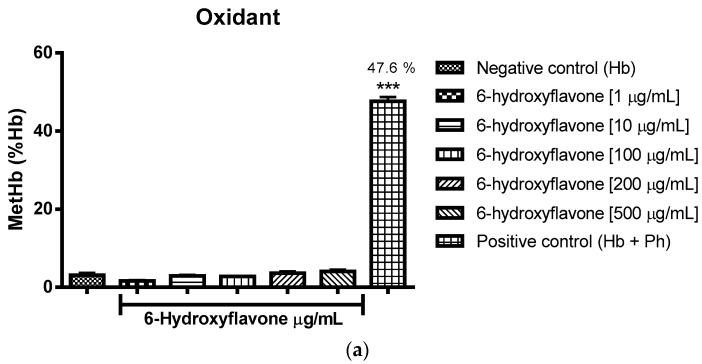
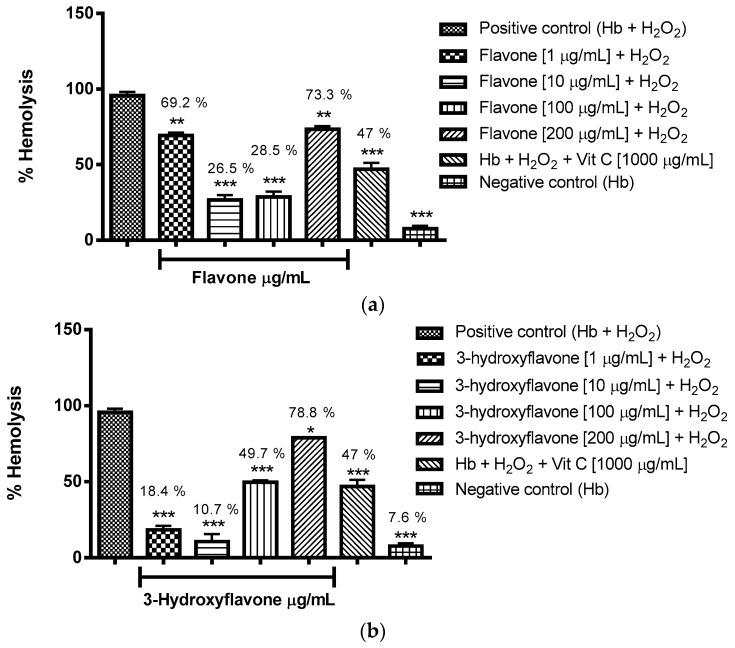
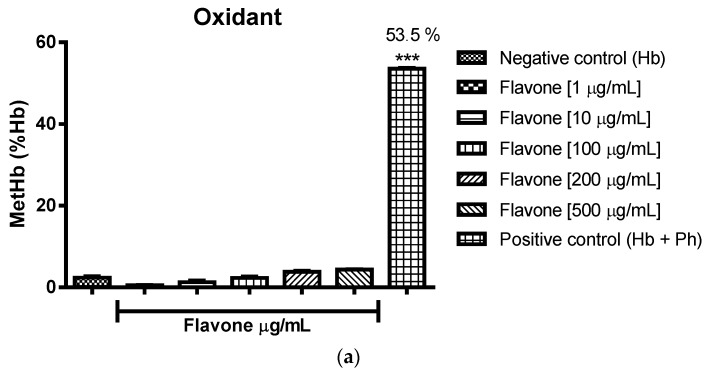
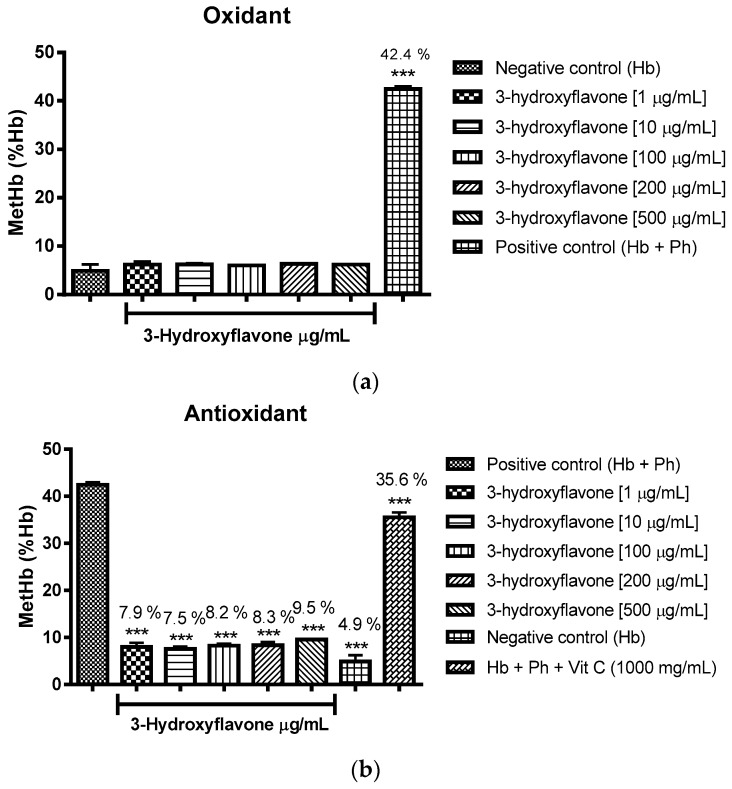
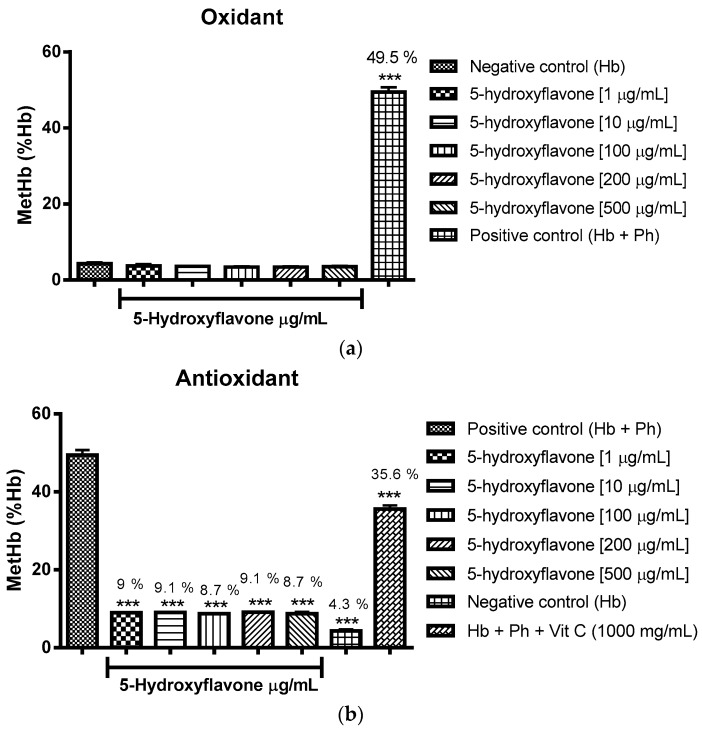
Flavonoid compounds are widely used as natural protective species, which can act as anti-inflammatory, antioxidant, anticoagulant, antihypertensive and antitumor agents. This study set out to investigate the probable pharmacological activities, along with the antibacterial and antioxidant effects, of flavone and its hydroxy derivatives: 3-hydroxyflavone, 5-hydroxyflavone and 6-hydroxyflavone. To do so, we investigated their pharmacological characteristics, using in silico tests that indicate likelihood of activity or inactivity, with the PASS online software, and the antimicrobial potential against Gram positive and Gram negative bacteria was also analyzed, including bacteria of clinical importance. We also tested for oxidant and antioxidant potential in these molecules in the presence of reactive oxygen species (ROS) and phenylhydrazine (Ph). The results revealed the following characteristics: pharmacological activities for the flavonoids as agonists of cell membrane integrity and as permeability inhibitors, as antagonists of anaphylatoxin receptors, as inhibitors of both kinase and peroxidase, and as having both antimutagenic capacity and vaso-protective potential. All of the flavonoids exhibited moderate antibacterial activity against Gram positive and Gram negative strains, with the flavones being bactericidal at 200 μg/mL for the strains of ATCC 8027, ATCC 25619 and 104; the other flavonoids revealed bacteriostatic action. The substances did not promote erythrocyte oxidation and behaved as sequestrators and antioxidants of hydrogen peroxide (H₂O₂) and phenylhydrazine (Ph). It was concluded that the analyzed compounds have various pharmacological activities in accordance with the predictions of PASS online, as their antibacterial and antioxidant activities were confirmed. The study also helps to consolidate the use of computational chemistry in silico tools to guide new drug search and discovery protocols.
黄酮类化合物作为天然保护物质被广泛使用,它们可以作为抗炎、抗氧化、抗凝血、抗高血压和抗肿瘤剂。本研究旨在研究黄酮及其羟基衍生物(3-羟基黄酮、5-羟基黄酮和6-羟基黄酮)可能的药理活性以及抗菌和抗氧化作用。为此,我们使用PASS在线软件通过计算机模拟试验研究了它们的药理特性,该试验可表明活性或无活性的可能性,并且还分析了它们对革兰氏阳性和革兰氏阴性细菌(包括具有临床重要性的细菌)的抗菌潜力。我们还在活性氧(ROS)和苯肼(Ph)存在的情况下测试了这些分子的氧化和抗氧化潜力。结果显示出以下特性:黄酮类化合物作为细胞膜完整性的激动剂和通透性抑制剂、过敏毒素受体的拮抗剂、激酶和过氧化物酶的抑制剂,以及具有抗诱变能力和血管保护潜力的药理活性。所有黄酮类化合物对革兰氏阳性和革兰氏阴性菌株均表现出中等抗菌活性,对于ATCC 8027、ATCC 25619和104菌株,黄酮在200μg/mL时具有杀菌作用;其他黄酮类化合物表现出抑菌作用。这些物质不会促进红细胞氧化,并且表现为过氧化氢(H₂O₂)和苯肼(Ph)的螯合剂和抗氧化剂。得出的结论是,根据PASS在线的预测,所分析的化合物具有多种药理活性,因为它们的抗菌和抗氧化活性得到了证实。该研究还有助于巩固计算机化学在计算机模拟工具中的应用,以指导新药物的搜索和发现方案。