School of Biomedical Sciences, The University of Queensland, Queensland, 4072, Australia.
Institute for Molecular Biosciences, The University of Queensland, Queensland, 4072, Australia.
Sci Rep. 2017 May 24;7(1):2353. doi: 10.1038/s41598-017-02564-9.
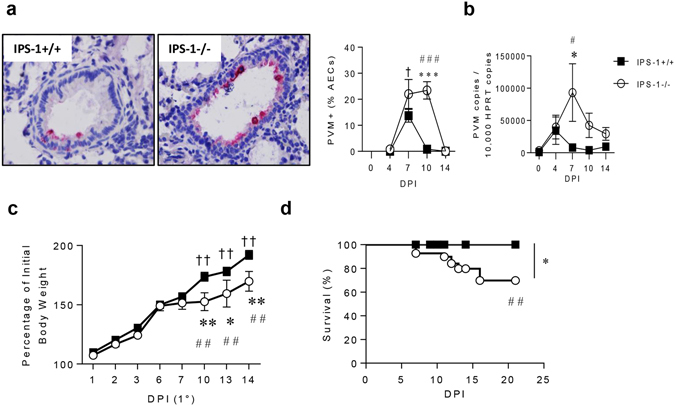
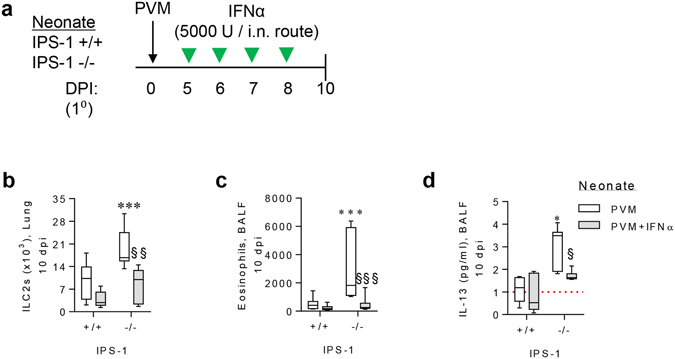
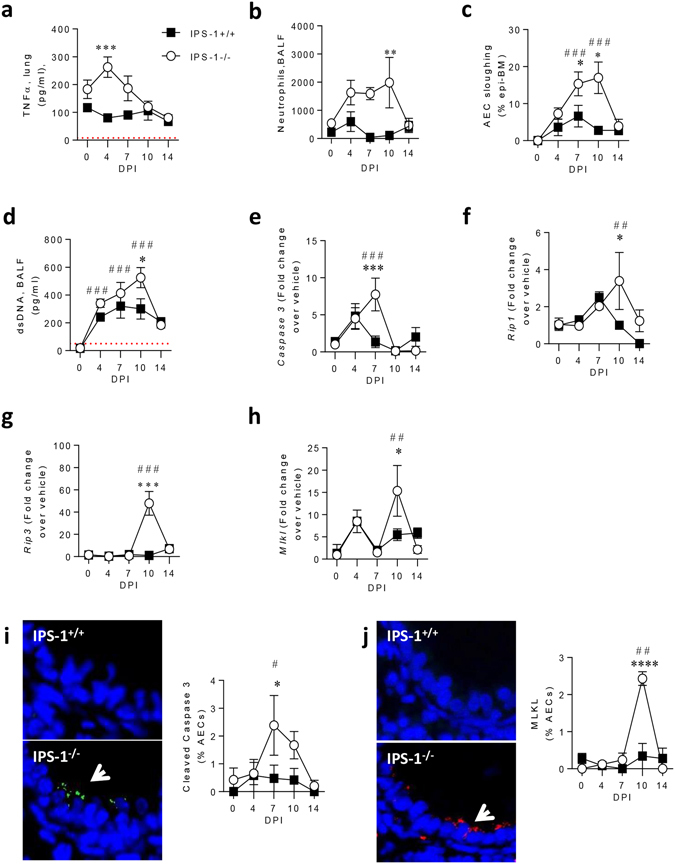
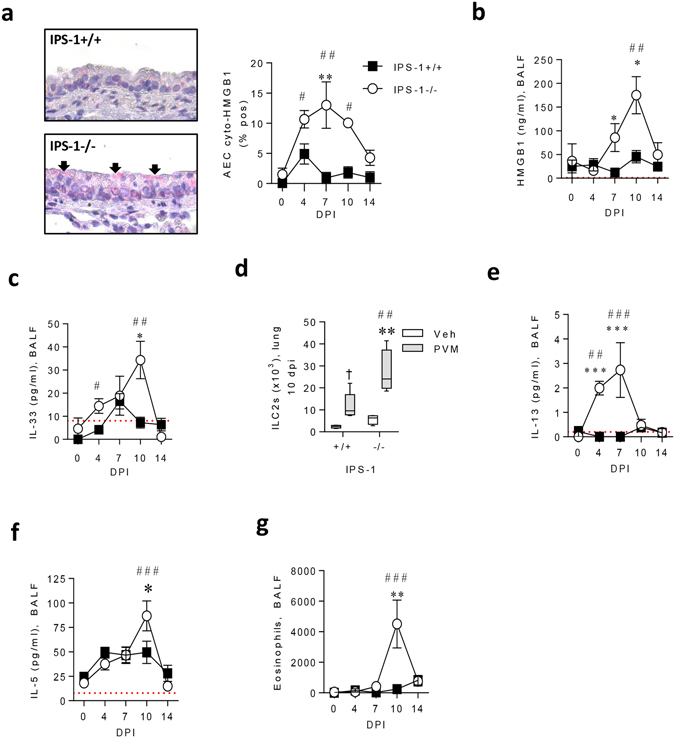
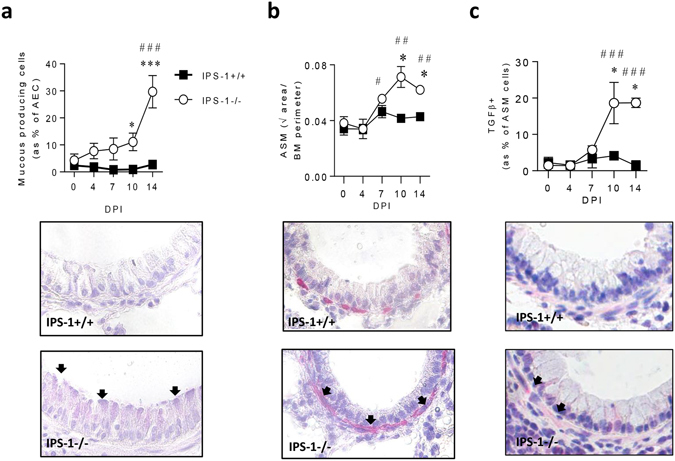
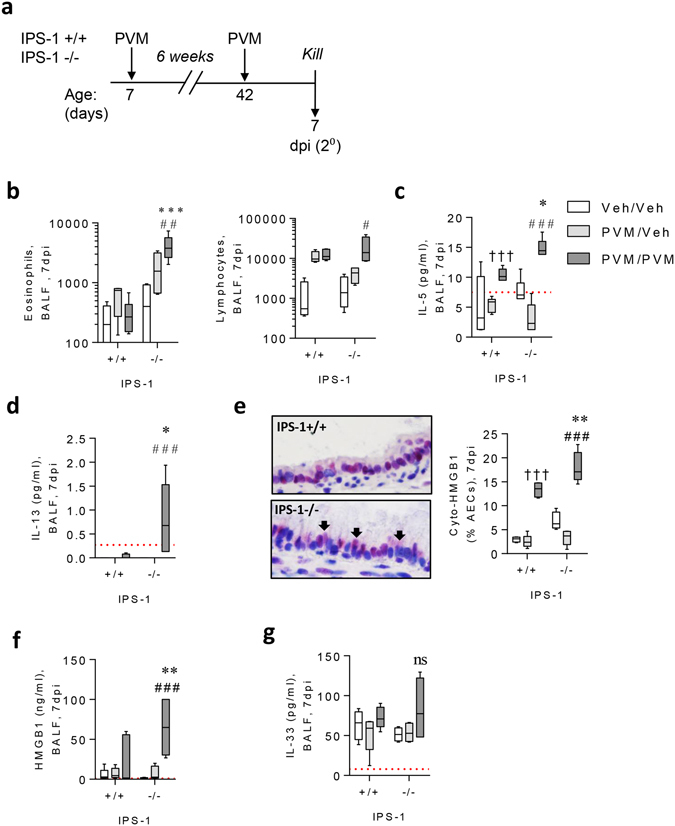
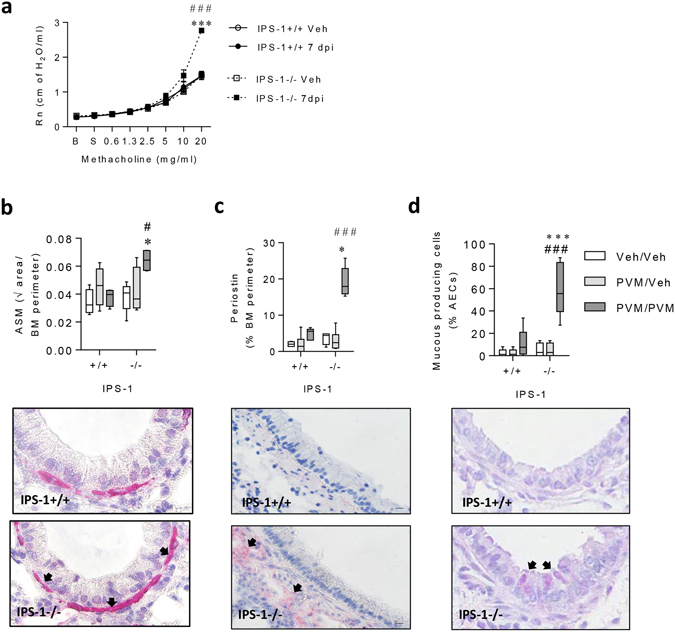
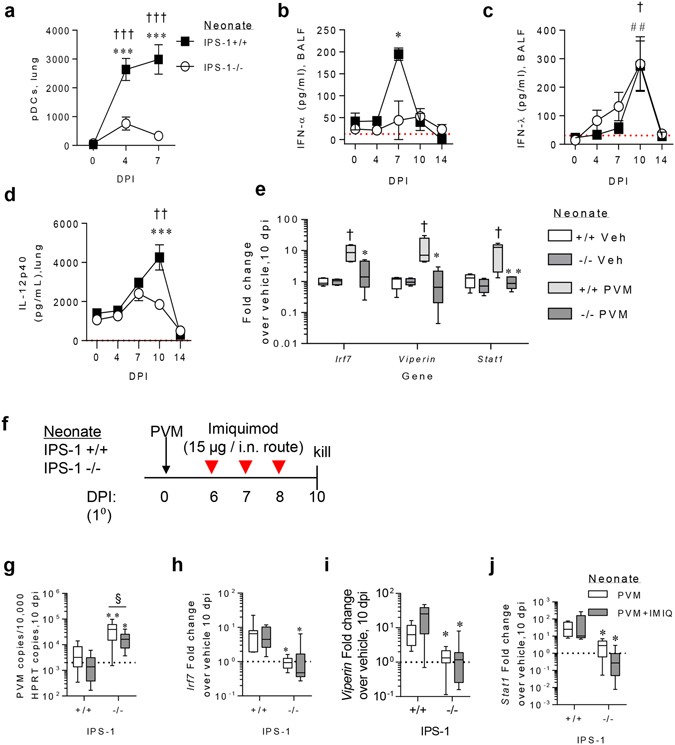
Respiratory syncytial virus (RSV)-bronchiolitis is a major cause of infant morbidity and mortality and a risk factor for subsequent asthma. We showed previously that toll-like receptor (TLR)7 in plasmacytoid dendritic cells (pDCs) is critical for protection against bronchiolitis and asthma in mice infected with pneumonia virus of mice (PVM), the mouse homolog of RSV. This lack of redundancy was unexpected as interferon-β promotor stimulator-1 (IPS-1) signalling, downstream of RIG-I-like receptor (RLR) and not TLR7 activation, contributes to host defence in hRSV-inoculated adult mice. To further clarify the role of IPS-1 signalling, we inoculated IPS-1 and WT mice with PVM in early-life, and again in later-life, to model the association between bronchiolitis and asthma. IPS-1 deficiency predisposed to severe PVM bronchiolitis, characterised by neutrophilic inflammation and necroptotic airway epithelial cell death, high mobility group box 1 (HMGB1) and IL-33 release, and downstream type-2 inflammation. Secondary infection induced an eosinophilic asthma-like pathophysiology in IPS-1 but not WT mice. Mechanistically, we identified that IPS-1 is necessary for pDC recruitment, IFN-α production and viral control. Our findings suggest that TLR7 and RLR signalling work collaboratively to optimally control the host response to pneumovirus infection thereby protecting against viral bronchiolitis and subsequent asthma.
呼吸道合胞病毒 (RSV)-细支气管炎是婴儿发病率和死亡率的主要原因,也是随后发生哮喘的危险因素。我们之前表明,浆细胞样树突状细胞 (pDC) 中的 Toll 样受体 (TLR)7 对于感染鼠肺炎病毒 (PVM,RSV 的小鼠同源物) 的小鼠的细支气管炎和哮喘的保护至关重要。这种缺乏冗余性是出乎意料的,因为干扰素-β启动子刺激物-1 (IPS-1) 信号转导,下游的 RIG-I 样受体 (RLR) 而不是 TLR7 激活,有助于 hRSV 接种的成年小鼠的宿主防御。为了进一步阐明 IPS-1 信号转导的作用,我们在早期生命和后期生命中用 PVM 接种 IPS-1 和 WT 小鼠,以模拟细支气管炎和哮喘之间的关联。IPS-1 缺乏易患严重的 PVM 细支气管炎,其特征是中性粒细胞炎症和坏死性气道上皮细胞死亡、高迁移率族蛋白 1 (HMGB1) 和 IL-33 释放以及下游的 2 型炎症。二次感染诱导 IPS-1 但不是 WT 小鼠发生嗜酸性粒细胞性哮喘样病理生理学。在机制上,我们确定 IPS-1 是 pDC 募集、IFN-α 产生和病毒控制所必需的。我们的研究结果表明,TLR7 和 RLR 信号协同工作,以最佳地控制宿主对肺病毒感染的反应,从而防止病毒性细支气管炎和随后的哮喘。