Mintz-Hittner Helen A, Geloneck Megan M
Ruiz Department of Ophthalmology and Visual Science, McGovern Medical School at UTHealth.
WT and Louise J Moran Pediatric Eye Clinic (affiliate of Robert Cizik Eye Clinic), Houston, TX, USA.
Eye Brain. 2016 Jun 15;8:135-140. doi: 10.2147/EB.S99306. eCollection 2016.
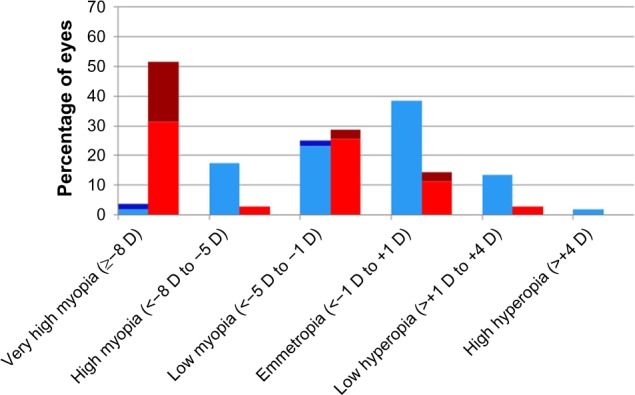
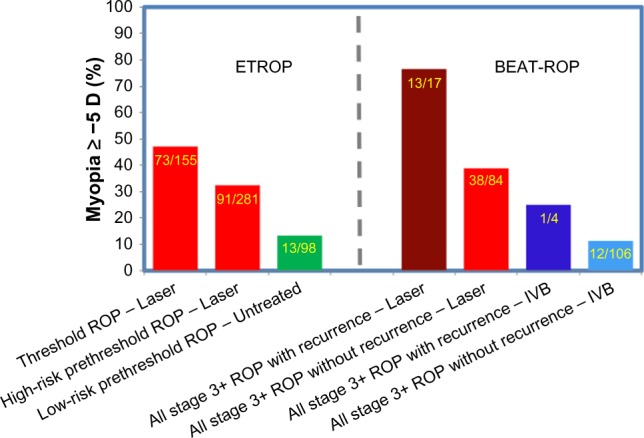
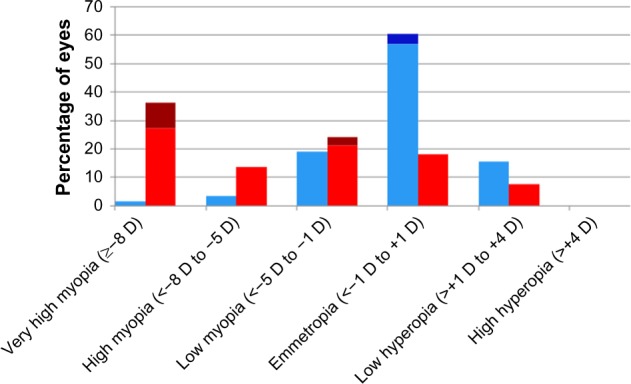
To examine the effect of anti-vascular endothelial growth factor (anti-VEGF) agents on refractive error in the setting of retinopathy of prematurity (ROP) through a review of the literature, a PubMed search was performed of appropriate search terms, and the results of all relevant studies were extracted and compiled. Eleven relevant articles were identified in the literature, totaling 466 eyes, treated with varied anti-VEGF agents (bevacizumab, ranibizumab, and aflibercept) with mean spherical equivalent refractions ranging from +0.75 D to -3.57 D, with prevalence of high myopia ranging from 0 to 35%. Anti-VEGF monotherapy for ROP leads to low levels of myopia, and there may be a differential effect of specific anti-VEGF agents utilized on refractive outcomes.
通过文献回顾,研究抗血管内皮生长因子(anti-VEGF)药物对早产儿视网膜病变(ROP)患者屈光不正的影响。在PubMed上使用适当的检索词进行搜索,并提取和汇总所有相关研究的结果。文献中确定了11篇相关文章,共466只眼睛,使用了不同的抗VEGF药物(贝伐单抗、雷珠单抗和阿柏西普),平均球镜等效屈光度范围为+0.75 D至-3.57 D,高度近视患病率范围为0%至35%。ROP的抗VEGF单药治疗导致低度近视,并且所使用的特定抗VEGF药物对屈光结果可能有不同的影响。