Department of Biology and Center for Life in Extreme Environments, Portland State University, Portland, OR, USA.
Departamento de Patología y Medicina Preventiva, Facultad de Ciencias Veterinarias, Universidad de Concepción, Chillán, Ñuble, Chile.
Genome Biol Evol. 2021 Jul 6;13(7). doi: 10.1093/gbe/evab108.
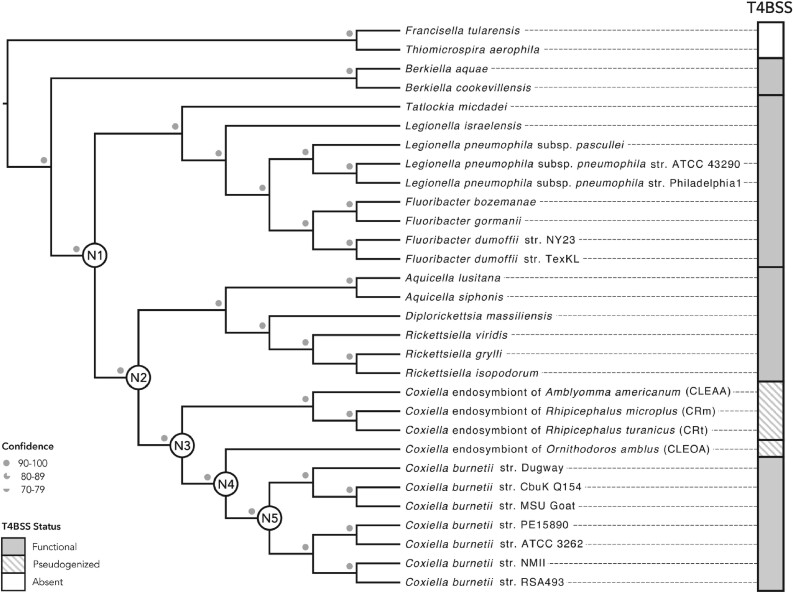
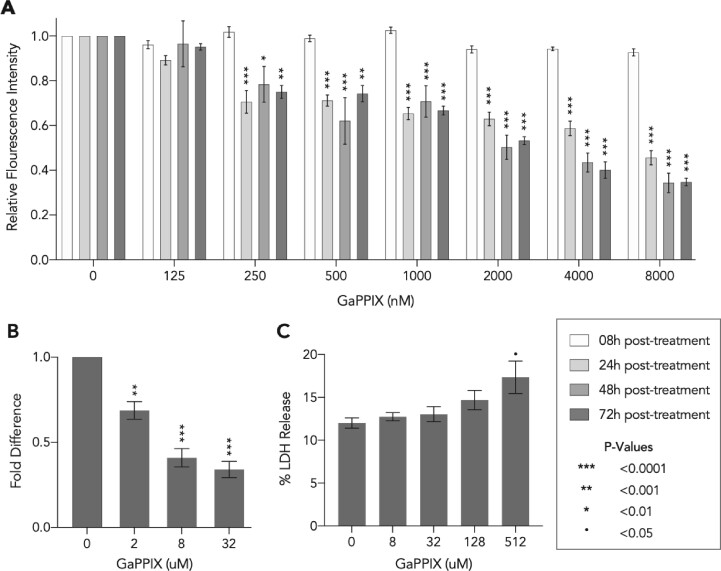
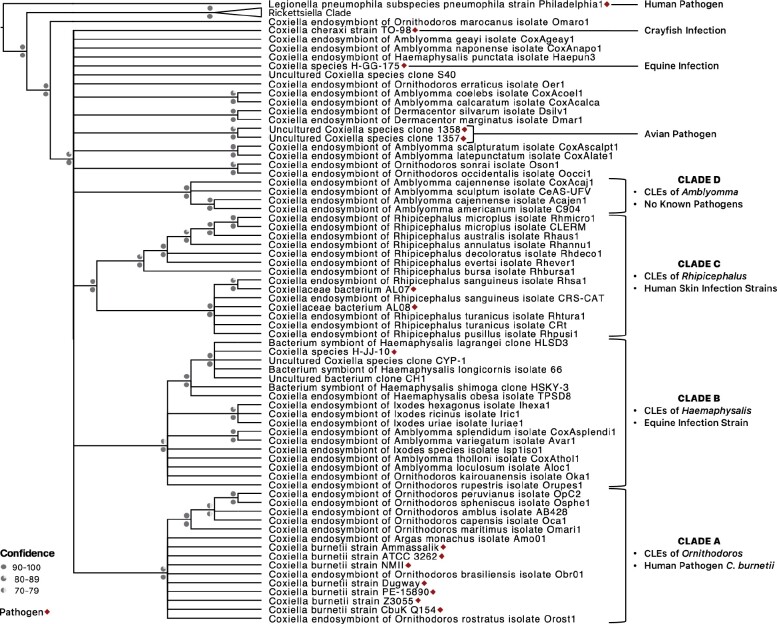
Both symbiotic and pathogenic bacteria in the family Coxiellaceae cause morbidity and mortality in humans and animals. For instance, Coxiella-like endosymbionts (CLEs) improve the reproductive success of ticks-a major disease vector, while Coxiella burnetii causes human Q fever, and uncharacterized coxiellae infect both animals and humans. To better understand the evolution of pathogenesis and symbiosis in this group of intracellular bacteria, we sequenced the genome of a CLE present in the soft tick Ornithodoros amblus (CLEOA) and compared it to the genomes of other bacteria in the order Legionellales. Our analyses confirmed that CLEOA is more closely related to C. burnetii, the human pathogen, than to CLEs in hard ticks, and showed that most clades of CLEs contain both endosymbionts and pathogens, indicating that several CLE lineages have evolved independently from pathogenic Coxiella. We also determined that the last common ancestorof CLEOA and C. burnetii was equipped to infect macrophages and that even though horizontal gene transfer (HGT) contributed significantly to the evolution of C. burnetii, most acquisition events occurred primarily in ancestors predating the CLEOA-C. burnetii divergence. These discoveries clarify the evolution of C. burnetii, which previously was assumed to have emerged when an avirulent tick endosymbiont recently gained virulence factors via HGT. Finally, we identified several metabolic pathways, including heme biosynthesis, that are likely critical to the intracellular growth of the human pathogen but not the tick symbiont, and show that the use of heme analog is a promising approach to controlling C. burnetii infections.
柯克斯体科中的共生菌和致病菌都会导致人类和动物发病和死亡。例如,类似柯克斯体的内共生菌(CLE)可提高蜱虫——一种主要的疾病传播媒介——的繁殖成功率,而贝氏柯克斯体则会引起人类 Q 热,未被描述的柯克斯体则同时感染动物和人类。为了更好地理解该组胞内细菌的致病和共生进化,我们对存在于软蜱 Ornithodoros amblus 中的一种 CLE(CLEOA)进行了基因组测序,并将其与军团菌目中的其他细菌的基因组进行了比较。我们的分析证实,CLEOA 与人类病原体贝氏柯克斯体的亲缘关系比硬蜱中的 CLE 更为密切,并且表明大多数 CLE 进化枝都同时包含内共生菌和致病菌,这表明有几个 CLE 谱系已经独立于致病的柯克斯体进化而来。我们还确定,CLEOA 和贝氏柯克斯体的最后共同祖先具备感染巨噬细胞的能力,尽管水平基因转移(HGT)对贝氏柯克斯体的进化有重要贡献,但大多数获得事件主要发生在 CLEOA-贝氏柯克斯体分化之前的祖先中。这些发现阐明了贝氏柯克斯体的进化,此前人们认为它是在一种无致病力的蜱内共生菌最近通过 HGT 获得了毒力因子后出现的。最后,我们鉴定了几种代谢途径,包括血红素生物合成途径,这些途径可能对人类病原体的细胞内生长至关重要,但对蜱共生菌则不重要,并且表明使用血红素类似物是控制贝氏柯克斯体感染的一种有前途的方法。