Kim Eun-Min, Kwak You Shine, Yi Myung-Hee, Kim Ju Yeong, Sohn Woon-Mok, Yong Tai-Soon
Department of Environmental Medical Biology and Arthropods of Medical Importance Resource Research Bank, Institute of Tropical Medicine, Yonsei University College of Medicine, Seoul, Korea.
Department of Parasitology and Tropical Medicine, and Institute of Health Sciences, Gyeongsang National University School of Medicine, Jinju, Korea.
PLoS Negl Trop Dis. 2017 May 24;11(5):e0005614. doi: 10.1371/journal.pntd.0005614. eCollection 2017 May.
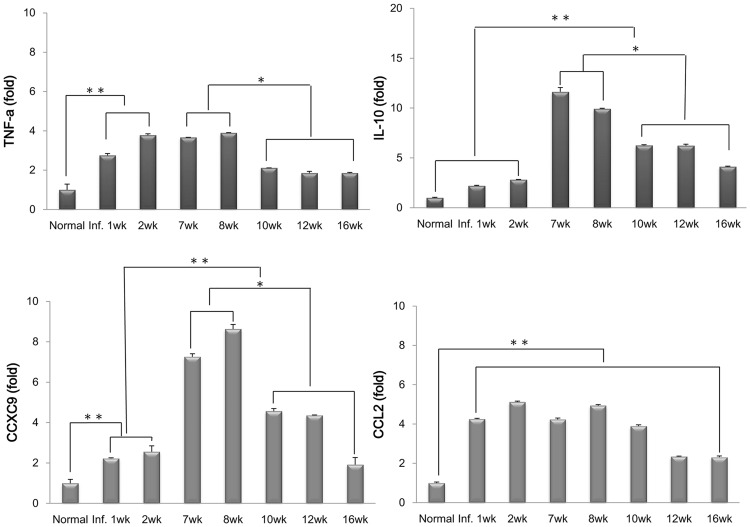
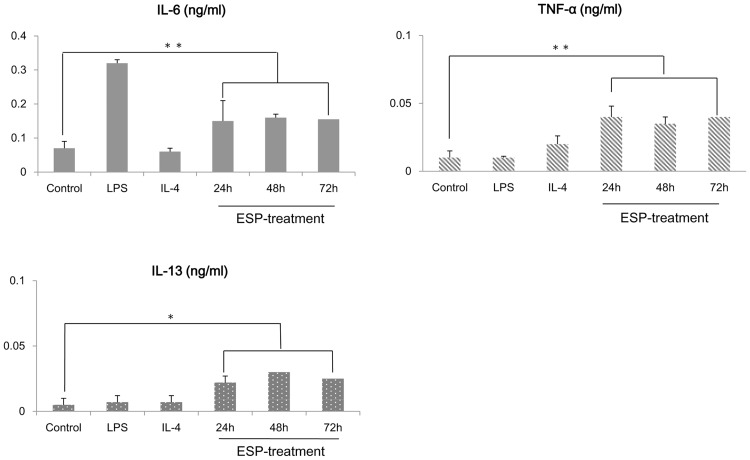
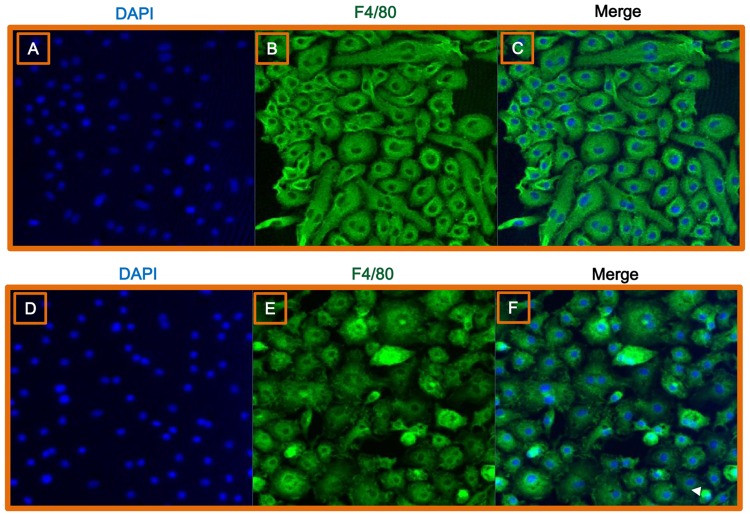
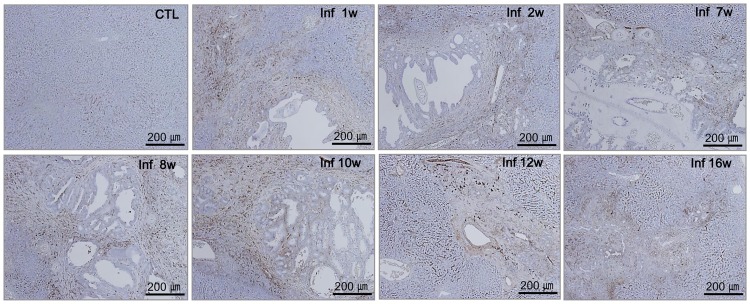
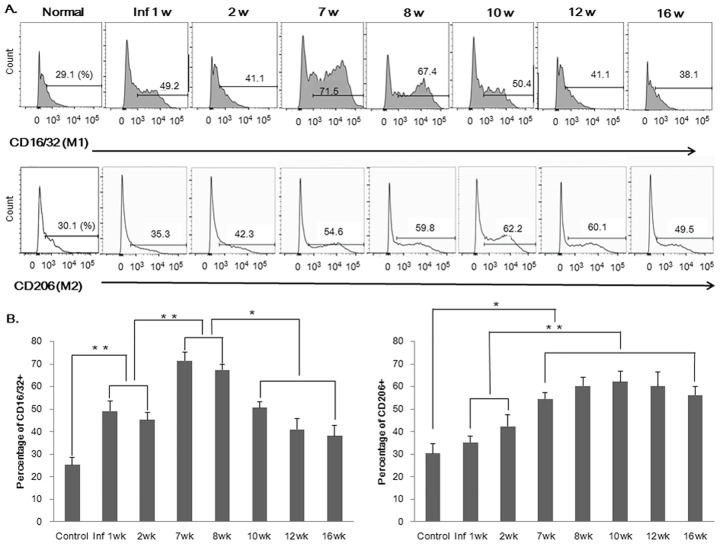
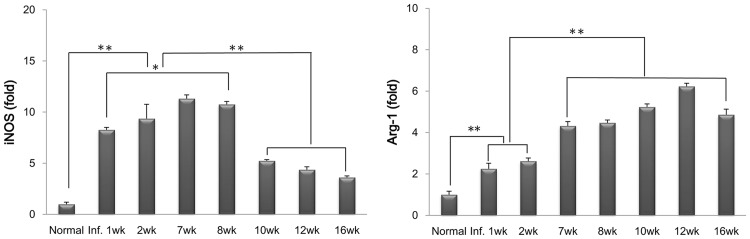
Clonorchis sinensis infection elicits hepatic inflammation, which can lead to cholangitis, periductal hepatic fibrosis, liver cirrhosis, and even cholangiocarcinoma. Hepatic macrophages are an intrinsic element of both innate and acquired immunity. This study was conducted to demonstrate the dynamics of hepatic macrophage polarization during C. sinensis infection in mice and to identify factors regulating this polarization. Treatment of hepatic macrophages isolated from normal mice with C. sinensis excretory/secretory products (ESPs) resulted in the preferential generation of classically activated hepatic macrophages (M1 macrophages) and the production of pro-inflammatory cytokines. Additionally, cells stimulated with C. sinensis ESPs exhibited changes in cellular morphology. During the early stages of C. sinensis infection, hepatic macrophages preferentially differentiated into M1 macrophages; however, during the C. sinensis mature worm stage, when eggs are released, there were significant increases in the abundance of both M1 macrophages and alternatively activated hepatic macrophages (M2 macrophages). Moreover, there was a further increase in the M2 macrophage count during the fibrotic and cirrhotic stage of infection. Notably, this fibrotic and cirrhotic stage promoted a strong increase in the proportion of Arg-1-producing macrophages (M2 phenotype), which were associated with fibrosis and tissue repair in the liver. Our results suggest that the dynamic polarization of hepatic macrophages as C. sinensis infection progresses is related to the histological lesions present in liver tissue. Hepatic macrophages thus play an important role in local immunity during C. sinensis infection.
华支睾吸虫感染会引发肝脏炎症,进而可能导致胆管炎、胆管周围肝纤维化、肝硬化,甚至胆管癌。肝巨噬细胞是固有免疫和获得性免疫的内在组成部分。本研究旨在阐明小鼠感染华支睾吸虫期间肝巨噬细胞极化的动态变化,并确定调节这种极化的因素。用华支睾吸虫排泄/分泌产物(ESPs)处理从正常小鼠分离的肝巨噬细胞,会优先产生经典活化的肝巨噬细胞(M1巨噬细胞)并分泌促炎细胞因子。此外,用华支睾吸虫ESPs刺激的细胞会出现细胞形态变化。在华支睾吸虫感染的早期阶段,肝巨噬细胞优先分化为M1巨噬细胞;然而,在华支睾吸虫成虫产卵阶段,M1巨噬细胞和替代性活化的肝巨噬细胞(M2巨噬细胞)的数量均显著增加。此外,在感染的纤维化和肝硬化阶段,M2巨噬细胞数量进一步增加。值得注意的是,在纤维化和肝硬化阶段,产生精氨酸酶-1的巨噬细胞(M2表型)比例大幅增加,这与肝脏纤维化和组织修复有关。我们的结果表明,随着华支睾吸虫感染的进展,肝巨噬细胞的动态极化与肝组织中的组织学病变有关。因此,肝巨噬细胞在华支睾吸虫感染期间的局部免疫中发挥着重要作用。