• 文献检索
  • 文档翻译
  • 深度研究
  • 学术资讯
  • Suppr Zotero 插件Zotero 插件
  • 邀请有礼
  • 套餐&价格
  • 历史记录
应用&插件
Suppr Zotero 插件Zotero 插件浏览器插件Mac 客户端Windows 客户端微信小程序
定价
高级版会员购买积分包购买API积分包
服务
文献检索文档翻译深度研究API 文档MCP 服务
关于我们
关于 Suppr公司介绍联系我们用户协议隐私条款
关注我们

Suppr 超能文献

核心技术专利:CN118964589B侵权必究
粤ICP备2023148730 号-1Suppr @ 2026

文献检索

告别复杂PubMed语法,用中文像聊天一样搜索,搜遍4000万医学文献。AI智能推荐,让科研检索更轻松。

立即免费搜索

文件翻译

保留排版,准确专业,支持PDF/Word/PPT等文件格式,支持 12+语言互译。

免费翻译文档

深度研究

AI帮你快速写综述,25分钟生成高质量综述,智能提取关键信息,辅助科研写作。

立即免费体验

受地方性下肢水肿病影响家庭中农村学龄儿童的健康观念:埃塞俄比亚南部的一项定性研究

Health beliefs of school-age rural children in podoconiosis-affected families: A qualitative study in Southern Ethiopia.

作者信息

Tora Abebayehu, Tadele Getnet, Aseffa Abraham, McBride Colleen M, Davey Gail

机构信息

Department of Sociology, College of Social Sciences, Addis Ababa University, Addis Ababa, Ethiopia.

Department of Sociology, College of Social Sciences, Wolaita Sodo University, Sodo, Ethiopia.

出版信息

PLoS Negl Trop Dis. 2017 May 25;11(5):e0005564. doi: 10.1371/journal.pntd.0005564. eCollection 2017 May.

DOI:10.1371/journal.pntd.0005564
PMID:28542227
原文链接:https://pmc.ncbi.nlm.nih.gov/articles/PMC5444591/
Abstract

BACKGROUND

Several studies have suggested investigation of health beliefs in children to be an important pre-condition for primary prevention of disease. However, little effort has been made to understand these in the context of podoconiosis. This study therefore aimed to explore the health beliefs of school-age rural children in podoconiosis-affected families.

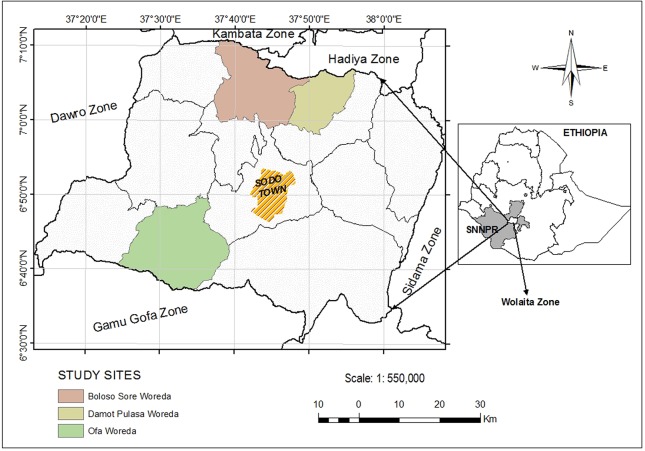
METHODOLOGY/PRINCIPAL FINDINGS: A cross sectional qualitative study was conducted in March 2016 in Wolaita Zone, Southern Ethiopia. Data were collected through in-depth individual interviews (IDIs) and focus group discussions (FGDs), with a total of one hundred seventeen 9 to15-year-old children recruited from podoconiosis affected families. The study revealed various misconceptions regarding risk factors for podoconiosis. Most children believed barefoot exposure to dew, worms, snake bite, frog urine, other forms of poison, and contact with affected people to be major causes of the disease. Their knowledge about the role of heredity and that of long term barefoot exposure to irritant mineral particles was also weak. Though most participants correctly appraised their susceptibility to podoconiosis in relation to regular use of footwear and foot hygiene, others based their risk perceptions on factors they think beyond their control. They described several barriers to preventive behaviour, including uncomfortable footwear, shortage and poor adaptability of footwear for farm activities and sports, and shortage of soap for washing. Children also perceived low self-efficacy to practice preventive behaviour in spite of the barriers.

CONCLUSION/SIGNIFICANCE: Health education interventions may enhance school-age children's health literacy and be translated to preventive action. Overcoming practical challenges such as shortage of footwear and other hygiene facilities requires other forms of interventions such as livelihood strengthening activities. Linking podoconiosis-affected families with local governmental or non-governmental organizations providing socio-economic support for households may assist school-age children in those families to sustainably engage in preventive behaviours.

摘要

背景

多项研究表明,调查儿童的健康观念是疾病一级预防的重要前提条件。然而,在足分枝菌病方面,人们对这些观念的了解甚少。因此,本研究旨在探讨受足分枝菌病影响家庭中农村学龄儿童的健康观念。

方法/主要发现:2016年3月在埃塞俄比亚南部的沃莱塔地区进行了一项横断面定性研究。通过深入个人访谈(IDI)和焦点小组讨论(FGD)收集数据,共从受足分枝菌病影响的家庭中招募了117名9至15岁的儿童。该研究揭示了对足分枝菌病危险因素的各种误解。大多数儿童认为赤脚接触露水、蠕虫、蛇咬、青蛙尿液、其他形式的毒物以及与患病者接触是该病的主要病因。他们对遗传作用以及长期赤脚接触刺激性矿物颗粒作用的了解也很薄弱。尽管大多数参与者正确评估了他们在定期使用鞋类和足部卫生方面患足分枝菌病的易感性,但其他人则将他们的风险认知基于他们认为无法控制的因素。他们描述了预防行为的几个障碍,包括不舒服的鞋类、用于农场活动和运动的鞋类短缺及适应性差,以及用于洗涤的肥皂短缺。尽管存在这些障碍,儿童也认为自己实施预防行为的自我效能较低。

结论/意义:健康教育干预措施可能会提高学龄儿童的健康素养,并转化为预防行动。克服诸如鞋类和其他卫生设施短缺等实际挑战需要其他形式的干预措施,如加强生计活动。将受足分枝菌病影响的家庭与为家庭提供社会经济支持的地方政府或非政府组织联系起来,可能有助于这些家庭中的学龄儿童可持续地参与预防行为。
https://cdn.ncbi.nlm.nih.gov/pmc/blobs/210c/5444591/268fab443c5b/pntd.0005564.g001.jpg

相似文献

1
Health beliefs of school-age rural children in podoconiosis-affected families: A qualitative study in Southern Ethiopia.受地方性下肢水肿病影响家庭中农村学龄儿童的健康观念:埃塞俄比亚南部的一项定性研究
PLoS Negl Trop Dis. 2017 May 25;11(5):e0005564. doi: 10.1371/journal.pntd.0005564. eCollection 2017 May.
2
'Why should I worry, since I have healthy feet?' A qualitative study exploring barriers to use of footwear among rural community members in northern Ethiopia.“既然我的脚很健康,我为什么要担心呢?”一项定性研究,探讨埃塞俄比亚北部农村社区成员使用鞋类的障碍。
BMJ Open. 2016 Mar 22;6(3):e010354. doi: 10.1136/bmjopen-2015-010354.
3
The extent of protective footwear use among school-age rural children at high risk for podoconiosis and socio-economic correlates: A household cross-sectional survey in Southern Ethiopia.在埃塞俄比亚南部,针对罹患象皮病风险较高的学龄农村儿童,进行了一项家庭横断面调查,以评估其防护鞋使用情况及其与社会经济因素的关联。
PLoS Negl Trop Dis. 2021 Oct 4;15(10):e0009791. doi: 10.1371/journal.pntd.0009791. eCollection 2021 Oct.
4
Willingness to pay for footwear, and associated factors related to podoconiosis in northern Ethiopia.埃塞俄比亚北部对鞋类的支付意愿以及与足分枝菌病相关的因素。
Int Health. 2016 Sep;8(5):345-53. doi: 10.1093/inthealth/ihw033. Epub 2016 Sep 12.
5
Association Between Causal Beliefs and Shoe Wearing to Prevent Podoconiosis: A Baseline Study.因果信念与穿特定鞋子预防足分枝菌病之间的关联:一项基线研究
Am J Trop Med Hyg. 2016 May 4;94(5):1123-8. doi: 10.4269/ajtmh.15-0342. Epub 2016 Feb 29.
6
The association of beliefs about heredity with preventive and interpersonal behaviors in communities affected by podoconiosis in rural Ethiopia.埃塞俄比亚农村受 Podoconiosis 影响的社区中,遗传信念与预防和人际行为之间的关联。
Am J Trop Med Hyg. 2012 Oct;87(4):623-30. doi: 10.4269/ajtmh.2012.12-0204. Epub 2012 Jul 23.
7
Community based cross sectional study of podoconiosis and associated factors in Dano district, Central Ethiopia.埃塞俄比亚中部达纳地区基于社区的象皮病横断面研究及相关因素分析。
PLoS Negl Trop Dis. 2019 Jan 28;13(1):e0007050. doi: 10.1371/journal.pntd.0007050. eCollection 2019 Jan.
8
Soil iron and aluminium concentrations and feet hygiene as possible predictors of Podoconiosis occurrence in Kenya.肯尼亚土壤中铁和铝的浓度以及足部卫生状况作为足分枝菌病发病的可能预测因素。
PLoS Negl Trop Dis. 2017 Aug 23;11(8):e0005864. doi: 10.1371/journal.pntd.0005864. eCollection 2017 Aug.
9
High levels of misconceptions and stigma in a community highly endemic for podoconiosis in southern Ethiopia.在埃塞俄比亚南部足分枝菌病高度流行的社区中,存在大量误解和污名化现象。
Trans R Soc Trop Med Hyg. 2008 May;102(5):439-44. doi: 10.1016/j.trstmh.2008.01.023. Epub 2008 Mar 12.
10
Interpretations of education about gene-environment influences on health in rural Ethiopia: the context of a neglected tropical disease.埃塞俄比亚农村地区关于基因-环境对健康影响的教育解读:以一种被忽视的热带病为背景
Int Health. 2016 Jul;8(4):253-60. doi: 10.1093/inthealth/ihw016. Epub 2016 Apr 24.

引用本文的文献

1
Impairment of health-related quality of life and its determinants among patients with podoconiosis in East Wollega Zone, Oromia Regional State, Ethiopia: institutional-based cross-sectional study.埃塞俄比亚奥罗米亚州东沃莱加地区象皮病患者的健康相关生活质量受损及其决定因素:基于机构的横断面研究。
BMJ Open. 2024 Mar 29;14(3):e077268. doi: 10.1136/bmjopen-2023-077268.
2
Prevalence and associated factors of Tunga penetrans infestation among 5-14-year-olds in rural Ethiopia.埃塞俄比亚农村地区 5-14 岁儿童中 Tunga penetrans 感染的流行状况及其相关因素。
PLoS One. 2021 Oct 29;16(10):e0259411. doi: 10.1371/journal.pone.0259411. eCollection 2021.
3

本文引用的文献

1
Interpretations of education about gene-environment influences on health in rural Ethiopia: the context of a neglected tropical disease.埃塞俄比亚农村地区关于基因-环境对健康影响的教育解读:以一种被忽视的热带病为背景
Int Health. 2016 Jul;8(4):253-60. doi: 10.1093/inthealth/ihw016. Epub 2016 Apr 24.
2
'Why should I worry, since I have healthy feet?' A qualitative study exploring barriers to use of footwear among rural community members in northern Ethiopia.“既然我的脚很健康,我为什么要担心呢?”一项定性研究,探讨埃塞俄比亚北部农村社区成员使用鞋类的障碍。
BMJ Open. 2016 Mar 22;6(3):e010354. doi: 10.1136/bmjopen-2015-010354.
3
The extent of protective footwear use among school-age rural children at high risk for podoconiosis and socio-economic correlates: A household cross-sectional survey in Southern Ethiopia.
在埃塞俄比亚南部,针对罹患象皮病风险较高的学龄农村儿童,进行了一项家庭横断面调查,以评估其防护鞋使用情况及其与社会经济因素的关联。
PLoS Negl Trop Dis. 2021 Oct 4;15(10):e0009791. doi: 10.1371/journal.pntd.0009791. eCollection 2021 Oct.
4
Severely stigmatised skin neglected tropical diseases: a protocol for social science engagement.被严重污名化的皮肤被忽视热带病:社会科学参与的方案。
Trans R Soc Trop Med Hyg. 2020 Dec 16;114(12):1013-1020. doi: 10.1093/trstmh/traa141.
5
A cross-sectional survey to assess the risk factors associated with stigmatizing attitudes towards patients with podoconiosis among rural youth in southern Ethiopia.横断面调查评估埃塞俄比亚南部农村青年中与疣状足患者污名化态度相关的危险因素。
Trans R Soc Trop Med Hyg. 2020 Dec 16;114(12):995-1002. doi: 10.1093/trstmh/traa091.
6
Applying Mental Model Methods to Characterize Understanding of Gene-Environment Influences: The Case of Podoconiosis in Ethiopia.应用心智模型方法刻画对基因-环境影响的理解:以埃塞俄比亚的足分支菌病为例。
Crit Public Health. 2019;29(1):84-99. doi: 10.1080/09581596.2017.1409885. Epub 2017 Dec 6.
7
Rural youths' understanding of gene x environmental contributors to heritable health conditions: The case of podoconiosis in Ethiopia.农村青年对遗传性健康状况的基因 x 环境因素的理解:以埃塞俄比亚 Podoconiosis 为例。
PLoS Negl Trop Dis. 2018 Sep 13;12(9):e0006763. doi: 10.1371/journal.pntd.0006763. eCollection 2018 Sep.
Association Between Causal Beliefs and Shoe Wearing to Prevent Podoconiosis: A Baseline Study.
因果信念与穿特定鞋子预防足分枝菌病之间的关联:一项基线研究
Am J Trop Med Hyg. 2016 May 4;94(5):1123-8. doi: 10.4269/ajtmh.15-0342. Epub 2016 Feb 29.
4
Use of footwear and foot condition among rural Ethiopian school children.埃塞俄比亚农村学龄儿童的鞋类使用情况与足部状况
J Epidemiol Glob Health. 2014 Dec;4(4):323-5. doi: 10.1016/j.jegh.2014.06.001. Epub 2014 Aug 23.
5
Epidemiology and individual, household and geographical risk factors of podoconiosis in Ethiopia: results from the first nationwide mapping.埃塞俄比亚足分支菌病的流行病学及个体、家庭和地理风险因素:首次全国范围测绘结果
Am J Trop Med Hyg. 2015 Jan;92(1):148-158. doi: 10.4269/ajtmh.14-0446. Epub 2014 Nov 17.
6
Injury related risk behaviour: a Health belief model-based study of primary school students in a safe community in Shanghai.伤害相关危险行为:以上海市安全社区小学生为对象的健康信念模式研究
PLoS One. 2013 Aug 8;8(8):e70563. doi: 10.1371/journal.pone.0070563. eCollection 2013.
7
A qualitative study exploring barriers related to use of footwear in rural highland ethiopia: implications for neglected tropical disease control.一项探索埃塞俄比亚农村高地地区穿鞋相关障碍的定性研究:对被忽视热带病控制的启示。
PLoS Negl Trop Dis. 2013 Apr 25;7(4):e2199. doi: 10.1371/journal.pntd.0002199. Print 2013.
8
Patients' perceptions of podoconiosis causes, prevention and consequences in East and West Gojam, Northern Ethiopia.埃塞俄比亚北沃洛地区东沃洛和西沃洛患者对疣状足病因、预防和后果的认知。
BMC Public Health. 2012 Sep 28;12:828. doi: 10.1186/1471-2458-12-828.
9
The association of beliefs about heredity with preventive and interpersonal behaviors in communities affected by podoconiosis in rural Ethiopia.埃塞俄比亚农村受 Podoconiosis 影响的社区中,遗传信念与预防和人际行为之间的关联。
Am J Trop Med Hyg. 2012 Oct;87(4):623-30. doi: 10.4269/ajtmh.2012.12-0204. Epub 2012 Jul 23.
10
HLA class II locus and susceptibility to podoconiosis.HLA Ⅱ类基因座与疣状足骨病易感性。
N Engl J Med. 2012 Mar 29;366(13):1200-8. doi: 10.1056/NEJMoa1108448.