Cheong Soon Hon, Sá Filho Ocilon G, Absalon-Medina Victor A, Schneider Augusto, Butler W R, Gilbert Robert O
Department of Clinical Sciences, College of Veterinary Medicine, Cornell University, Ithaca, New York, United States of America.
Department of Animal Science, Cornell University, Ithaca, New York, United States of America.
PLoS One. 2017 May 19;12(5):e0177356. doi: 10.1371/journal.pone.0177356. eCollection 2017.
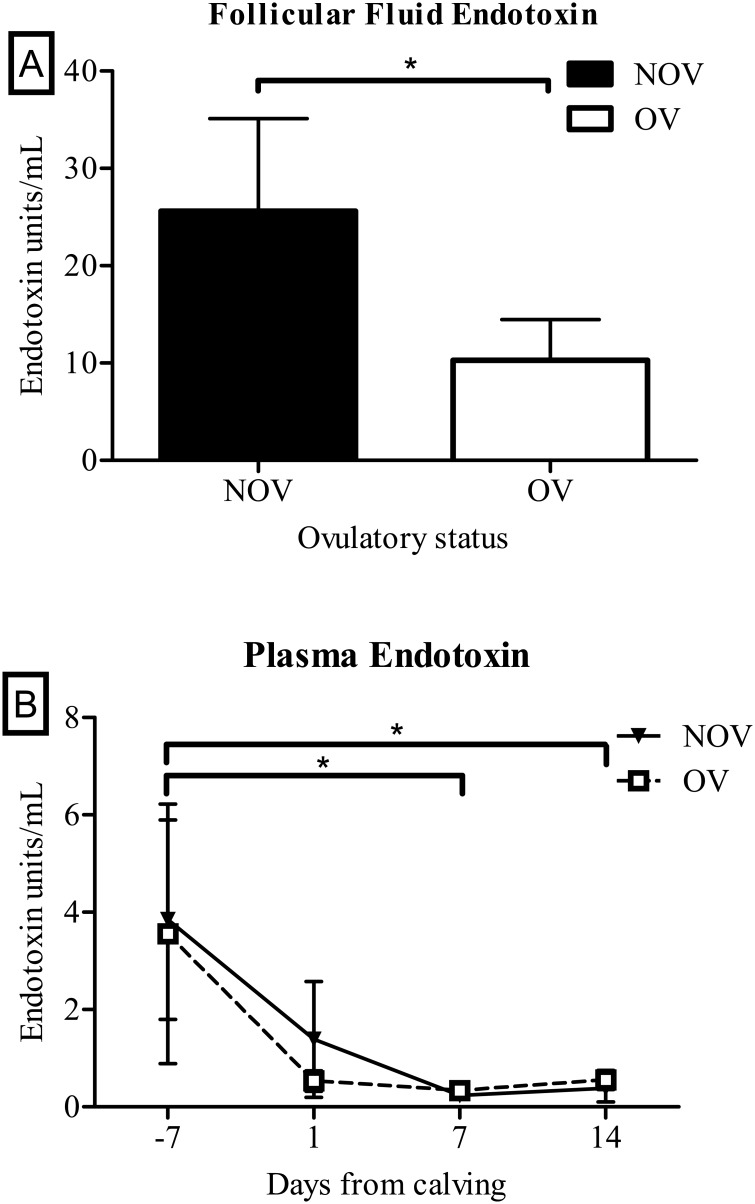
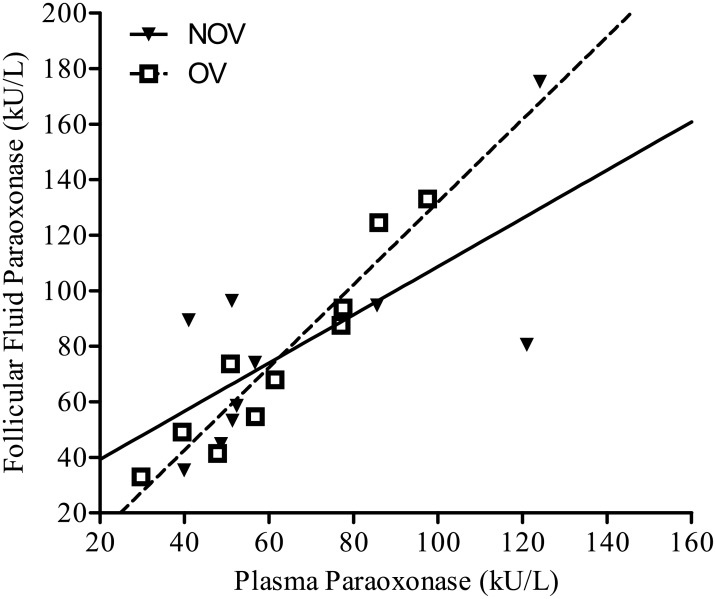
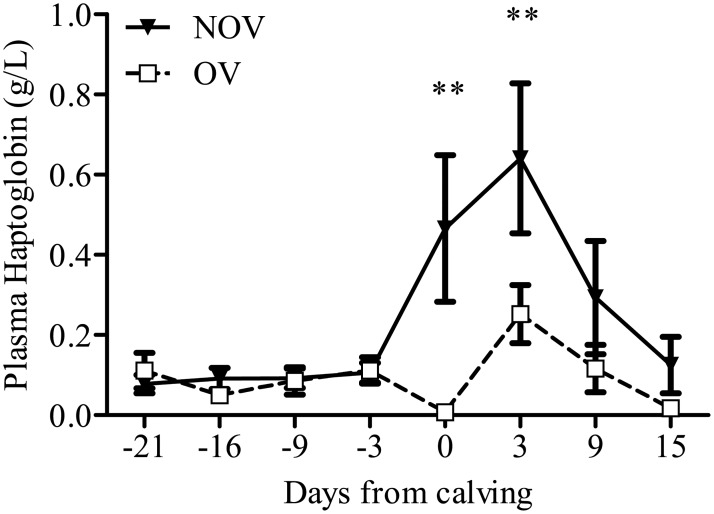
The objective of this study was to determine the effects of uterine and systemic inflammatory responses to uterine bacterial contamination at calving in dairy cows on the growth and ovulatory outcomes of the first dominant follicle postpartum. Ovulatory capability of the first dominant follicle postpartum was predicted in 53 multiparous cows by using a combination of follicle growth characteristics and circulating estradiol concentrations. Endotoxin levels were assayed in follicular fluid samples that were aspirated the day after ovulatory outcome prediction. Plasma levels of haptoglobin, a proinflammatory acute phase protein, and paraoxonase, a negative acute phase protein were determined. Uterine bacteria and inflammation were evaluated in three uterine fluid samples from each cow collected on the day of calving, the day after follicle aspiration, and at 35 days postpartum. Cows that had a strong initial uterine inflammatory response (robust recruitment of polymorphonuclear leukocytes of ≥ 35% and cows with uterine pH < 8.5 on the day of calving) were more likely to have an ovulatory first dominant follicle. Follicular fluid endotoxin levels were higher in non-ovulatory cows compared with ovulatory cows. Endotoxin levels in circulation were not different between ovulatory groups but were higher prepartum than on day 7 and 14 postpartum. Systemic inflammation characterized by elevated haptoglobin concentrations was higher in non-ovulatory cows despite similar bacterial contamination and circulating endotoxin levels. Paraoxonase activity in follicular fluid was significantly associated with the paraoxonase activity in plasma, however, plasma paraoxonase concentrations were not different between non-ovulatory and ovulatory cows. Cows with a higher uterine bacterial load on the day of calving had slower ovarian follicle growth. In summary, a robust uterine inflammatory response on the day of calving was positively associated with ovarian function while elevated systemic inflammation during the early postpartum period was negatively associated with the ovulatory status of the first dominant follicle postpartum.
本研究的目的是确定奶牛产犊时子宫细菌污染引发的子宫和全身炎症反应对产后首个优势卵泡生长及排卵结果的影响。通过结合卵泡生长特征和循环雌二醇浓度,对53头经产奶牛产后首个优势卵泡的排卵能力进行了预测。在预测排卵结果后的第二天,采集卵泡液样本检测内毒素水平。测定了血浆中促炎急性期蛋白触珠蛋白和负急性期蛋白对氧磷酶的水平。在每头奶牛产犊当天、卵泡抽吸后第二天和产后35天收集的三份子宫液样本中评估子宫细菌和炎症情况。产犊当天子宫炎症初始反应强烈(多形核白细胞募集率≥35%且子宫pH<8.5的奶牛)的奶牛更有可能拥有排卵的首个优势卵泡。与排卵奶牛相比,未排卵奶牛的卵泡液内毒素水平更高。排卵组之间循环内毒素水平没有差异,但产前高于产后第7天和第14天。尽管细菌污染和循环内毒素水平相似,但未排卵奶牛中以触珠蛋白浓度升高为特征的全身炎症更高。卵泡液中的对氧磷酶活性与血浆中的对氧磷酶活性显著相关,然而,未排卵奶牛和排卵奶牛之间的血浆对氧磷酶浓度没有差异。产犊当天子宫细菌负荷较高的奶牛卵巢卵泡生长较慢。总之,产犊当天强烈的子宫炎症反应与卵巢功能呈正相关,而产后早期全身炎症升高与产后首个优势卵泡的排卵状态呈负相关。