Dou Xiaowei, Sun Yan, Li Jiazhao, Zhang Jing, Hao Dandan, Liu Wenwen, Wu Rui, Kong Feifei, Peng Xiaoxu, Li Jing
State Key Laboratory of Reproductive Medicine, Nanjing Medical University, Nanjing, Jiangsu, 211166, China.
College of Animal Science and Veterinary Medicine, Heilongjiang Bayi Agricultural University, Daqing, Heilongjiang, 163319, China.
Aging Cell. 2017 Aug;16(4):825-836. doi: 10.1111/acel.12617. Epub 2017 May 22.
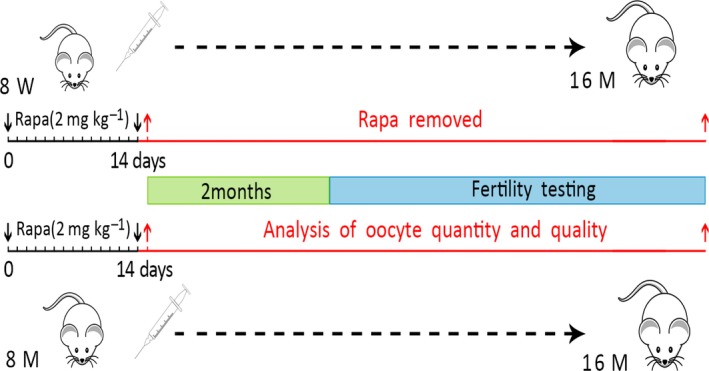
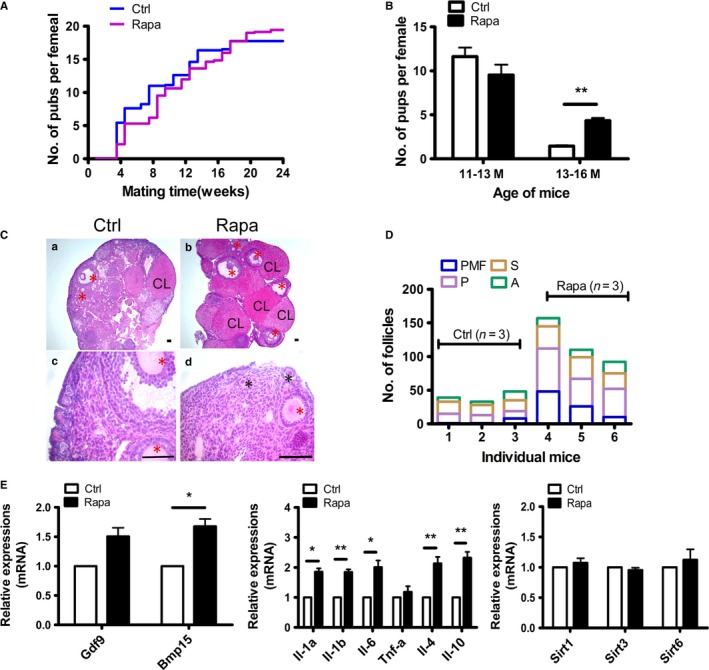
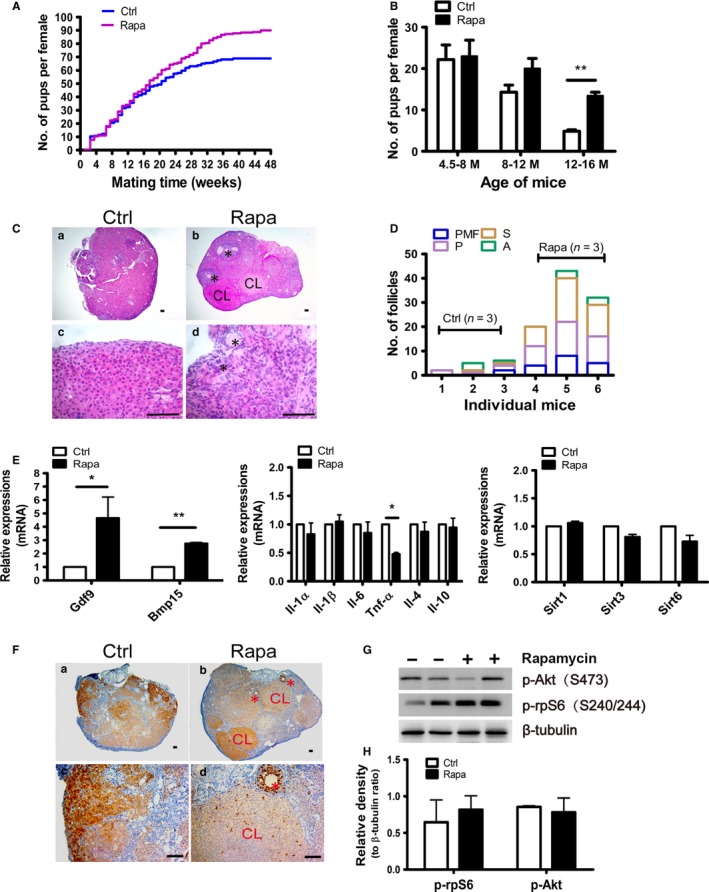
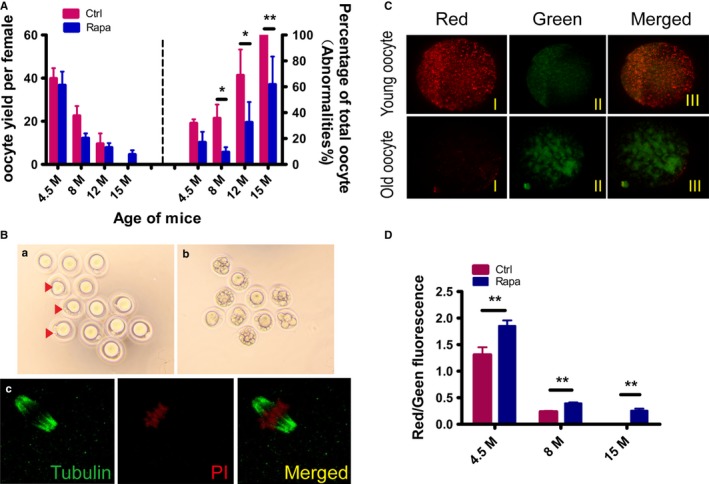
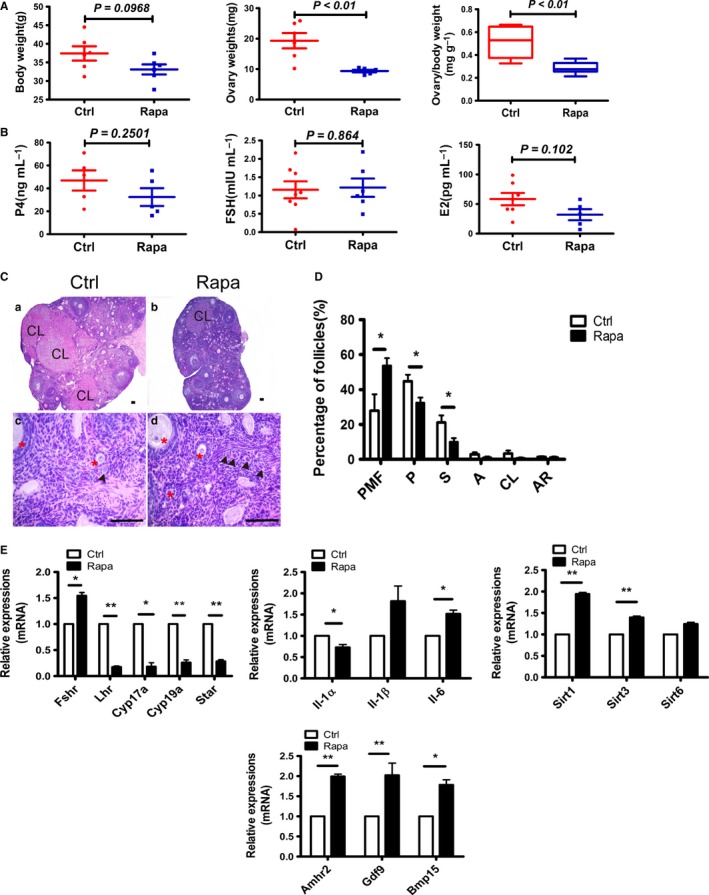
Although age-related ovarian failure in female mammals cannot be reversed, recent strategies have focused on improving reproductive capacity with age, and rapamycin is one such intervention that has shown a potential for preserving the ovarian follicle pool and preventing premature ovarian failure. However, the application is limited because of its detrimental effects on follicular development and ovulation during long-term treatment. Herein, we shortened the rapamycin administration to 2 weeks and applied the protocol to both young (8 weeks) and middle-aged (8 months) mouse models. Results showed disturbances in ovarian function during and shortly after treatment; however, all the treated animals returned to normal fertility 2 months later. Following natural mating, we observed prolongation of ovarian lifespan in both mouse models, with the most prominent effect occurring in mice older than 12 months. The effects of transient rapamycin treatment on ovarian lifespan were reflected in the preservation of primordial follicles, increases in oocyte quality, and improvement in the ovarian microenvironment. These data indicate that short-term rapamycin treatment exhibits persistent effects on prolonging ovarian lifespan no matter the age at initiation of treatment. In order not to disturb fertility in young adults, investigators should in the future consider applying the protocol later in life so as to delay menopause in women, and at the same time increase ovarian lifespan.
尽管雌性哺乳动物中与年龄相关的卵巢功能衰竭无法逆转,但最近的策略集中在提高随着年龄增长的生殖能力上,雷帕霉素就是这样一种干预措施,它已显示出具有保护卵巢卵泡库和预防卵巢早衰的潜力。然而,由于其在长期治疗期间对卵泡发育和排卵有不利影响,其应用受到限制。在此,我们将雷帕霉素给药时间缩短至2周,并将该方案应用于年轻(8周)和中年(8个月)小鼠模型。结果显示治疗期间及治疗后不久卵巢功能出现紊乱;然而,所有接受治疗的动物在2个月后恢复了正常生育能力。自然交配后,我们在两个小鼠模型中均观察到卵巢寿命延长,最显著的效果出现在12个月以上的小鼠中。短暂的雷帕霉素治疗对卵巢寿命的影响体现在原始卵泡的保留、卵母细胞质量的提高以及卵巢微环境的改善上。这些数据表明,无论开始治疗时的年龄如何,短期雷帕霉素治疗对延长卵巢寿命均具有持续影响。为了不干扰年轻成年人的生育能力,研究人员未来应考虑在生命后期应用该方案,以便延迟女性绝经,同时延长卵巢寿命。